News
Industry News

Flexible Ventilation Duct Manufacturer | DERFLEX

Update:2026/7/19 17:19:45 Views:
Industrial coated-fabric products Request A Quote
Finished duct systems �� project manufacturing

Flexible Ventilation Duct Manufacturer for Engineered Airflow Packages

DERFLEX manufactures flexible ventilation duct assemblies for mining, tunneling, underground construction and temporary industrial air movement. Each quotation is built around the fan, pressure direction, route geometry, connection format and required test method��so the delivered duct can arrive as a coordinated installation package rather than an unspecified tube.

Positive or negative pressureLayflat, spiral and low-profile structures
Project-sized interfacesDiameters, sections, cuffs and fittings
Optional safety treatmentsSpecified flame-retardant and antistatic grades
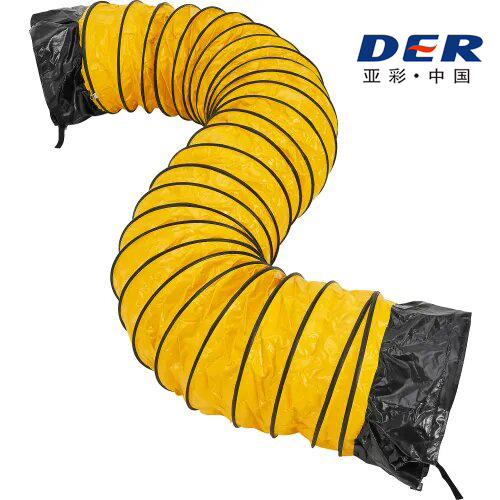
Product display Yellow spiral flexible ventilation duct manufactured by DERFLEX

Manufacturer-configured duct assembly

Body material, reinforcement, welding, suspension and end connections are reviewed as one finished product.

  • Custom diameter and section length
  • Fan cuffs, zippers, rings or clamp-ready ends
  • Optional wear strips, marking and repair kits
300–3000 mmReference diameter window
5–300 mProject section-length options
3 airflow formatsLayflat · spiral · oval
System accessoriesReducers · bends · branches · adapters
Manufacturer selection

A Reliable Duct Order Starts Before the Fabric Is Cut

Procurement problems often begin when a duct is purchased by diameter alone. Two ducts with the same nominal size can behave very differently when the pressure direction, wire pitch, seam layout, suspension spacing or fan connection changes.

DERFLEX therefore treats the inquiry as an airflow and installation brief. The objective is to translate fan data and site constraints into a repeatable production specification that purchasing teams can approve, installers can understand and future replacement orders can reference.

01

Translate airflow duty

Confirm whether the system forces fresh air, extracts contaminated air or requires both modes in different sections.

02

Match the duct structure

Select a collapsible layflat body, a helix-supported suction duct or an oval geometry for restricted headroom.

03

Lock the interface details

Define cuffs, zippers, rings, suspension points, reducers, branches, markings and packing before production.

Choose the pressure route first. Then engineer the duct around the route.

A flexible ventilation duct manufacturer should help separate forced-air supply from suction duty, because reinforcement and collapse resistance are determined by the operating pressure—not by the product color or a generic “heavy duty” label.

Discuss Fan & Route Data
Three product routes

Flexible Ventilation Ducting for Different Pressure and Clearance Conditions

The correct construction depends on how the duct must remain open, how it will be suspended and how frequently the route will change.

Forced-air supply

Layflat Positive-Pressure Duct

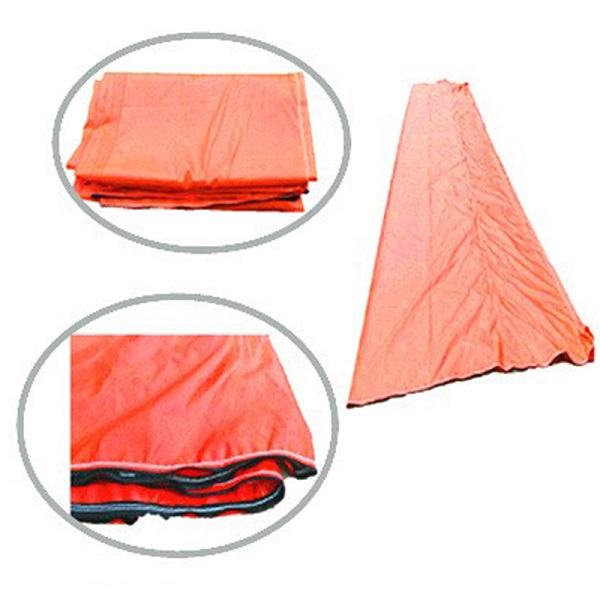
A collapsible duct body that inflates when the fan is operating and packs flat for transport and storage.

  • Fresh-air delivery to advancing work zones
  • Long runs with repeatable section connections
  • Single- or double-line suspension options
Suction or extraction

Spiral Wire-Reinforced Duct

A continuous steel helix supports the airway when the system is under negative pressure or routed through bends.

  • Dust, fume and localized exhaust transfer
  • Shape retention under suction duty
  • Optional external wear protection
Restricted clearance

Oval Low-Headroom Duct

A redistributed cross-section that preserves useful airflow area while reducing vertical interference.

  • Narrow headings and equipment envelopes
  • Custom suspension and shape-control layout
  • Positive-pressure or reinforced configurations
Product construction

See the Difference Between Duct Types, Installations and Finished Sections

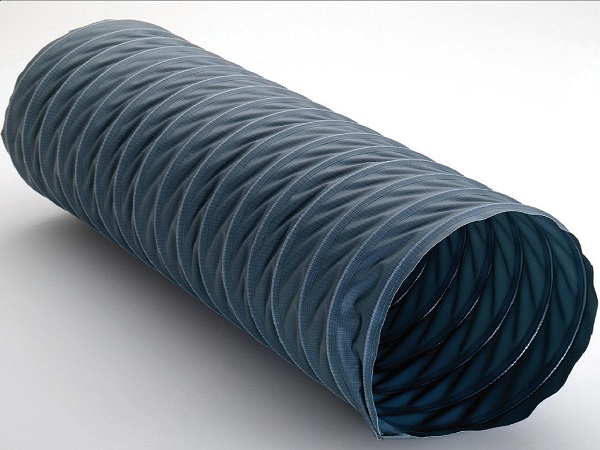
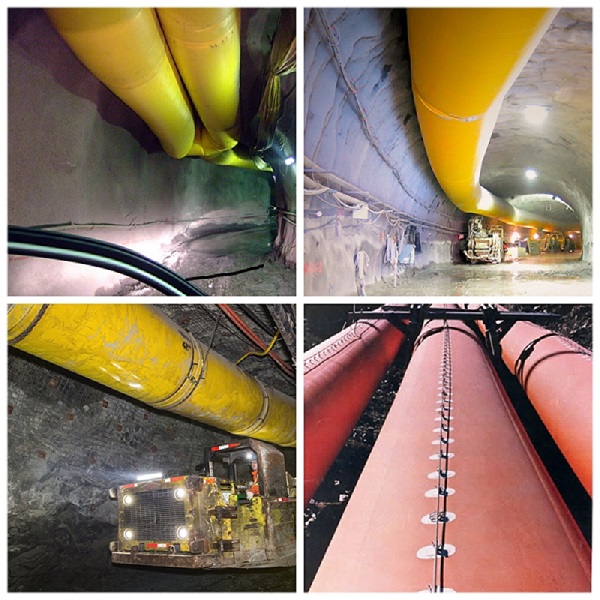
Real project supply includes more than a material description. The images below show the variety of flexible duct forms and field conditions supported by DERFLEX.

Procurement framework

Reference Flexible Ventilation Duct Specification Range

Use this table to prepare an inquiry. Final values should be confirmed on the approved product datasheet and relevant test documents for the exact construction ordered.

Supply format Finished duct sections and optional accessories Fabric body, seams, suspension, reinforcement and agreed interfaces supplied as a coordinated item.
Airflow duty Positive pressure, negative pressure or project combination Pressure direction determines whether a layflat or shape-supported structure is appropriate.
Base construction Woven or knitted polyester with PVC coating on both sides Fabric structure and coating formulation are selected around strength, weldability, handling and environment.
Reference fabric weight Approximately 400�C900 g/m2 Final weight depends on duct type, diameter, pressure demand and safety treatment.
Reference diameter Approximately 300�C3000 mm Non-standard sizes can be reviewed after airflow and installation data are provided.
Section length Common project options from 5�C300 m Length selection should balance leakage control, handling, repair strategy and shipping volume.
Reinforcement None continuous, spring-steel helix or oval shape control Selected according to positive pressure, suction duty, bend radius and available clearance.
Connections Zipper, hook-and-loop, steel ring, eyelet, clamp or soft cuff Fan interfaces and replacement sections should use one documented connection standard.
Suspension Single row, double row, fins, grommets or custom geometry Spacing and reinforcement are coordinated with diameter, weight and tunnel alignment.
Performance options Flame-retardant, antistatic, high-visibility color and wear protection Required test method, limit and certificate format must be stated before quotation.
Accessories Reducers, bends, tees, wyes, fan adapters, patches and repair kits Accessories can be included on the same bill of materials to simplify installation and future maintenance.
Important: pressure capability, fire behavior, surface resistance and temperature range are construction-specific. They should not be inferred from a generic product name or color.
Manufacturing controls

From Coated Textile to a Repeatable Finished Duct

A useful manufacturing specification controls the parts buyers see in the quotation and the details installers discover only after the shipment arrives.

M

Material matching

Polyester structure, PVC formulation, weight and optional treatments are selected around pressure, abrasion, flexibility and market requirements.

W

Seam and welding control

Weld layout, overlap width and cuff fabrication are standardized to support airtightness and consistent section geometry.

R

Reinforcement integration

Wire diameter, pitch, wear strip and suspension reinforcement are coordinated rather than added as unrelated components.

I

Interface verification

Fan outlet measurements, coupling orientation and accessory dimensions are checked against the approved drawing or sample.

Q

Inspection records

Visual checks, dimensions, connection details and agreed performance documents can be organized around the purchase specification.

P

Marking and packing

Section identification, installation order, OEM marks, packing units and spare parts can be defined for easier jobsite control.

One approved specification can support the first order, replacement sections and future project expansion.

Document the duct type, interfaces, suspension and material treatment once. That record helps procurement teams avoid mixing incompatible sections during maintenance or repeat purchasing.

Build a Repeat-Order Spec
Applications

Where Flexible Ventilation Duct Systems Are Commonly Specified

Flexible ducting is useful when the air route must advance, bend, relocate or connect to temporary equipment without the installation burden of rigid metal ductwork.

Underground mining

Fresh-air delivery and localized extraction for headings, drifts, equipment zones and temporary work areas.

Tunnel construction

Extendable duct lines for metro, railway, highway, utility, hydropower and water-conveyance projects.

TBM and civil works

Duct packages aligned with advancing machinery, service routes, cross passages and changing installation clearances.

Industrial exhaust

Temporary transfer of dust, fumes, heat or process air during maintenance, production changes and equipment installation.

Confined-space work

Portable air supply or exhaust for tanks, chambers, shipyards, basements and controlled-entry maintenance zones.

Temporary climate control

Air movement for drying, cooling, heating and enclosure ventilation at construction and industrial sites.

Buyer checklist

What to Send a Flexible Ventilation Duct Manufacturer

A complete first inquiry reduces quotation assumptions and makes it easier to compare proposals on the same technical basis.

  1. Fan informationOutlet diameter, airflow, static pressure or fan curve, and interface photos or drawing.
  2. Pressure directionForced fresh air, suction/extraction, or a mixed system with separate duct sections.
  3. Route and total lengthOverall run, desired section lengths, bends, branches, elevation changes and available headroom.
  4. Installation methodHanging cable, single or double suspension, wall routing, floor contact or mobile equipment connection.
  5. Required standardExact flame-retardant, antistatic, electrical resistance or other test method required by the destination market.
  6. Commercial formatQuantity, OEM marking, packing units, spares, repair material, inspection documents and delivery schedule.
FAQ

Questions from Contractors, Fan Companies and Duct Distributors

The answers below are intentionally project-focused because flexible ventilation duct performance depends on the confirmed construction and operating conditions.

Does DERFLEX supply finished flexible ventilation ducts or only PVC duct fabric?
DERFLEX can supply finished duct sections with welded bodies, suspension details, reinforcement, end connections and optional accessories. Raw PVC-coated duct fabric can also be quoted separately when the buyer fabricates ducts locally.
Which duct type should be used for negative-pressure extraction?
A wire-reinforced spiral duct is generally considered for suction because the helix helps keep the airway open. Final wire diameter, pitch, wall construction and pressure capability must be matched to the fan and route.
Can diameter, length and connection style be customized?
Yes. Diameter, section length, color, cuff, zipper, ring, eyelet, clamp interface, suspension arrangement and marking can be configured around the approved project specification.
Are flame-retardant and antistatic options available?
They can be specified. The inquiry should state the required test method, acceptance limit and document format because different markets and underground projects may apply different standards.
Can DERFLEX manufacture reducers, bends and branch fittings with the duct?
Yes. Reducers, elbows, tees, wyes, transitions, fan adapters, repair panels and selected hardware can be reviewed as part of one coordinated bill of materials.
How can buyers reduce air loss across a long duct run?
Specify the correct diameter, minimize unnece, ssary bends, choose practical section lengths, use compatible low-leak connections and control suspension so the duct does not kink or deform. The fan and duct should be reviewed as one airflow system.

Build the Duct Around Your Fan, Route and Installation Plan

Send the pressure direction, fan data, diameter, total run, connection preference, site layout and required test standard. DERFLEX will review the manufacturing route and prepare a project-based quotation without using unverified universal performance claims.

Consulting Services
+86-021-54361792 / 54361798
Email
sales@derflex.com