


 Coated fabrics
Custom cover supply
Grain Pile Tarpaulin for Bulk Storage
A grain pile tarpaulin is a fabricated weather cover for bulk grain held in outdoor piles or bunkers. DERFLEX supplies PVC-coated fabric and custom-cover options for storage operators, agricultural distributors and cover fabricators. Start with the pile profile, water runoff, aeration interfaces and edge restraint, then select the material and welded panel layout. A well-specified grain storage tarp helps exclude rain; moisture within the grain still needs active storage management.
Custom dimensions · Material and cover options · Project-specific edge details
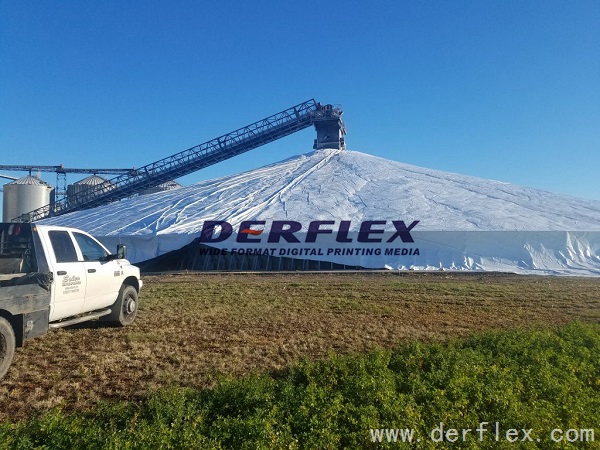
Size the cover to the pile surface.
Ground footprint is a starting dimension. The fabric has to reach over the grain and finish at the specified attachment line.
Conical or round piles
Record base diameter, peak height and the actual route from apex to the edge. A flat circular sheet does not fit a cone without folds or shaping. Compare a shaped panel pattern with a managed-fold design, including how the apex and perimeter will be closed.
Elongated piles and bunkers
Measure the cross-pile surface path, longitudinal profile, wall height and end slopes. Add separate allowances for wall drape, edge reach, connections and dimensional tolerance. Check how the cover changes shape as grain settles or sections are reclaimed.
Use the custom tarp drawing guide to distinguish finished size from cut size and to identify every opening.
Illustrative cross-section
For a symmetrical triangular pile with a 20 m base and 4 m height, the idealized path across the top is:
Adding an assumed 1 m edge reach on each side gives 23.54 m across that section, before pattern-specific shaping, hems and seam allowances.
Geometry example only. The assumed 1 m reach is not an anchoring recommendation. Actual profiles and end panels must be measured separately.
Cover-to-site interfaces Schematic only; not to scale or an installation design.
A / Cover surface: maintain runoff and avoid unsupported water pockets.
B / Edge interface: coordinate reinforcement with a designed restraint system.
C / Airflow interface: locate duct connections without cutting unplanned holes.
D / Prepared base: manage ground moisture and route water away.
Rain resistance does not resolve condensation.
A solid PVC grain pile cover can limit rain entry while also restricting moisture escape through the sheet.
Treat vapor permeability as a measured property
Do not describe a continuous PVC-coated cover as breathable without water-vapor transmission data for that construction. Air permeability and water-vapor transmission describe different behavior; neither can be inferred from GSM or a waterproof claim.
Moisture can collect when humid air meets a colder cover surface. The operator should set a grain-conditioning and cooling plan appropriate to the crop, climate and storage period, with checks for wet surfaces and localized deterioration.
Storage context: Purdue Extension: temporary grain storage considerations.
Give air and runoff defined routes
Map intake locations, duct connections and monitoring access before fabricating the cover. Unplanned openings can admit rain; tightly closing an intended intake can undermine airflow. Fan and duct design belongs with the grain-storage specialist.
Trace runoff beyond the perimeter. A top cover does not stop ground moisture, prevent flooding or correct a poorly drained pad. Ground barriers, retaining walls and site drainage are separate parts of the storage design.
Site planning context: University of Missouri Extension: temporary grain storage piles.
Specify the storage mode. Aerated temporary storage and a hermetic or fumigation enclosure have different requirements. Weather-cover fabric alone does not establish gas-tightness, chemical compatibility or suitability for direct grain contact.
Design the load path at the edge.
The sheet, reinforcement and site restraint have to work as one connection.
Discuss edge ballast, straps or wall attachment against the actual pile geometry and exposure. A local eyelet concentrates force; a reinforced sleeve or webbing detail distributes it differently. Changing the attachment method changes the required edge construction. The following options are drawing-review directions, not a supplied anchorage design.
On smaller screens, scroll the comparison table horizontally.
| Restraint approach | Cover detail to review | Site issue to resolve |
|---|---|---|
| Distributed ballast bags or tubes | Protected bearing zones, edge reach and resistance to local abrasion. | Ballast stability, surface friction and a clear runoff route; loose objects can shift or damage the cover. |
| Straps to defined anchors | Load-spreading patches, webbing direction and connection geometry. | Anchor capacity, load distribution and strap routing across the actual pile. |
| Wall or bunker attachment | Clamp line, compatible sleeve or hardware interface, and wall-top protection. | Wall strength, sharp edges, installation access and water passing outside the wall. |
| System using aeration suction | Compatible air inlets, cover fit and perimeter sealing detail. | Fan controls, power-loss behavior and the restraint arrangement when suction changes. |
Record ballast and strap positions on the drawing. Keep drains accessible and inspect corners, attachment zones and changes of direction. There is no standard ballast mass or universal eyelet pitch for every grain pile. Review grommet spacing and attachment layout when selecting point connections.
A wide cover starts with a panel plan.
Finished cover width and available roll width are different dimensions.
Plan the joints before cutting
A large cover may combine multiple compatible PVC-coated panels. Confirm usable roll width, fabric direction, seam allowance and finished tolerances. Increasing roll width can reduce joint count, but it does not remove apex details, end closures or handling constraints.
Keep seam intersections and attachment zones visible on the drawing. Review any surface lacquer or finish for joining compatibility. Reclaimed sections need their own closure detail; merely overlapping two loose sheets does not establish a weatherproof joint.
For material sourcing, compare grain cover fabric for converters and the broader PVC tarpaulin material range.
Approve a representative weld
Welding conditions depend on the coating, finish, equipment and joint geometry. Trial the actual material combination rather than carrying over a temperature setting from another cover.
- Identify the material lot, joining method and seam construction.
- Record test direction, specimen preparation and agreed acceptance criteria.
- Inspect joint continuity and reinforcement transitions.
- Agree finished-cover inspection and repair procedures separately from material tests.
The PVC tarp weld seam strength guide explains why a fabric tensile value cannot stand in for a seam result.
Make the quotation describe the deliverable.
Choose roll supply or a finished cover, then define the evidence and interfaces needed for approval.
| Purchase item | Define for this project | Approval evidence |
|---|---|---|
| Supply format | Fabric rolls, prepared panels or a fabricated cover; identify included accessories. | Itemized quotation and scope drawing. |
| PVC-coated polyester | Material reference, GSM, base construction, color, grain-facing side and finish. | Matching sample and current technical sheet; do not select by mass alone. |
| Finished geometry | Developed dimensions, shaped ends, openings, edge reach and tolerances. | Dimensioned drawing with a revision reference. |
| Seams and edges | Panel layout, joining method, hem, patches and attachment interface. | Representative joint approval and defined inspection criteria. |
| Outdoor exposure | Storage period, sun exposure, local temperatures and expected reuse. | Relevant grade-specific data; laboratory exposure hours are not a service-life guarantee. |
| Contact requirements | Whether the cover touches grain and the intended crop and market. | Documentation for the exact formulation and intended contact conditions where required. |
| Handling and packaging | Section size, fold direction, orientation marks, packing and unloading method. | Section schedule, mass estimate and packing specification. |
Use the published grain pile cover range to discuss available material directions. DERFLEX's grain-cover references include different constructions; confirm the selected grade instead of transferring a specification from another cover. For seasonal scheduling and repeated deployment, see harvest grain covers.
The order should separate the cover from fans, ducts, walls, anchors and installation services unless these are explicitly included in the agreed scope. Price, MOQ, sample terms and lead time depend on that scope, order quantity and destination.
Check mass before choosing a single large sheet.
Panel size affects packing, unloading and deployment as well as seam count.
For planning, fabric mass in kilograms equals developed fabric area in square meters × GSM ÷ 1,000. Include all panel material when measuring area. The estimate below excludes webbing, hardware, packaging and any additional material not entered. It does not determine a safe crew size or lifting method.
Estimated total fabric mass
Average fabric mass per equal-area section
Illustrative starting inputs, not a product recommendation. Unequal sections need individual area calculations.
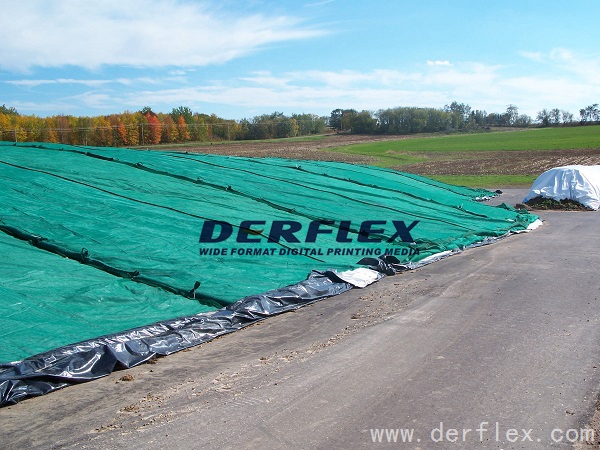
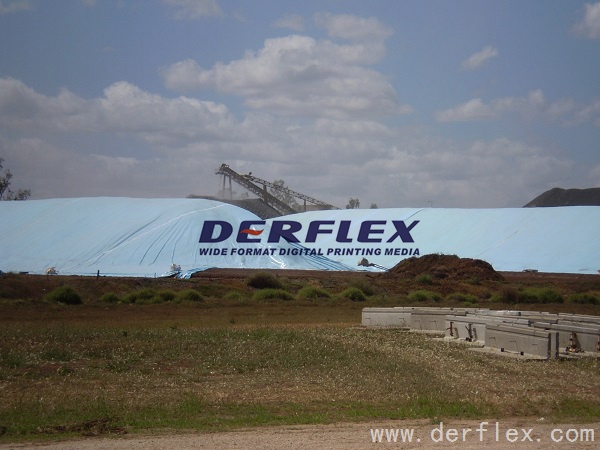
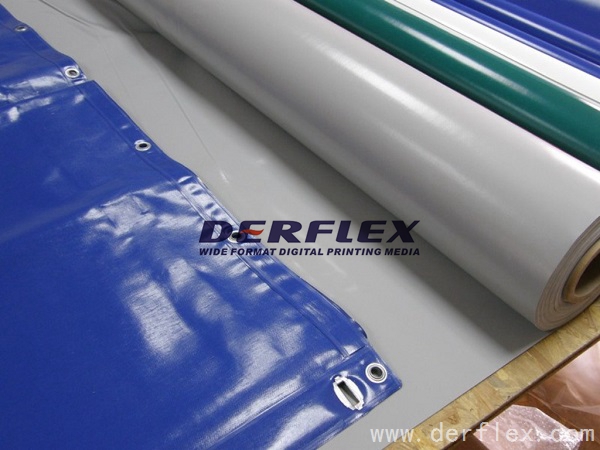
See the scale. Inspect the interfaces.
Review cover geometry and general fabric details alongside the drawing and material sample for your project.

Resolve the drawing, then approve production.
A short, well-defined approval sequence makes material and fabrication decisions easier to review.
Share the storage brief
Send grain type, duration, pile or bunker geometry, site photographs, climate and the aeration concept. Mark direct-contact surfaces and access points.
Review the cover scope
Agree the supply format, material direction, panel sizes, restraint interfaces and what belongs to the site contractor.
Approve the sample and drawing
Match the sample to the quoted material, then confirm critical seams, edges, dimensions and the acceptance record required.
Confirm delivery and repeat orders
Set packing orientation, cover identification and destination. Retain the approved revision and sample reference for future purchases.
Quote-ready information
- Pile footprint, height and measured surface paths
- Wall height, end slopes and attachment line
- Storage duration, weather and reuse expectations
- Air inlets, duct interfaces and monitoring access
- Restraint detail, edge reach and section layout
- Material requirements and direct-contact conditions
- Quantity, destination and required delivery window
A sketch is enough to start the discussion. Final fabrication requires a confirmed drawing.
Plan reuse from the beginning. Provide access for edge and seam inspection after adverse weather and during reclaim. Clean and dry the cover before storage, isolate damaged sections and confirm a compatible repair method. Follow the site's access plan; cover straps and lifting features are not personnel anchorage unless separately designed and certified for that use.
Grain pile tarpaulin FAQ
Is PVC grain pile tarpaulin breathable?
A continuous PVC-coated tarp should be treated as a low-permeability weather barrier unless the selected material has measured water-vapor transmission data. It does not provide the controlled airflow required by an aeration system. Specify air paths separately and keep them clear.
Can a waterproof grain storage tarp stop condensation?
It can reduce rain penetration, but it cannot remove moisture already present in the grain or stop a cold cover surface from collecting condensate. Grain condition, cooling, designed airflow and monitoring must be addressed with the storage operator.
How do I measure a grain pile cover?
Measure the developed surface path over the pile in both principal directions, then add the edge reach and fastening allowances shown on the drawing. Plan dimensions alone are insufficient. Conical, oval and bunker piles need different panel layouts.
How much ballast does a grain tarp need?
There is no universal ballast weight or spacing. Wind exposure, pile shape, restraint layout, bearing surface, anchorage and any dependence on fan suction must be reviewed together. The cover drawing should show the attachment interface; the site designer should determine the restraint loads.
Can narrow rolls be welded into a large grain pile cover?
Compatible PVC-coated panels can be joined to make a larger cover. Usable roll width, seam allowance, panel direction, finished dimensions and handling limits must be agreed first. A representative weld trial and project-specific acceptance criteria are needed before production.
What should I send for a custom grain cover quotation?
Send a pile sketch with dimensions and peak height, grain type, storage period, weather exposure, aeration layout, edge-restraint detail, quantity and destination. Identify whether you need fabric rolls or a finished cover, and state any direct grain-contact documentation requirements.