News
Industry News

Heavy Duty Tarp Rolls vs Finished Tarps for Fabricators | DERFLEX

Update:2026/10/1 19:38:00 Views:
Fabricator Supply Decision Guide · PVC Tarp Materials

Heavy Duty Tarp Rolls vs Finished Tarps: Which Supply Format Is Better for Fabricators?

For a professional tarp shop, the better format is not automatically the cheaper item on the quotation. Tarp rolls usually make more sense when you already cut, weld, sew and install hardware in-house. Finished tarps are usually more efficient when dimensions are stable, local conversion capacity is limited, or you want a ready-to-sell product with less workshop labor.

Quick answer: choose roll goods for production control and SKU flexibility; choose finished tarps for speed and lower local processing; choose semi-finished panels when you want to keep final fitting, hardware or branding local without doing all cutting and joining from raw rolls.
Answer First

Which supply format is better for a tarp fabricator?

The answer depends on what your workshop is designed to do profitably and repeatably.

Buy heavy duty tarp rolls when...

your value is created by local conversion and you need one material platform to serve several finished products.

  • You cut custom sizes or irregular patterns frequently.
  • You already use hot-air, HF, hot-wedge welding or industrial sewing.
  • You want control over seam position, reinforcement and hardware layout.
  • You need flexible stock that can become multiple tarp SKUs.
  • Local fabrication labor and quality control are already part of your operation.
  • You can handle wide, heavy rolls safely and store them correctly.

Buy finished tarps when...

your priority is deployment, resale or installation rather than converting raw material in-house.

  • You need ready-to-use covers with hems, grommets, webbing or D-rings installed.
  • Your workshop lacks reliable welding, sewing, cutting or eyeleting capacity.
  • Your recurring sizes and designs are already standardized.
  • Labor availability or local conversion cost is a bottleneck.
  • You want the supplier to control cutting, joining, reinforcement and packing.
  • You are building a private-label product line with consistent finished presentation.
For many established fabricators, roll goods are the default production input—but not for every job. A workshop may still buy finished truck tarps, large welded assemblies or complex reinforced covers when those products would interrupt local production, require equipment the shop does not have, or create more labor than value. DERFLEX already supplies PVC tarp fabric by the roll as well as custom heavy duty finished tarps, so the format can be matched to the buyer's real operating model rather than forced into one route.
Fabricator Decision Matrix

Tarp Rolls vs Semi-Finished Panels vs Finished Tarps

Use the table as a sourcing filter before comparing unit price.

Decision factor Heavy duty tarp rolls Semi-finished panels Finished tarps
Best fit Established fabricators and converters Shops keeping only selected finishing local Distributors, installers and fixed-SKU programs
Local cutting Required Reduced or pre-cut by supplier Not required
Seam / welding work Local control Shared between supplier and buyer Supplier controlled
SKU flexibility Highest High Lower after production
Material inventory flexibility One roll can feed several products Panel inventory is application-specific Finished inventory is SKU-specific
Workshop equipment needed Highest Moderate Lowest
Local labor content Highest Moderate Lowest
Control of seam placement Highest Shared Defined before supplier production
Hardware flexibility Add locally as each order requires Can split work between supplier and buyer Must be confirmed in drawing / specification
Lead time after order arrives Depends on local production queue Moderate local work Ready for resale / installation
Best use case Mixed custom sizes, repair work, multiple SKUs, local manufacturing Large panels, pre-welded sections, repeat assemblies, local final fit Standardized finished covers, fleet programs, distributor stock, project kits
What Changes the Economics?

Eight variables matter more than the headline roll price

A low raw-material price can become expensive after waste, labor, rework and slow production are included.

01

Cutting yield

Match usable roll width to finished panel dimensions. A poor width choice can create off-cuts, extra seams or repeated trim loss.

02

Seam count

Wider usable material can reduce joining operations, but only if your handling and welding equipment can process the width efficiently.

03

Labor minutes

Cutting, positioning, welding, sewing, trimming, hemming, eyeleting, inspection and packing must be valued as real production cost.

04

Hardware content

Grommets, D-rings, webbing, straps, rope hems and reinforcement patches can represent a meaningful share of local assembly time.

05

Rework risk

Inconsistent welds, inaccurate dimensions, skipped reinforcement or hardware misalignment can erase savings from lower raw-material cost.

06

Inventory strategy

Roll stock is flexible. Finished stock is immediately sellable. The right choice depends on demand predictability and local response time.

07

Freight efficiency

Compare roll cores, roll diameter, palletization, folded finished covers, carton dimensions and container utilization—not only product weight.

08

Production opportunity cost

If a large finished tarp ties up your best welding table for hours, outsourcing that assembly may be more profitable even when the unit price is higher.

Interactive Planning Tool

Compare local roll conversion cost with finished-tarp purchasing

This simple planning model helps fabricators avoid comparing raw roll price directly with a finished product price.

Local conversion inputs

Use your own commercial data. Values are not sent anywhere.

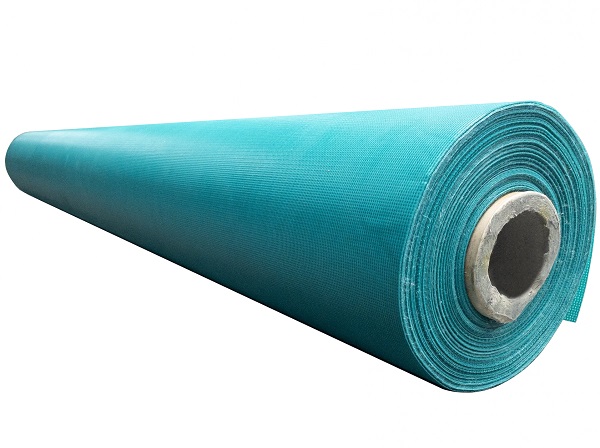
DERFLEX PVC tarp roll material for professional fabrication
PVC coated tarp roll material gives fabricators control over cutting, seam layout and downstream finishing.
When Rolls Win

Heavy duty tarp rolls are a production asset when your workshop adds real value

Roll goods shift the conversion work to the fabricator. That is an advantage only when the shop has the equipment, process discipline and order mix to use the flexibility. DERFLEX's current tarp fabric manufacturing page positions PVC coated polyester as a conversion material for cutting, welding, sewing and reinforcement.

Production flexibility

One stocked roll can be converted into different finished widths, lengths, cover shapes, repair sections, curtains or project-specific products.

Control of seam and reinforcement placement

Fabricators can place welds away from high-abrasion zones, add reinforcement at load points, and position hardware around the actual installation geometry.

Better alignment with custom-order business

Roll inventory works particularly well when customers frequently change dimensions, drop lengths, grommet intervals or accessory layouts.

  • Best for variable dimensions and frequent custom orders.
  • Useful when one material grade serves several related products.
  • Supports local repair, alteration and short-run production.
  • Lets experienced shops control the exact fabrication sequence.
Step 01Plan layoutMatch usable roll width to panel geometry, seam allowance and cutting yield.
Step 02Cut panelsManual or automated cutting should maintain dimensional repeatability and edge quality.
Step 03Join materialUse the validated welding or sewing method for the selected PVC construction.
Step 04Reinforce & hardwareAdd hems, webbing, wear patches, grommets, D-rings, straps and pockets as required.
Step 05Inspect & packCheck dimensions, seam continuity, hardware placement, surface condition and packing.
When Finished Tarps Win

Finished tarps remove local conversion steps and free capacity for higher-value work

Finished supply is not only for distributors with no workshop. A fabricator may deliberately outsource a repeat cover when local production is the bottleneck, the assembly is unusually large, or the project requires more welding table time than the margin justifies.

Fewer local process steps

Cutting, joining, reinforced hems, hardware placement, logo work and packing can be completed before shipment according to an approved drawing or sample.

Predictable repeat programs

Finished supply is efficient when size, material, seam design, grommet layout and packaging are stable from order to order.

Useful for private-label or regional distribution

Importers can receive market-ready tarps rather than maintaining a local production cell for every size in the catalog.

For finished programs, specification discipline becomes more important. Confirm whether dimensions are cut size or finished size, define tolerances, approve hardware locations, and freeze the drawing before bulk production.
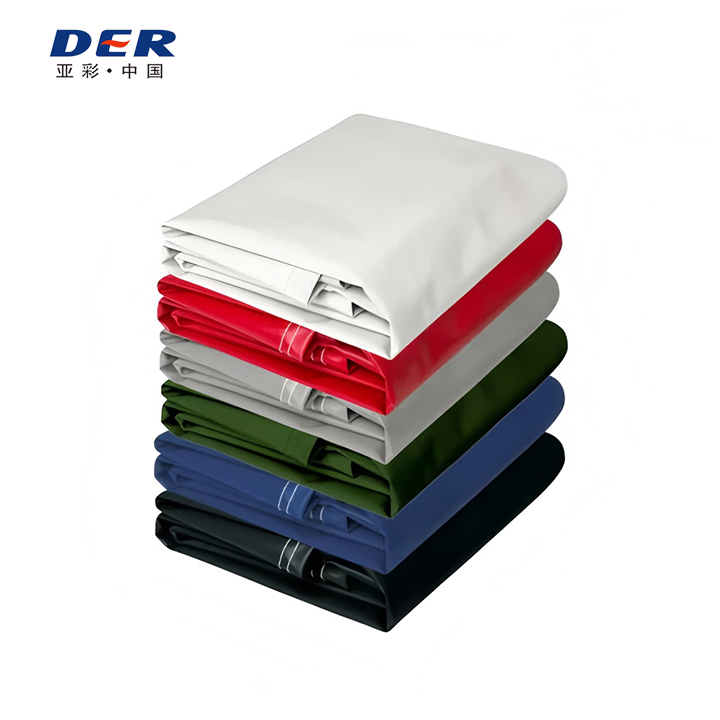
DERFLEX finished heavy duty PVC tarps in multiple colors
Finished heavy duty tarps can arrive with size, seams, hems, reinforcement and hardware completed.
Often the Best Middle Ground

Semi-finished panels can reduce labor without giving up local customization

A fabricator does not have to choose only between a full roll and a completely finished tarp.

Pre-cut panels

Supplier cuts major pieces to drawing; fabricator performs final joining, edge work or installation-specific trimming.

Pre-welded large sheets

Large field seams can be completed before shipment while the local shop retains perimeter finishing and hardware placement.

Reinforced tarp blanks

Perimeter hems or webbing can be prepared in advance, leaving the buyer to install project-specific grommets, D-rings or fittings.

OEM kits

Panels, straps, hardware and labels can be organized as a repeatable kit when local final assembly adds market or installation value.

DERFLEX already presents roll, semi-finished and finished tarp supply as separate fabrication levels. This hybrid route is especially useful when the fabricator wants to keep customer-specific finishing local but remove repetitive cutting or large-panel welding from its own production queue.
Engineering & Fabrication Notes

Five checks before ordering heavy duty tarp rolls

For fabricators, material compatibility is a production issue—not only a data-sheet issue.

A

Confirm usable roll width

Do not design around nominal width alone. Plan the actual panel layout, seam allowance, trimming and equipment clearance. Use the DERFLEX tarp roll size guide to structure width, length, GSM and roll-weight questions.

B

Validate your joining process

Share whether the shop uses hot air, HF, hot wedge, sewing or a combined method. Coating formulation, surface finish, thickness and equipment settings all influence the process window.

C

Match weight to handling

Higher GSM can support more robust constructions, but it also increases roll mass, operator handling effort and finished-cover weight. Do not specify “heaviest” by default.

D

Design reinforcement around loads

Grommets and D-rings concentrate force into small areas. Reinforced hems, webbing and local patches should be designed around pull direction and service conditions, not added as decoration.

E

Approve repeat-order controls

For ongoing programs, document fabric structure, color reference, finish, width tolerance, roll packing and welding trial expectations so the next shipment is easier to reproduce.

F

Separate material from finished-system performance

Water resistance, wind performance and service life are affected by seams, hardware, installation and drainage. A strong roll does not compensate for a weak finished-tarp design.

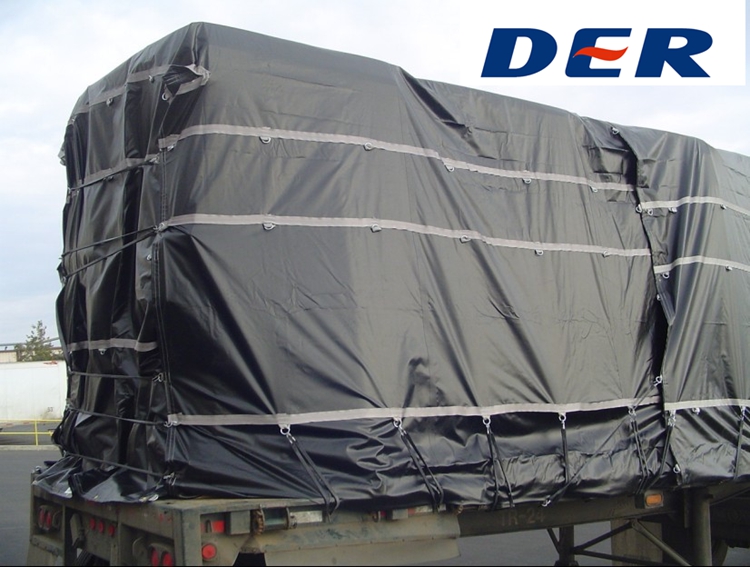
Finished heavy duty truck tarp with reinforced webbing and tie-down points
Truck tarps show why material, seam layout, webbing and tie-down geometry must be evaluated as one system.
Application Logic

A fabricator may use all three supply formats in one product family

Consider a truck-cover business. Standard replacement tarps may be economical as finished imports. Unusual dimensions may be made locally from roll stock. Very large roof panels can be ordered pre-welded, then completed locally with side drops, webbing and hardware.

This is why the supply decision should be made by product family, not by company. A shop with excellent welding equipment may still outsource selected finished assemblies, while a distributor may keep roll stock for repairs and emergency custom work.

Practical split by demand pattern

  • High-volume fixed SKU: finished tarp or semi-finished route.
  • Low-volume custom size: roll stock and local fabrication.
  • Very large repetitive panel: pre-welded or semi-finished panel.
  • Repair / modification service: roll stock or short continuous lengths.
  • Private-label catalog: finished products with controlled packaging.
Material Direction

What tarp material should fabricators specify?

For reusable heavy duty waterproof covers, PVC coated polyester is a common platform because it combines textile reinforcement with a weldable, weather-resistant surface.

Specification area What the fabricator should define Why it affects conversion
Finished weight Target GSM or oz/yd² matched to service duty Influences handling, strength potential, abrasion resistance and finished cover mass.
Base fabric Yarn / weave direction when strength targets require it Drives tensile, tear and dimensional behavior beneath the coating.
Coating construction Coated or laminated direction, adhesion expectation, surface treatment Affects durability, weldability, appearance and processing consistency.
Roll width Usable width based on cutting layout Changes seam count, waste percentage, machine fit and handling.
Surface finish Glossy, matte, lacquered or application-specific Affects blocking, cleanability, appearance and fabrication feel.
Functional options UV, anti-mildew, cold-resistance, FR or other requirements only when relevant Should match the real climate, application and compliance requir, ement.
Finished details Seams, hems, webbing, patches, grommets, D-rings, straps and branding Determines whether the order should remain roll goods or move toward semi-finished / finished supply.
For material-level sourcing, see DERFLEX's PVC coated tarp guide. For buyers who need the finished cover instead of raw conversion material, use the custom heavy duty tarp program.
RFQ Checklist

Send different information for roll goods and finished tarps

The faster route to a useful quotation is to describe how the material will be converted or how the finished cover must function.

For tarp roll quotations

Tell the supplier what your workshop needs to process reliably.

  • Finished product type and application
  • Target GSM / oz and base-fabric direction if known
  • Required usable roll width and preferred length
  • Color, finish and repeat color-control expectations
  • UV, FR, anti-mildew or low-temperature requirement if applicable
  • Hot-air, HF, hot-wedge or sewing process
  • Estimated quantity and repeat-order frequency
  • Core, wrapping, pallet and shipment preferences

For finished tarp quotations

Tell the supplier exactly what must arrive ready for use or resale.

  • Finished dimensions, drawing or physical sample
  • Cut-size vs finished-size requirement and tolerance
  • Material structure / weight / color
  • Seam position and preferred joining method
  • Hem, webbing and reinforcement details
  • Grommet, eyelet, D-ring, strap or pocket layout
  • Logo, label, carton and private-label packaging
  • Quantity by SKU and destination market
Fabricator FAQ

Questions buyers ask about tarp rolls and finished tarps

Direct answers for converters, tarp shops, distributors and OEM buyers.

Is it cheaper to buy heavy duty tarp rolls or finished tarps?

Roll goods usually have a lower level of added processing, but they are not automatically cheaper after conversion. A fabricator should add material waste, cutting, welding or sewing, hardware, reinforcement, labor, overhead, rework, inspection and packing. Finished tarps can be more economical when local labor is expensive, production capacity is constrained, or the design is highly repeatable.

Why do professional tarp fabricators prefer roll goods?

Roll goods give the fabricator control over panel size, seam location, reinforcement, grommet spacing and finished SKU design. One roll specification can also support several custom covers, which can reduce the number of finished-product SKUs that must be stocked.

When should a fabricator buy finished tarps instead of rolls?

Finished tarps are attractive when the product is standardized, local conversion equipment is limited, labor is a bottleneck, or the fabricator wants to reserve workshop time for higher-margin custom work. They also work well for distributor and private-label programs where the product should arrive ready for resale.

Can a fabricator order semi-finished tarps?

Yes. Semi-finished supply can include cut panels, pre-welded sheets, reinforced blanks or partly completed assemblies. This route reduces repetitive labor while allowing the fabricator to keep customer-specific trimming, hardware installation, fitting or branding local.

How does roll width affect tarp fabrication cost?

Roll width affects cutting yield, seam count, handling and machine compatibility. A wider roll may reduce joins on large panels, but it can also increase roll weight and make handling more difficult. The efficient width is the one that fits the finished panel layout and production equipment with acceptable waste.

Does higher GSM always make a better heavy duty tarp?

No. Higher GSM means more mass per square metre, not automatically better finished performance. Base fabric, yarn and weave, coating adhesion, seam design, reinforcement, abrasion points, fixing loads and UV exposure should be evaluated together with GSM.

What equipment is normally needed to convert PVC tarp rolls?

Depending on the product, fabricators may need cutting equipment, hot-air / HF / hot-wedge welding or industrial sewing equipment, plus hemming, eyeleting or grommeting tools and a suitable inspection area. The intended process should be shared with the material supplier before sampling.

What should I send DERFLEX for a roll-vs-finished-tarp recommendation?

Send the finished product type, size range, annual or order quantity, target material weight, roll-width preference, fabrication equipment, welding or sewing method, hardware details, performance requirements, packaging and destination market. DERFLEX can then discuss whether roll goods, semi-finished panels or finished tarp supply better fits the program.

Need one supplier for roll goods, semi-finished panels and finished heavy duty tarps?

Send DERFLEX your product type, finished dimensions, roll-width needs, fabrication method, target material weight, quantity, reinforcement and packaging requirements. The supply format can then be matched to your production line and commercial model.

Consulting Services
+86-021-54361792 / 54361798
Email
sales@derflex.com