


How Heavy Are Truck Tarps?
Most full-size manual flatbed truck tarps fall roughly in the 60–140 lb (27–64 kg) per tarp range, but size, drop depth, flap area, fabric weight, webbing, D-rings and reinforcement can change the finished weight substantially. A common 18 oz steel tarp is usually much easier to handle than a full-drop lumber tarp made from the same fabric.
Truck Tarp Weight Chart: Steel Tarps vs Lumber Tarps
“18 oz tarp” describes material weight per square yard, not the total weight of the finished truck tarp. Once a tarp becomes a real flatbed product, extra panels, smoke flaps, reinforced hems, webbing, grommets, D-rings and wear patches add weight.
| Tarp example | Fabric direction | Material-only rectangle* | Current finished-product reference | Why finished weight is higher |
|---|---|---|---|---|
| 16 × 27 ft steel tarp | 18 oz/yd2 PVC-coated vinyl | ≈ 54 lb | ≈ 66–78 lb | Short flap, perimeter webbing, two D-ring rows, grommets, seams and local reinforcement. |
| 24 × 27 ft lumber tarp | 18 oz/yd2 PVC-coated vinyl | ≈ 81 lb | ≈ 115–121 lb | Deep 8 ft drops, large end flap, multiple D-ring rows, long webbing runs, reinforced edges and hardware. |
| 28 × 28 ft deep-drop lumber tarp | 18 oz/yd2 PVC-coated polyester | ≈ 98 lb | ≈ 136 lb | Very large coverage area, 10 ft drop/flap geometry, four D-ring rows and high hardware count. |
| Weight-reduced 24 × 27 ft lumber tarp | Mixed-material / lighter side-panel designs | Not directly comparable | ≈ 88–108 lb in current examples | Heavier top fabric is retained while side panels use lighter vinyl or high-strength lightweight material. |
*Material-only rectangle = length × width × nominal oz/yd2 before extra flap area, hems, webbing, D-rings, grommets, patches and fabrication allowances. Published supplier examples reviewed in September 2026 show that two tarps with the same nominal fabric weight can still have different finished weights.
Why an “18 oz Truck Tarp” Does Not Weigh 18 Pounds
In North American tarp specifications, 18 oz normally means 18 ounces per square yard of finished fabric. It is an area-weight specification, similar to GSM, not the total weight of the tarp.
18 oz ≈ 610 GSM
Oz/yd2 and GSM both describe material mass per area. An 18 oz fabric is approximately 610 gsm; 22 oz is approximately 746 gsm. Mil or mm describes thickness, while denier describes yarn size. They should not be treated as interchangeable measurements.
DERFLEX's tarp GSM, ounce and thickness guide explains how to compare these measurements before ordering roll material or finished tarps.
Material-Only Weight Formula
For a rectangular tarp quoted in feet and oz/yd2:
Material weight (lb) = Length(ft) × Width(ft) × oz/yd2 ÷ 144
Example: 16 × 27 ft × 18 oz ÷ 144 = 54 lb of base rectangle material.
Then add flap material, reinforcement, webbing, hardware, seams and any extra wear panels to estimate the finished product. For metric projects, use area in m2 × GSM ÷ 1000 to estimate kilograms of fabric.
Truck Tarp Weight Calculator
Estimate material weight before hardware. Add actual flap / extra-panel area and an estimated finishing weight only if those values are known. Final production weight should be confirmed from the approved specification or sample.
Estimate a Flatbed Tarp
Preset example: 16 × 27 ft, 18 oz fabric, 4 × 8 ft flap, 15 lb of webbing/hardware/reinforcement.
How Much Heavier Is a 22 oz Truck Tarp Than an 18 oz Tarp?
For the same fabric area, 22 oz material is about 22% heavier than 18 oz material. The real handling difference becomes more noticeable as tarp size increases.
16 × 27 ft
18 oz rectangle ≈ 54 lb; 22 oz rectangle ≈ 66 lb before flaps and hardware.
24 × 27 ft
18 oz rectangle ≈ 81 lb; 22 oz rectangle ≈ 99 lb before flaps and hardware.
20 × 30 ft
18 oz rectangle ≈ 75 lb; 22 oz rectangle ≈ 91.7 lb before flaps and hardware.
A heavier grade can add abrasion reserve, but weight alone does not guarantee stronger seams, better tear strength or longer life. For a deeper comparison, see DERFLEX's PVC coated tarp material options.
Choose Truck Tarp Weight Around the Handling Cycle
The heaviest tarp is not automatically the best tarp. For manual flatbed use, finished weight influences folding, lifting, storage-box size, deployment time and crew fatigue.
| Working condition | Useful direction | Why | What to specify |
|---|---|---|---|
| Daily manual deployment | Balance material weight with targeted reinforcement | Reducing unnecessary mass can make repeated lifting and folding easier. | Finished section weight, tarp dimensions, drop, flap size, wear pads, storage method. |
| Steel, coils or low-profile freight | Use shorter drops instead of excess coverage | A smaller steel tarp can be easier to handle even when the fabric grade stays heavy duty. | Load height, sharp edges, abrasion zones, D-ring rows, corner protection. |
| Tall lumber / wallboard loads | Full coverage with weight-managed panel design | Deep drops and end flaps add a large amount of area and hardware. | Single-, two- or three-piece configuration, drop depth, overlap, flap geometry. |
| High abrasion, less frequent removal | Heavier PVC or localized wear reinforcement | Extra mass may be justified if fabric abrasion is the real failure mode. | Contact points, wear patches, coating, yarn structure, surface finish. |
| Cold-weather fleets | Do not choose by ounce alone | Cold flexibility can matter more than simply adding fabric mass. | Temperature requirement, folding frequency, cold-crack / low-temperature performance to be confirmed. |
Practical rule for fleets and distributors
If drivers regularly complain that a tarp is too heavy, first reduce unnecessary area, divide a large cover into manageable sections, or move reinforcement only to high-wear zones. Changing every square foot to a lighter fabric is only one of several weight-reduction strategies.
For load-specific shapes and finishing, review custom truck tarp manufacturing options or compare flatbed tarp types for lumber, steel and machinery.
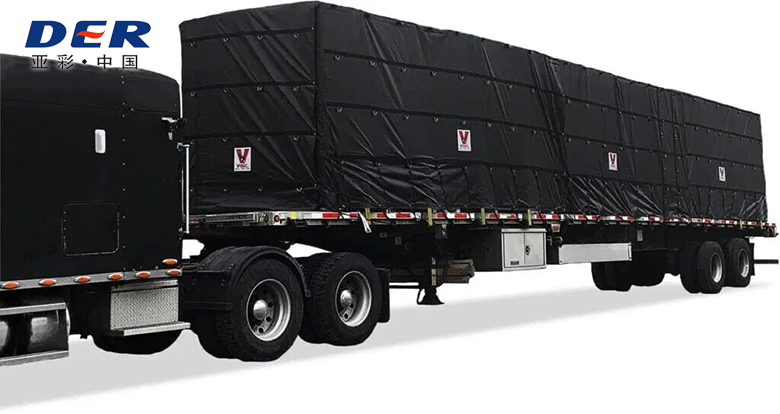
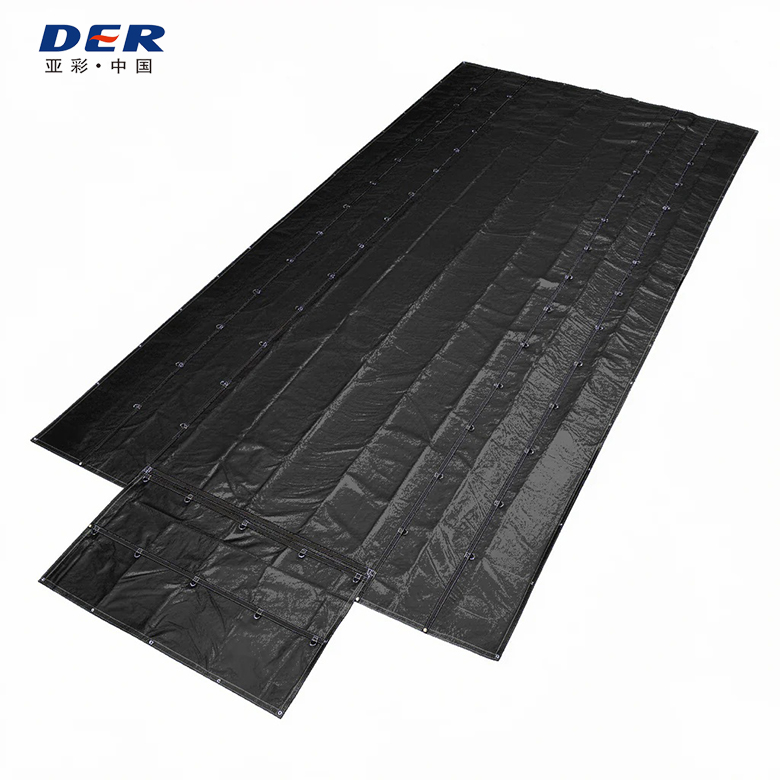
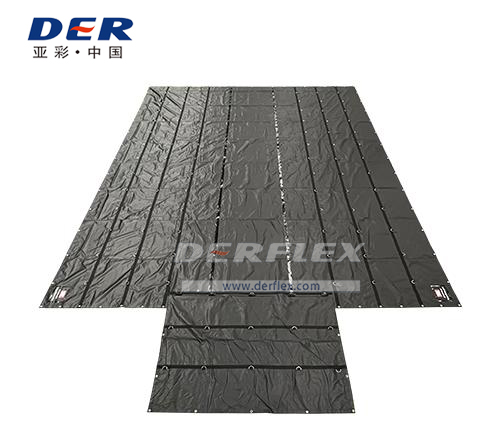
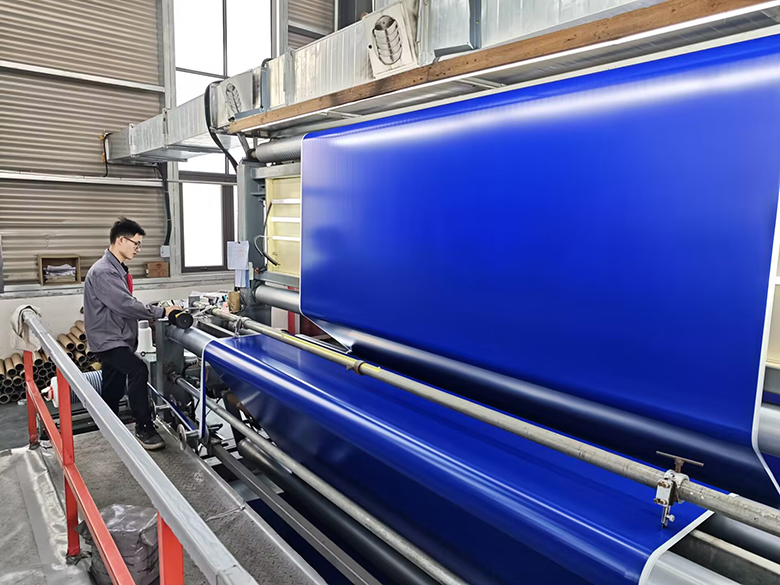
Truck Tarp Product, Application & Manufacturing Images
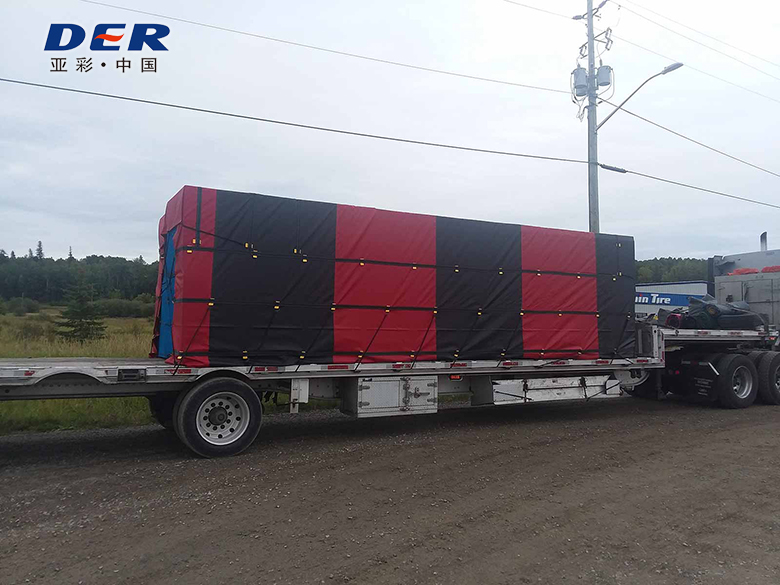
Real DERFLEX-hosted images for the article hero, product-detail context, installed flatbed use and manufacturing support.
What Buyers Should Specify When Finished Tarp Weight Matters
A quotation based only on “18 oz truck tarp” leaves too many variables undefined. If driver handling, freight cost or storage-box space is important, include a finished-weight target in the project brief.
For truck tarp converters
Specify roll weight, usable width, panel map and expected finished configuration. Wide-width planning can reduce seams, but the most efficient layout depends on fabric construction, machinery and required finished weight.
For fleets and private-label buyers
Send an existing tarp, drawing or finished-weight target. DERFLEX can discuss material, reinforced zones, D-ring rows, custom color, logo and packing around the use case.
Start with DERFLEX's truck tarpaulin specification overview or review the lumber tarp product structure for deep-drop flatbed coverage.
Truck Tarp Weight FAQ
Direct answers to the questions drivers, fleet buyers, distributors and tarp manufacturers ask when comparing truck tarp weight.
How much does a 24 × 27 ft lumber tarp weigh?
Current 18 oz PVC-coated vinyl market examples for 24 × 27 ft full-drop lumber tarps are roughly 115–121 lb. A weight-reduced design can be lighter, but the exact result depends on flap area, side-panel material, D-rings, webbing and reinforcement.
How much does a 16 × 27 ft steel tarp weigh?
Current 18 oz finished steel tarp examples in the 16 × 27 ft class are roughly 66–78 lb. The base rectangular 18 oz fabric alone is about 54 lb, with the rest coming from flap material, reinforced hems, webbing, D-rings, grommets and construction differences.
What does 18 oz mean on a truck tarp?
It normally means 18 ounces per square yard of finished fabric, not 18 pounds total. Eighteen ounces per square yard is approximately 610 GSM.
Is a 22 oz truck tarp too heavy for daily use?
It can be appropriate for high-abrasion work, but the handling penalty grows with tarp area. For the same area, 22 oz material is about 22% heavier than 18 oz material before hardware. Large manual tarps should be evaluated for section size, storage and deployment frequency.
How do I calculate truck tarp weight?
For a rectangular tarp, multiply length in feet by width in feet by fabric oz/yd2, then divide by 144 to estimate base fabric pounds. Add flap area, webbing, D-rings, grommets, patches and other finished components for a realistic total.
Why is my finished tarp heavier than the fabric calculation?
The nominal fabric calculation does not include end flaps, smoke flaps, double hems, sewn webbing, D-rings, grommets, rope, wear pads, reinforcement strips, overlap seams or other hardware. Large lumber tarps can add substantial finished weight through these components.
Can a lighter truck tarp still be durable?
Yes, when the full structure is engineered correctly. A lighter construction can use stronger base yarns, targeted wear patches and reinforcement only where needed. Durability should be checked through the complete fabric, seam, reinforcement and hardware design rather than ounce weight alone.
What information should I send DERFLEX if I need a lighter custom truck tarp?
Send finished dimensions, truck and cargo type, existing tarp weight if available, target maximum handling weight, fabric direction, flap/drop geometry, D-ring and grommet layout, wear zones, climate, quantity and destination. A drawing, sample or current product photo helps reduce assumptions.
Need a Truck Tarp with a Specific Handling Weight?
Send DERFLEX the tarp size, drop, flap, material target, hardware plan, existing finished weight and the maximum weight your crew wants to handle. We can review a practical PVC-coated polyester or weight-reduced construction direction before sampling.