


How to Compare Tarpaulin Suppliers: 20-Point Factory Evaluation Checklist
Compare tarpaulin manufacturers on the same specification, the same evidence standard and the same commercial assumptions. This 100-point scorecard helps importers, distributors, OEM brands and industrial procurement teams separate a convincing quotation from a supply system that can actually reproduce the approved tarp.
What is the fairest way to compare tarpaulin suppliers?
The fairest comparison is a controlled, evidence-based RFQ comparison. Give every supplier the same application, material direction, finished dimensions, performance requirements, fabrication details, packaging, quantity, destination and inspection expectations. Then score the response against objective evidence instead of sales language.
A low quotation is not directly comparable when one supplier assumes laminated material, another assumes knife-coated material, one quotes cut size while another quotes finished size, or test values use different methods. Normalize those assumptions first.
Designed for side-by-side supplier selection
This page is intentionally different from a factory audit. An audit asks whether one factory's controls work. A supplier comparison asks which candidate provides the clearest technical basis, strongest evidence chain and most manageable commercial risk for the same buying program.
Normalize the RFQ so every supplier is quoting the same tarp
Supplier comparison fails when the inputs are not controlled. Use one master RFQ and one revision number for every candidate. If a supplier proposes an alternative construction, keep it as a clearly labeled alternate—not as a silent substitution.

Six issues to resolve before a supplier stays on the shortlist
A weighted score should not hide a critical compliance or traceability gap. The following items are suggested procurement gates: resolve them before awarding a bulk order, even if the supplier's total score is otherwise high.
20-Point Tarpaulin Supplier Comparison Scorecard
Score each supplier from 0 to 5 using the evidence scale below. The suggested weights total 100 points. Adjust the weights internally when your application has unusual safety, compliance, lead-time or service risks.
Enter up to three supplier names
Scores are calculated in your browser. No form submission is required.
| # | Evaluation criterion | What to verify | Evidence to request | Weight | Supplier A | Supplier B | Supplier C |
|---|---|---|---|---|---|---|---|
| A. Factory identity & manufacturing control · 20 points | |||||||
| 01 | Legal entity & site identity | Contract, factory address, export/payment entity and responsible production site are consistent or clearly explained. | Business registration, factory address evidence, invoice/export entity explanation, live site verification where appropriate. | 4 | |||
| 02 | In-house vs. subcontracted processes | Which stages are controlled directly: base fabric, PVC film, coating/lamination, cutting, welding, sewing, eyeleting, printing and packing. | Process map, responsibility matrix, subcontractor disclosure and approval controls. | 4 | |||
| 03 | Equipment & route fit | The demonstrated equipment can produce the quoted material width, coating/lamination route and finished-tarp construction. | Factory tour, equipment list, current production examples and product-specific process explanation. | 4 | |||
| 04 | Capacity evidence | Available capacity is realistic for the required quantity and delivery window, including peak-season load and finishing bottlenecks. | Production plan, schedule assumptions, recent order evidence, maintenance and bottleneck discussion. | 4 | |||
| 05 | Continuity & dependency risk | Critical raw materials, equipment and outsourced stages have a practical continuity plan. | Backup-source approach, critical spares, alternate route, risk register or documented recovery process. | 4 | |||
| B. Material & technical specification · 25 points | |||||||
| 06 | Material construction clarity | Base fabric, denier/weave, coating or lamination route, nominal GSM, surface finish and functional treatments are clearly defined. | Product-specific TDS, construction description, sample code and revision-controlled specification. | 6 | |||
| 07 | Dimensions & tolerances | GSM, thickness, width, roll length, finished size and acceptable production tolerances are measurable and contractually aligned. | Tolerance table, sample measurements, inspection method and cut-size vs. finished-size definition. | 5 | |||
| 08 | Mechanical & functional evidence | Relevant tensile, tear, adhesion, waterproof, cold-flex, UV or other values are tied to a test method and the quoted product. | Raw or summarized test data with method, specimen direction, sample identity and date where relevant. | 5 | |||
| 09 | Environment & compliance fit | Outdoor exposure, temperature, abrasion, mildew, chemical contact, flame-retardant direction or tender requirements are handled explicitly. | Applicable product evidence, required standard mapping and third-party test plan if external verification is needed. | 4 | |||
| 10 | Conversion & fabrication compatibility | The material is suitable for the intended welding, sewing, printing, folding, hardware or local conversion process. | Trial-weld/sample data, fabrication recommendation, seam examples and converter feedback where available. | 5 | |||
| C. Quality system, sampling & traceability · 25 points | |||||||
| 11 | Incoming material control | Polyester base fabric, PVC inputs, pigments, hardware, webbing and other critical materials are identified, inspected and status-controlled. | Incoming inspection record, lot labels, approved-supplier list and rejected-material handling. | 4 | |||
| 12 | Process parameter control | Relevant line settings and in-process checkpoints are defined, recorded and linked to reaction plans when results drift. | Production traveler, batch record, process window, inspection frequency and nonconformance reaction plan. | 5 | |||
| 13 | Testing & calibration control | The supplier can explain which properties are tested in-house, which are outsourced and how measurement equipment is kept suitable. | Equipment list, calibration status, test method control, external laboratory route and witnessed demonstration when needed. | 4 | |||
| 14 | Sample-to-bulk lock | The approved sample becomes a controlled reference for bulk production rather than an informal visual example. | Golden sample, sample code, approved drawing, color reference, approval record and defined bulk acceptance criteria. | 4 | |||
| 15 | Traceability, CAPA & change control | A finished roll or tarp can be traced to production and inspection records; complaints and material/process changes are formally controlled. | Backward/forward trace sample, retained sample policy, corrective-action record and buyer change-approval rule. | 8 | |||
| D. Finished tarp, commercial terms & long-term supply · 30 points | |||||||
| 16 | Finished-tarp engineering | Seams, hems, webbing, rope edge, corner patches, grommets, D-rings, straps and high-stress zones are specified for the actual use. | Approved drawing, first-piece inspection, seam/weld detail, reinforcement layout and hardware specification. | 6 | |||
| 17 | Packaging, labels & export documents | Packaging protects the product and preserves item, quantity, batch and handling identity through warehouse and shipment. | Packing mock-up, label/artwork approval, pallet or roll plan, shipping marks and document list. | 5 | |||
| 18 | Quotation scope & total cost clarity | Material, finishing, packaging, tooling, sample charges, Incoterm, freight assumptions and exclusions are explicit enough for like-for-like comparison. | Itemized quote, Incoterm, validity, payment terms, packaging basis and clearly stated exclusions. | 6 | |||
| 19 | Lead time, replenishment & repeat-order control | Sampling, material preparation, production, inspection, packing and shipping time are separated; repeat orders reference the approved specification. | Milestone schedule, peak-season assumptions, reorder identifier, retained reference and revision history. | 7 | |||
| 20 | Communication, claims & after-sales response | Technical questions are answered with evidence, changes are documented and claim handling is based on batch records, photos, measurements and root-cause review. | Named project owner, response workflow, complaint/CAPA example, escalation path and agreed claim information requirements. | 6 | |||
Suggested scoring bands on this page are an internal procurement aid, not an industry certification. A high total should not override a failed mandatory safety, tender, legal or product-compliance requirement.
Score the proof, not the promise
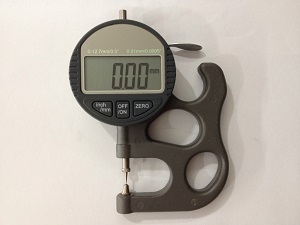
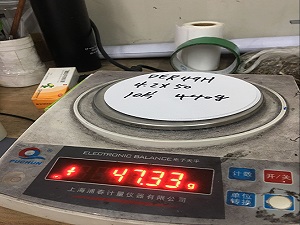
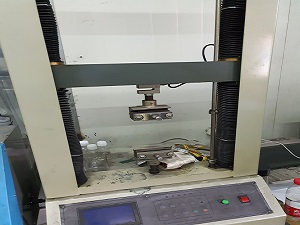
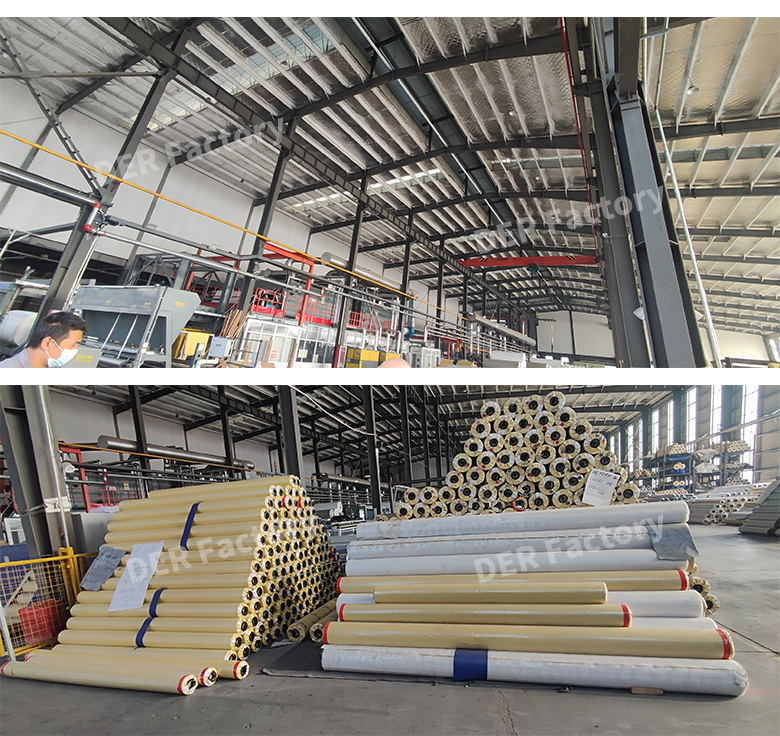
Use one evidence scale across all suppliers. A supplier should receive more credit when the evidence is product-specific, traceable and verifiable rather than generic.
The weighting should change with the buying program
The same supplier can be suitable for one program and a poor fit for another. Reweight criteria before RFQ release, not after you see the quotations.
Importer / Distributor
Increase weight on repeat shade, SKU control, packaging, labeling, container efficiency, replenishment and claim response.
Tarp Converter
Increase weight on roll width, winding, coating consistency, weldability, surface quality, defect mapping and conversion yield.
OEM / Private Label
Increase weight on change control, golden sample, artwork approval, color control, packaging and repeat-order specification.
Industrial Project / Tender
Increase weight on named test methods, compliance evidence, inspection plan, documentation, traceability and delivery milestones.
Compare like with like—or document why you are not
A stock seller, trading company, finished-tarp fabricator and coated-fabric manufacturer may all be legitimate suppliers, but they control different parts of the result. The procurement question is not “Which label sounds better?” It is “Which operating model controls the risks in this order?”
| Supply model | Usually strongest at | What to verify | Typical fit |
|---|---|---|---|
| Stock-oriented seller | Immediate availability, standard sizes and simple replacement purchasing. | Actual product spec, finished size, stock consistency, return terms and delivery availability. | Urgent, small-volume or standard-size needs. |
| Trading / sourcing company | Factory network, consolidation and broader category coverage. | Which factory makes your order, how subcontractors are approved, and who owns quality responsibility. | Multi-category sourcing where supplier management is strong. |
| Finished-tarp fabricator | Cutting, welding/sewing, hems, hardware, custom shapes and local project adaptation. | Base-fabric source, drawing control, fabrication tolerances and sample-to-bulk process. | Custom covers and complex finished assemblies. |
| Coated-fabric manufacturer | Material structure, roll consistency, surface, coating route, width and technical data. | Downstream finishing scope and whether finished tarp fabrication is in-house or outsourced. | Converters, roll buyers and specification-driven material programs. |
| Integrated manufacturing supply | Coordinating material, conversion, quality evidence, packaging and repeat programs. | Do not assume integration—verify which critical operations are actually controlled for your product. | Bulk OEM, distributor and recurring industrial programs. |
What should every supplier receive before quoting?
At minimum, give each candidate the same controlled buying brief:
- End use, installation method, handling cycle and service environment.
- Roll goods, cut panels or finished cover; finished dimensions and tolerance expectation.
- Material direction, target GSM/thickness, reference sample or performance target.
- Relevant tensile, tear, waterproof, UV, cold-flex, flame-retardant or other requirements.
- Seam, hem, webbing, grommet, D-ring, pocket, strap and reinforcement details.
- Color, logo, labels, private-label packaging and artwork requirements.
- Sample quantity, bulk quantity, forecast, destination and required delivery window.
- Inspection plan, third-party verification or tender documentation required before shipment.
What must be normalized before you compare price?
Check that the quoted scope uses the same commercial and technical basis:
- Same material construction—not only the same nominal GSM.
- Same finished-size definition, tolerance and seam allowance.
- Same hardware material, spacing and reinforcement.
- Same testing and documentation scope.
- Same packaging, labels and pallet/roll protection.
- Same Incoterm, freight basis, destination and quote validity.
- Same tooling, sample, inspection and third-party test assumptions.
- Same definition of defects, rework, replacement and claim evidence.
A good supplier comparison follows one line from RFQ to shipment
The most useful question is not “Can you make this?” but “Show how this exact requirement becomes a controlled production and release record.”
RFQ → Quote → Sample → Master Spec → Production → Inspection → Shipment → Reorder
Each step should reference the same product identity or an approved revision. If the description changes between documents, stop and reconcile the difference before treating the price or performance data as comparable.
For a deeper single-factory review, use DERFLEX's tarpaulin factory audit checklist for importers. To review how a manufacturer can be scored before a full audit, see the tarp manufacturer evaluation scorecard.
Use the same checklist to evaluate DERFLEX
DERFLEX publishes separate resources for manufacturing scope, plant visibility and quality control so procurement teams can review the supply system rather than rely only on a product claim.
Manufacturing scope
Review DERFLEX's tarpaulin manufacturing capability and decide which operations matter for your program.
Supplier program
Use the B2B tarpaulin supplier page for bulk, OEM and repeat-order sourcing context.
Quality evidence
Review the published DERFLEX quality control workflow, then request product-specific evidence for your order.
Factory visibility
Use the DERFLEX factory tour as a starting point, then verify the route relevant to the quoted tarp.
Send DERFLEX the same specification you are sending other suppliers
Side-by-side comparison works best when every candidate receives the same information. DERFLEX can review your tarp application, material direction, finished construction and documentation requirements against one controlled RFQ.
- Application and operating environment
- Finished size or roll specification
- Target material, GSM or reference sample
- Performance and required test methods
- Seams, reinforcement and hardware
- Color, branding and packaging
- Quantity, forecast and delivery destination
- Inspection and documentation requirements
Get a comparable quotation
Include your current specification, incumbent sample or supplier comparison sheet if available. The objective is to quote the same scope—not simply to return a lower headline number.
Questions buyers ask when comparing tarp suppliers
Use the answers as a procurement starting point, then adapt the checklist to your product, destination market and contract requirements.
What should I compare first when choosing a tarpaulin supplier?
Compare the manufacturing scope and product specification first. Make sure every supplier is quoting the same material construction, finished dimensions, reinforcement, hardware, testing and packaging before you compare price.
How can I tell whether a tarp supplier is a real manufacturer?
Verify the legal entity and production address, map which operations are performed in-house, review the equipment used for your product, and ask for traceable production and inspection evidence. A company name or factory photo alone does not prove control of the quoted process.
Should the lowest tarpaulin price win the order?
Not automatically. The lowest price is meaningful only when specification, tolerance, testing, packaging, Incoterm and service assumptions are equivalent. A lower quote based on a lighter construction or narrower quality scope is not a like-for-like comparison.
What documents should I request from a PVC tarpaulin supplier?
Useful documents can include a product-specific specification, drawing, tolerance table, sample approval, relevant test data, inspection criteria, packing specification and order traceability references. Required compliance documents depend on the application and destination.
How many suppliers should I compare?
For many B2B sourcing projects, comparing a small number of qualified candidates is more useful than collecting many shallow quotations. This scorecard supports three side-by-side suppliers, but procurement teams can duplicate the method for additional candidates.
How do I prevent sample quality from changing in mass production?
Convert the approved sample into a master specification: record material identity, color, dimensions, tolerances, fabrication, hardware, test requirements, packaging and revision status. Define what requires buyer approval before any later change.
Is a factory audit the same as a supplier comparison?
No. A supplier comparison evaluates several candidates against the same buying criteria. A factory audit goes deeper into one supplier's production, testing, traceability and quality system. Use comparison for shortlisting and audit depth according to project risk.
Procurement note: weighting, score bands and evidence expectations should be adapted to the actual application, contract, safety requirements and destination-market rules.