


How to Keep a Tarp from Scratching Painted Equipment
Protect the finish as carefully as the equipment. A waterproof tarp blocks rain, but paint protection depends on a clean contact layer, controlled movement and hardware kept clear of painted panels.
For machinery manufacturers, export packers and fleet maintenance teams, this guide explains how to reduce tarp abrasion during storage, handling and transport. DERFLEX supports custom PVC cover specifications, reinforcement and fastening layouts; any proposed liner must be checked against your actual paint system.
Discuss Your Equipment CoverView Installation Steps
The quick answer
To keep a tarp from scratching painted equipment, clean and dry both surfaces, confirm the paint is fully cured, separate the tarp from the finish with a compatible soft liner or supported air gap, keep seams and hardware away from paint, and secure the cover so it cannot flap or slide. Lift the cover during removal and inspect contact areas after initial use and exposure to wind or rain.
Why does a protective tarp leave scratches?
Scratching usually develops where contact, pressure and relative movement occur together. A small amount of sand beneath a cover can become abrasive as wind or vibration moves the fabric. A heavier tarp may resist tearing while still rubbing the finish underneath.
Grit at the interface
Dust, metal chips and dried mud can embed in a liner or settle on a panel. Even soft fabric becomes a risk when contaminated.
Repeated movement
Loose panels, transport vibration and frequent dragging during removal concentrate rubbing at corners, ridges and protrusions.
Hard or incompatible contact
Eyelets, buckles, seam ridges and stiff folds can mark paint. Moisture, dye transfer or material migration may also cause finish damage without a visible scratch.
Use industrial tarp guidance to define the outer protection duty, then assess the paint-contact interface separately.
What should go between a tarp and painted equipment?
A clean, compatible soft liner can reduce abrasive contact. For sensitive finishes or extended storage, a supported cover that does not touch the paint may be preferable. No material name alone establishes suitability: test the actual liner, coating and exposure together.
| Contact option | Where to consider it | What to verify |
|---|---|---|
| Removable soft liner | Repeated access with a separately cleanable contact layer | Fiber softness, lint, trapped grit, drying, secure positioning and replacement access |
| Integrated soft-backed cover | Repeated installation where loose liners are difficult to control | Liner availability, seam placement, attachment method, wet performance and coating compatibility |
| Local padded protection | Handles, corners, hinges and small contact zones | Pad retention, pressure distribution and whether surrounding fabric can still touch paint |
| Supported stand-off cover | High-value finishes or prolonged outdoor storage | Stable support, drainage, wind clearance, non-marring support contact and ventilation |
| Bare PVC or PE tarp | Weather barrier above an independently protected asset | Avoid assuming bare coated fabric is suitable for direct rubbing against painted panels |
For the weather shell, compare PVC tarp material and construction. Waterproof PVC is generally not breathable; a soft backing does not make the assembled cover breathable.
Paint-contact risk matrix
Use the equipment’s operating conditions to select the cover architecture. These are design directions, not pre-approved material specifications.
| Equipment situation | Main exposure | Design direction | Release check |
|---|---|---|---|
| Painted machinery stored indoors | Dust and installation abrasion | Clean, lightweight contact layer; easy lifting; protected seams | Inspect representative corners and panels after a trial fit |
| Generator or machine in an outdoor yard | Wind movement, rain and condensation | Weather shell with drainage and protected ventilation; stand-off or validated liner | Check for flapping, dampness and pad movement after weather exposure |
| New equipment shipped on a flatbed | Sustained airflow, vibration and road contamination | Fitted cover, protected contact zones and route-specific fastening review | Trial fit plus representative transport evaluation |
| High-gloss or freshly refinished equipment | Marking, imprinting and material compatibility | Confirm cure requirements; consider avoiding paint contact entirely | Coating supplier approval and representative panel assessment |
| Equipment uncovered every day | Repeated handling and dirty-side transfer | Orientation labels, lift points and replaceable contact protection | Observe the complete installation and removal cycle |
For transport applications, review truck tarpaulin requirements. An equipment cover does not replace the required load restraint system.
Six steps to reduce scratches and scuffs
Confirm cure and cool-down
Check the coating supplier’s cure and contact restrictions. Allow hot equipment to cool before covering; keep covers away from exhausts and operating parts.
Clean both contact surfaces
Remove loose grit with a finish-appropriate cleaning method. Avoid rubbing dirt across paint. Dry the equipment and check the tarp underside, liner and pads.
Map and isolate contact zones
Identify roof ridges, doors, corners and protrusions. Add validated soft protection or clearance. Position eyelets, hooks, buckles and seam ridges away from painted panels.
Lower the cover into position
Use sufficient people or suitable handling aids to lift it. Do not drag a large tarp over the finish. Keep the clean inner face off the ground.
Secure without concentrating pressure
Use approved anchor locations and distribute tension. Remove excess flapping without pulling hard against vulnerable corners. Route straps clear of paint and secure loose ends.
Inspect, then lift to remove
Check the first installation and after changing weather or transport conditions. Stop and correct any rubbing, trapped water or pad migration. Release fixings before lifting the cover away.
Maintain separate clean-side and dirty-side handling. Follow the tarp cleaning and storage guide between uses, including liner care appropriate to its material.
Specify a cover around the contact map
A fitted cover should follow the equipment envelope while allowing installation clearance and protected ventilation. Oversizing creates loose fabric; excessive tension increases pressure at corners.
Keep durability and paint safety separate
An external wear patch protects the tarp from a protrusion. It does not necessarily protect the paint beneath it, and extra layers can create a stiff ridge. Specify outer reinforcement and inner contact protection as different features.
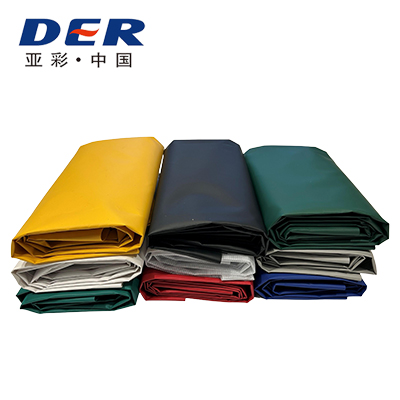
Made-to-measure tarpaulin development can start with your dimensions, drawings and access requirements.
| Specification item | Information to agree before production |
|---|---|
| Outer fabric | PVC coated construction, weight, thickness, color and exposure requirements; final grade confirmed by DERFLEX |
| Contact layer | Exact material, thickness or construction, attachment and cleaning method; availability and paint compatibility subject to project review |
| Geometry | Finished dimensions, orientation, protrusions, installation clearance and access openings |
| Seams and hardware | Weld or seam layout, reinforcement, fixing coordinates and prohibited contact zones |
| Moisture management | Drainage slope, protected ventilation and inspection access; avoid water pockets and saturated pads |
| Acceptance | Approved sample, fit check, finish assessment and agreed inspection conditions |
Test the complete system on the actual finish
Start with a representative painted coupon or spare panel, rather than experimenting on a sale-ready machine. Use the same coating system and cure condition as the equipment. Agree test conditions with the coating supplier and cover supplier before approving bulk orders.
Contact compatibility
Assess the proposed interface under representative pressure, temperature, humidity and contact duration. Check for gloss change, imprinting, discoloration, tack and residue.
Movement and fit
Evaluate rubbing at corners and seams, liner retention, strap routing and hardware clearance. Include removal and reinstallation in the assessment.
Weather and maintenance
Check drainage, drying, condensation and cleaning effects. Define rejection criteria and inspection intervals from the application risk.
What to send for a custom equipment cover quotation
DERFLEX’s custom tarp manufacturing options include finished size, color, PVC fabric selection, reinforced edges and fastening details. Ask for project review of the paint-contact layer rather than assuming a standard tarp has a soft backing.
MOQ, sample arrangements, liner supply, lead time and price depend on the agreed construction and order. Confirm these with DERFLEX before purchasing.
Your enquiry checklist
- Equipment dimensions, drawing and clear photos
- Paint type, cure status and sensitive contact zones
- Indoor storage, outdoor storage or transport route
- Expected duration and cover removal frequency
- Anchor points, hardware restrictions and ventilation needs
- Quantity, destination and required delivery schedule
- Sample, fit trial and finish acceptance requirements
Frequently asked questions
Can a tarp scratch painted equipment?
Yes. Grit trapped underneath, repeated cover movement, hard seams and exposed hardware can scratch or scuff paint. A clean, compatible contact layer and a stable fit reduce the risk; waterproof fabric alone does not establish paint safety.
What should I put between a tarp and paint?
Use a clean, soft, non-abrasive liner validated for the actual coating and exposure. For sensitive finishes, consider a supported cover that avoids contact. Check for trapped grit, moisture, dye transfer and migration before extended use.
Is a heavier PVC tarp safer for painted machinery?
Not automatically. Fabric weight affects handling and cover durability, but paint protection depends on contact material, cleanliness, pressure and movement. Select the weather shell separately from the paint-contact layer.
Can I use a moving blanket under an outdoor tarp?
Only after checking its cleanliness and compatibility. Moving blankets may contain coarse fibers, stitching or debris and may retain water. They are not a default solution for prolonged outdoor contact with a sensitive finish.
How long should fresh paint cure before covering?
Follow the coating manufacturer’s instructions for the specific coating, application conditions and contact pressure. Dry-to-touch is not the same as fully cured. There is no universal waiting period suitable for every painted equipment surface.
What information does DERFLEX need for a custom equipment cover?
Provide equipment dimensions and photos, painted contact zones, coating and cure information, storage or transport conditions, removal frequency, anchor locations, quantity and destination. Request a material sample and trial fit; liner availability and compatibility must be confirmed for the project.
Show us the equipment. Identify the finish that needs protection.
Send dimensions, photos and exposure conditions. Ask DERFLEX to review the outer fabric, custom fit, reinforcement and fastening layout, together with your paint-contact requirements.
Request a Custom Cover QuoteInclude “painted equipment cover” in your enquiry and identify any fresh, high-gloss or sensitive coating.