


 Industrial cover care · Chemical exposure qualification
Industrial Cover Cleaning & Degreaser Compatibility
An industrial cover that tolerates grease is not automatically compatible with the cleaner used to remove it. Specify the contamination and the cleaning chemistry separately, then evaluate the actual dilution, temperature, dwell, wiping or spray method and repeated cycle. For mining and oilfield equipment covers, OEM machinery shrouds and flexible industrial curtains, DERFLEX can discuss coated-fabric and fabricated-panel options against your defined cleaning duty.

Oil resistance and degreaser compatibility are different decisions.
A service contaminant may stay on a machine cover for hours; a concentrated cleaner may contact that same cover only briefly but be chemically more aggressive. Neither exposure can be reduced to a generic “oil resistant” or “washable PVC” label.
Direct answer: PVC cover cleaning compatibility is established for a specified fabric construction and finished component under a named cleaner, use concentration, temperature, dwell time, mechanical action and cleaning frequency. An oil-contact claim alone is not evidence of safe repeated degreasing.
Contamination on the cover
Identify hydraulic oil, lubricating grease, metalworking fluid, diesel residue, dirt or mixed soil. Record whether the residue is a mist, splash, smear, drip or pooled deposit—and how long it remains before cleaning.
Explore the exposure-specific material discussion in oil resistant tarp selection.
Chemicals applied to remove it
Identify the actual trade-name degreaser, concentrate and diluted working mixture. Include surfactants, alkalinity or acidity, any solvents, temperature, brush force, spray settings, rinse method and the residue left behind.
For wider chemical-contact decisions, consult chemical resistant tarp requirements.
Start with the cleaner SDS—not a generic “degreaser safe” claim.
Cleaning-product labels may group substantially different formulations under the word degreaser. Request the SDS and technical directions, then confirm the working mixture with its supplier. An SDS helps identify hazards and constituents but is not, by itself, an approval for PVC coated textiles.
Screening directions only—these categories do not certify a formulation or replace grade-specific testing.
| Cleaner approach | Initial material concern | What to confirm before approval |
|---|---|---|
| Water and mild compatible detergent | Residue, finish appearance, trapped moisture at seams | Supplier care guidance, dilution, gentle agitation, complete rinsing and drying |
| Water-based alkaline degreaser | High pH exposure, detergent additives, warm wash, repeated surface attack | pH and formulation, working concentration, peak temperature, dwell and cycles |
| Solvent-containing cleaner | Softening, tack, swelling, print or lacquer damage; risk depends on the blend | Full formulation review and separate compatibility evidence; do not assume approval for standard PVC |
| Acidic cleaner or descaler | Contact-side chemistry, color/finish change, joints and exposed fittings | Actual acid, concentration, temperature, application and rinse conditions |
| Disinfectant or combined wash | Oxidizers or other active ingredients, contact time and repeated-use effects | Exact product, active ingredients, dwell and material-specific acceptance |
Handling boundary: Do not mix different cleaners or improvise dilution. Follow the cleaner supplier’s instructions, site chemical-safety procedures, required protective equipment and wastewater controls. A material-compatibility review does not assess worker exposure or approve a cleaning operation.
Define dilution, contact temperature, dwell time and cleaning force.
Two facilities using the same cleaner can create different exposures. Capture both the normal cleaning procedure and the foreseeable upper limit—not just the bottle label or wash-bay setpoint.
| Field to specify | Record in the working instruction | Why it matters |
|---|---|---|
| Cleaner identity and revision | Brand, exact product, SDS date and any supplier formulation reference | Brand families can contain chemically different products. |
| Working concentration | Concentrate-to-water ratio, mixing method and maximum permitted strength | The concentrate, spray mix and rinse carry different exposure levels. |
| Maximum contact temperature | Actual liquid-at-surface temperature in °C, not just room temperature | Hot water can amplify coating or accessory sensitivity. |
| Dwell and reapplication | Time wet on the cover before wiping/rinsing; number of applications per event | Chemicals can concentrate as liquid evaporates or pools in folds. |
| Method and force | Soft cloth, brush type, spray distance/pressure, nozzle and abrasion exposure | Mechanical cleaning can strip a finish even if the fluid itself is compatible. |
| Rinse, dry and frequency | Water quality, rinse completeness, drying practice, washes per week and expected service period | Residual cleaner and repeated cycles may cause delayed change. |
If the liquid sits in a seam pocket, zipper tape or folded edge, include a separate retained-residue condition in the evaluation.
A clean-looking fabric swatch does not approve the completed cover.
Machine covers, equipment shrouds and curtains may contain several polymers, finishes and mechanical attachments. The test coupon must represent the weakest relevant detail, not only the main opaque sheet.
Coating, topcoat and scrim
Check finish loss, tack, whitening, cracking, mass or dimensional change, coating adhesion and flexibility. Inspect cut edges and exposed textile.
Clear windows and seams
Review clouding, haze, scratches, stress whitening and joint integrity. Never transfer opaque PVC approval automatically to a clear film.
Printed marks and labels
Check ink rub-off, legibility, edge lift, adhesive response and color change after the actual wipe or spray cycle.
Zippers, hook-and-loop and seals
Inspect zipper operation, teeth/tape condition, fastener engagement, gasket response and cleaner trapped in closures.
Welds, sewn seams and patches
Compare post-cleaning seam integrity, seam edge lift and any adhesive or repair patch changes; define acceptance methods.
Webbing, eyelets and elastic
Check corrosion, loss of elasticity, webbing stiffness and stress at reinforced holes after cleaning and refitting.
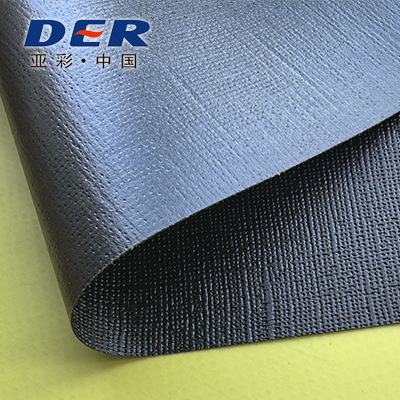
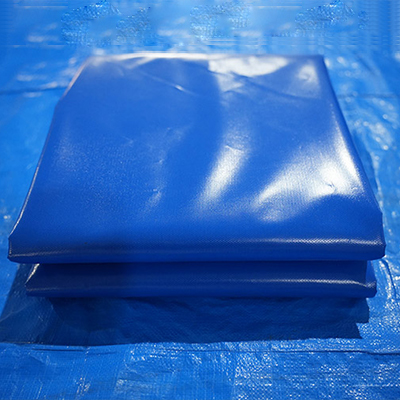
For a complete fabricated enclosure and closure layout, see custom machinery cover construction. Where the brief includes low-energy hydraulic-oil splash protection, review hydraulic-oil splash guard fabric as a distinct application.
Evaluate repeated cleaning on representative components—not just once on a flat coupon.
A coated fabric repeated cleaning test should reproduce the cleaning sequence in the relevant orientation, using identifiable control and exposed samples. The program below is a proposed qualification plan, not a report of testing performed or a universal standard method.
Apply service soil
Known contaminant / residue and time before cleaning.
Apply cleaner
Named mixture at recorded strength and surface temperature.
Clean & rinse
Dwell, spray/wipe force, rinse and recovery.
Dry & repeat
Document drying state and agree cycle count.
Inspect & compare
Control versus exposed components and function.
Identify what was tested.
Record fabric grade/revision, coating side, batch, window grade, welded or sewn details, ink, zipper, adhesive and actual sample geometry. Photograph each part before testing with consistent lighting and scale.
Represent cleaning practice.
Agree one or more cleaner mixtures and the maximum normal duty. Include the actual soil, temperature, dwell, application tools, rinsing, drying, cycles and any deliberately trapped liquid at closures.
Measure relevant changes.
Check appearance, tack, color or haze, dimensional stability, flexibility, coating adhesion, tensile/tear or seam strength where relevant, plus zipper operation and printed-label legibility. Use matching controls and documented methods.
Decide before seeing results.
Set acceptance limits and how pass/fail will be determined for each component. Record individual findings, deviations, sample IDs and the exact cleaner/grade combination approved. Failure of one functional item may require a change of component or cleaning method.
How this differs from immersion testing: ISO 6450:2021 describes liquid-effect exposure approaches for rubber- or plastics-coated fabrics. It does not by itself qualify repeated wiping, spray force, detergency, printed marks, zippers or a complete cover. A service-specific cycle plan should be identified as supplementary, with its own conditions and acceptance criteria. See coated fabric liquid-resistance testing and report interpretation.
Issue a care instruction that operators can follow and purchasing can audit.
A cleaning method is only approved for the material construction and duty covered by its evidence. Make the approved chemical and process revision part of the cover's OEM documentation, not an informal site habit.
What the instruction should state
- Cover model, material revision and approved exposed face.
- Cleaner brand/product, document revision and mixing method.
- Approved dilution window, maximum surface temperature and dwell time.
- Wipe or spray method, permitted tools, rinse and drying sequence.
- Cleaning frequency, inspection checkpoints and stop-use signs.
- Clear window, printing and closure exceptions; record and traceability.
What triggers a new review
- New cleaner, replacement brand or changed formulation.
- Higher concentration, temperature, dwell, spray energy or frequency.
- New coating/lacquer, clear-film grade, print ink or bonded patch.
- Changed wash equipment, drying procedure or rinse water.
- Observed coating tack, cracking, delamination, haze or closure malfunction.
- Change in residual oil, grease or cross-contamination.
If operators report increased residue, inspect and revise the entire process before increasing cleaner strength. For material-level formulation discussion, see chemical resistant PVC coated fabric specifications.
Specify the exposure, samples and acceptance evidence together.
DERFLEX can discuss coated textile rolls, cut panels and custom industrial cover configurations against an application-specific cleaning brief. A material quote is not automatically a completed cover, an installed cleaning system or a certified chemical-containment assembly.
Buyer information to prepare
- Cleaner SDS, technical sheet, supplier and product revision.
- Actual working dilution, maximum °C, dwell and cycles per shift or week.
- Wiping/brush/spray and rinse/dry process; photos of existing damage.
- Oil/grease contamination type and duration on the cover.
- Cover drawing, fabric sides, windows, printed areas, closure type and seam construction.
- Roll goods or finished panels, sizes, estimated quantity and destination.
- Required before/after photographs, tests, control samples and acceptance decision.
Record before production approval
Cleaner documentation: named product SDS, recommended application directions and relevant technical sheet.
Sample traceability: fabric/coating revision, window and closure grades, process and specimen IDs.
Comparison evidence: before/after photographs under consistent conditions and agreed property measurements, including limitations.
Decision: signed approval of the allowed cleaning recipe and the changes that will require requalification.
These documents describe a recommended approval package. No previously completed DERFLEX degreaser test or fixed performance result is claimed.
Industrial cover cleaning compatibility FAQ
Answers are material- and procedure-specific. Do not apply an unverified cleaner to production covers simply because it is sold for general industrial equipment.
Can I use a degreaser on a PVC coated machinery cover?
Only after the exact cleaner, working dilution, temperature, dwell time and cleaning method are checked against the selected cover construction. Start with the material supplier’s approved care instructions, then qualify unfamiliar products on representative coated-fabric and component samples.
Does an oil-resistant tarp resist every cleaning chemical?
No. Resistance to grease, hydraulic oil or lubricant residues does not prove tolerance of an alkaline degreaser, solvent blend, disinfectant or repeated hot washing. Contaminant exposure and cleaning exposure must be specified and evaluated separately.
What belongs in a repeated-cleaning compatibility test?
A representative test reproduces the soil, cleaner identity and batch, dilution, temperature, dwell, agitation or spray method, rinsing, drying and intended number of cycles. It compares exposed and control samples and checks the coating, window, printing, seams and closures using agreed acceptance criteria.
Can a clear PVC window use the same cleaner as an opaque tarp panel?
Not automatically. Clear-film formulation, optical clarity, stress whitening, haze and its welded or bonded joint need a separate review. Approval for an opaque coated-polyester body is not approval for a transparent window.
Which cleaning changes require requalification?
Recheck a different brand or formulation, new supplier grade, higher concentration, higher temperature, longer dwell, stronger brush or spray, new rinse procedure or increased cleaning frequency. Also review changes to coating, lacquer, print, adhesive, zipper, window film or seam method.
What should an OEM buyer send DERFLEX for a material review?
Send the cleaner SDS and product or technical sheet, actual dilution, maximum contact temperature, dwell time, wipe or spray method, cleaning schedule, oil or grease residue, cover drawing, component list, order quantity and desired acceptance evidence. Include before-and-after photographs if a field problem already exists.
Send the cleaner SDS, dilution, temperature and cleaning schedule.
Describe the oil or grease residue, the exact degreaser and how the cover is cleaned. DERFLEX can review material and component options and discuss a suitable sampling and acceptance plan before OEM production.
Include in your inquiry
- Named cleaning product and current SDS
- Working dilution and highest °C
- Dwell time, wipe/spray method and frequency
- Cover drawing and windows/closure details
- Sample and evidence expectations