Capture
Position the tarp beyond the visible drip area so spray, migrating water and intermittent leaks fall inside the catchment zone.



DERFLEX water diverter tarps are suspended catchment covers made to intercept overhead water and route it through a drain outlet and hose before it reaches machinery, inventory, work areas or finished interiors. Custom size, outlet location, suspension hardware and PVC coated fabric configurations are available for industrial leak diversion programs.
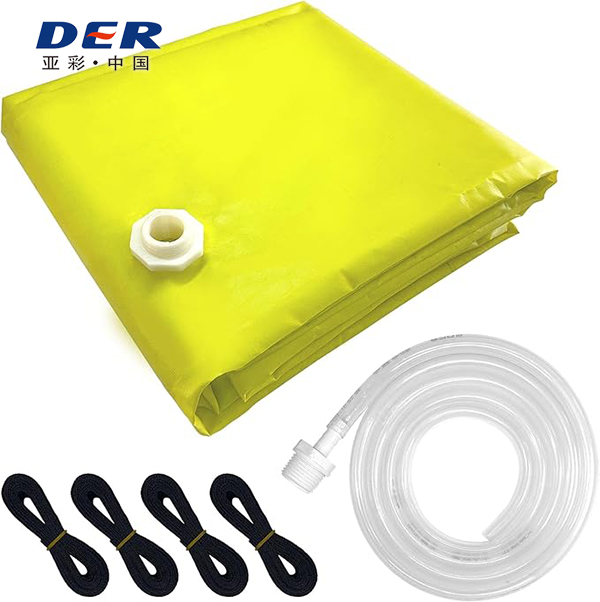
Product image: a leak diverter tarp system combines a waterproof catchment body, suspension points and a drain connection so water is redirected rather than allowed to pool above the work area.
A water diverter tarp is a waterproof suspended tarp with a low-point drain outlet. It catches water from a roof, ceiling, pipe or HVAC leak and channels that water through a hose to a drain or collection container. It is a temporary leak-management device, not a substitute for repairing the source of the leak.
The system works by turning an uncontrolled drip zone into a controlled drainage path. The tarp is suspended below the leak, shaped with positive slope toward an outlet, and connected to a hose that carries the water away from the protected area.
Position the tarp beyond the visible drip area so spray, migrating water and intermittent leaks fall inside the catchment zone.
Use multiple suspension points to create a stable funnel or trough profile rather than a flat sheet that can hold standing water.
Locate the drain fitting at the true low point. The outlet and hose route should match the expected water volume and available drainage path.
Inspect the hose, fittings, suspension and leak source during use. A diverter manages water temporarily while permanent repair is arranged.
Final construction should be confirmed against the building environment, leak location, expected water volume, available anchor points and required compliance documents. The reference values below reflect the type of configuration already presented on DERFLEX's existing leak diverter page.
| Item | Typical / Available Direction | Buyer Note |
|---|---|---|
| Material | PVC coated polyester tarpaulin | Selected for waterproof catchment, fabrication and repeated handling. |
| Reference Weight | 500–900 gsm on the current DERFLEX leak-diverter reference page | Confirm the finished specification for the intended size, suspension layout and service environment. |
| Drain Outlet | Custom outlet size and position; current reference page lists 1–2 inch options | Connection standard, hose ID and outlet geometry should be confirmed before production. |
| Suspension | D-rings, webbing and/or grommets | Spacing and reinforcement should follow tarp size, intended pitch and safe support points. |
| Seam Construction | Welded or sealed construction according to design | Seam design matters because water may migrate toward seams and outlet areas during use. |
| Size & Shape | Custom square, rectangular or project-specific geometry | Specify the leak footprint and surrounding clearance, not only the visible drip point. |
| Performance Options | Flame-retardant, anti-static, anti-mildew or other options by project requirement | Required standards and documentation must be confirmed before quotation and sampling. |
| Supply Format | Finished diverter tarps, OEM/custom projects, or related PVC tarp material | Useful for distributors, facility-safety suppliers, contractors and repeat industrial programs. |
The best configuration depends on where water appears, how wide the affected area is, how much clearance is available and where the collected water can be routed.
| Leak Scenario | Recommended Diverter Direction | Critical Design Point |
|---|---|---|
| Single roof drip / ceiling tile leak | Square or compact rectangular roof leak diverter tarp | Create a clear low point and keep the hose route free of kinks. |
| Wide roof seam or migrating ceiling leak | Larger rectangular catchment with multiple suspension points | Cover the full wet zone plus surrounding migration area; avoid a flat center. |
| Pipe, valve or HVAC condensate leak | Compact pipe leak diverter or narrow trough-style catchment | Fit within limited overhead clearance without interfering with pipe access. |
| Leak above machinery or production line | Custom industrial leak diversion tarp with reinforced hanging points | Route water away from electrical controls, moving equipment and personnel paths. |
| Warehouse rack / inventory protection | Wide catchment tarp positioned above the protected zone | Plan drainage so hose discharge cannot create a secondary floor hazard. |
| OEM / distributor program | Repeatable sizes, outlet fittings, labels and packaging | Freeze the specification after sampling so replacement and repeat orders remain consistent. |
A leak catcher can fail even when the fabric itself is waterproof. Poor pitch, weak suspension, a clogged fitting or a kinked hose can create pooling and transfer the problem elsewhere.
The outlet should sit at the lowest point created by the suspension geometry. Hose diameter, hose length, vertical drop, bends and debris all affect drainage. For uncertain or high-volume leaks, confirm the expected inflow and route before finalizing the outlet.
A water diverter tarp should form a predictable funnel or trough. The attachment layout has to support the tarp while maintaining enough slope for water to reach the drain.
Current market offerings use both reinforced polyethylene and vinyl/PVC-coated constructions. The right choice depends on target cost, reuse expectation, fabrication method, indoor requirements and OEM positioning.
| Decision Factor | PVC-Coated Polyester | Reinforced PE / Poly |
|---|---|---|
| Typical Positioning | Industrial, reusable, custom-fabricated diverter programs | Lightweight, economical emergency leak catchment |
| Fabrication | Well suited to welding, reinforcement and custom hardware integration | Often heat-sealed or fabricated as a lighter-duty construction |
| Handling | Generally heavier and more robust depending on specification | Generally lighter and easier to store in emergency kits |
| Customization | Strong fit for custom dimensions, outlet positions, color and OEM programs | Useful for standardized sizes and cost-sensitive programs |
| Buyer Question | Do I need repeated deployment, heavier reinforcement or custom fabrication? | Do I prioritize lightweight storage and lower unit cost? |
The common goal is the same: keep uncontrolled overhead water away from people, assets and operations while the leak source is investigated and repaired.
Redirect roof leaks away from racks, packaged inventory, pick areas and forklift traffic while roofing work is scheduled.
Protect machinery, work cells, tooling and production zones from roof, sprinkler-pipe or overhead utility leaks.
Use carefully planned diversion to keep water away from sensitive equipment while facility teams isolate hazards and arrange repair.
Manage ceiling leaks above finished interiors, walkways and occupied areas without relying on buckets directly under every drip.
Temporary ceiling leak containment can support maintenance response where dry floors and controlled drainage paths are important.
Compact leak diversion tarps can collect condensate, valve drips or pipe leaks in areas where full-size roof diverters do not fit.
Most problems are system-level problems rather than simply “bad tarp fabric.” These checks help buyers specify a more practical finished product.
Visible drips may move as wind, roof saturation or ceiling paths change. Size the capture area around the full wet zone rather than one drip point.
A flat tarp can accumulate water, increase load and distort the suspension. The geometry should move water to the outlet continuously.
An outlet is only useful if the hose has a clear route to a safe drain or container without kinks, uphill runs or trip hazards.
Large tarps create higher forces at hanging points. Reinforcement, hardware and spacing should be selected together.
Indoor fire-code requirements, anti-static needs, chemical exposure, cleaning and repeated deployment can change the material specification.
A leak diverter controls water after it enters the building. It does not fix the roof membrane, pipe, valve or HVAC source.
A clear inquiry makes it easier to recommend tarp dimensions, material weight, drain location, suspension details and packaging.
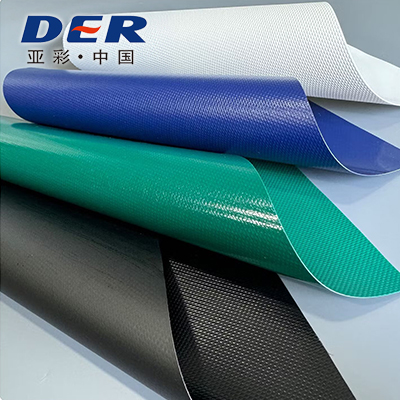
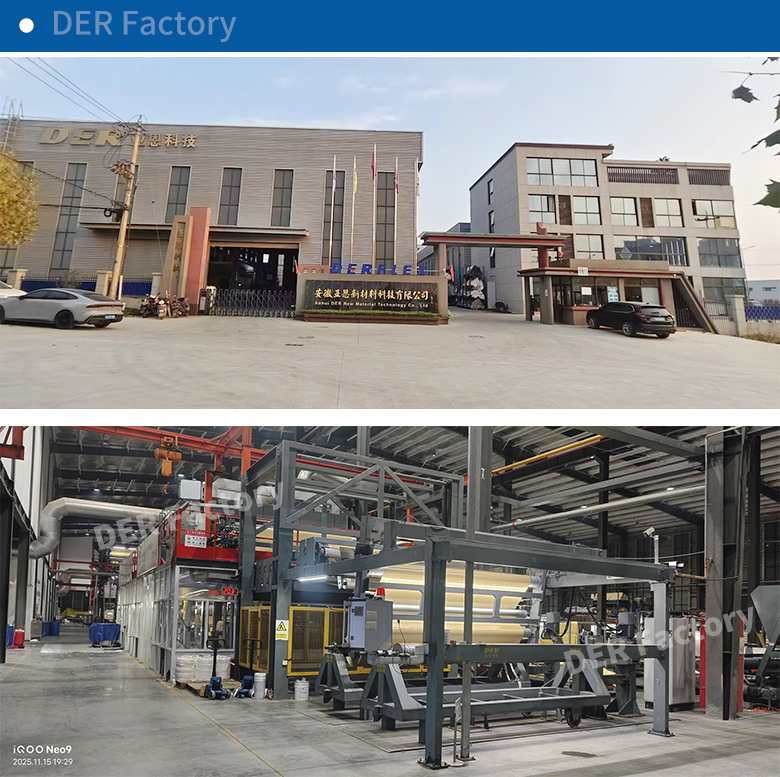
These are existing DERFLEX site images selected for product, material and manufacturing context. The hero image is not lazy-loaded; below-the-fold images are lazy-loaded.

These internal links connect water-diversion buyers with related tarp materials, custom fabrication and roof-protection guidance.
Direct answers to the questions facility managers, distributors, contractors and industrial buyers commonly ask before selecting a roof or ceiling leak diverter.
A water diverter tarp is a waterproof suspended catchment tarp with a drain fitting. It is hung below an overhead leak and shaped so water flows to the outlet, then through a hose to a safer drainage or collection point.
A roof leak diverter tarp is installed inside the building below the leak to catch and redirect water after it enters. An exterior roof tarp is placed over a damaged roof area to reduce water entry. The two products solve different parts of the same emergency.
Choose a catchment that covers the entire observed wet area and leaves practical margin for water migration. Also check ceiling clearance, suspension points and where the hose can drain. A custom size is useful when the leak is long, irregular or positioned above equipment.
No. The preferred design creates continuous slope toward the drain outlet so water is removed rather than stored in the tarp. Standing water increases load on the fabric, fittings and suspension points.
Yes. Compact or custom-shaped diverters can be used below leaking pipes, valves, HVAC condensate lines and other overhead sources, provided there is safe clearance and a controlled route for the drain hose.
PVC-coated polyester is a common choice because it provides a waterproof coated surface and can be fabricated with welded seams, reinforcement, grommets, webbing and drain fittings. The final material weight and functional options should be matched to the application.
Send the leak source, target tarp size, ceiling or suspension layout, outlet position, hose connection requirement, material or compliance needs, quantity, destination and any photos or drawings. This helps define a practical finished-tarp specification.
No. It is a temporary water-management measure that helps protect the area below a leak while permanent roof, pipe, valve or HVAC repair is investigated and completed.
Send DERFLEX the leak location, finished dimensions, preferred outlet position, suspension details, material requirements, quantity and destination. Photos or a simple site sketch can help clarify the catchment and drainage layout.