01
Coverage Geometry
Top width, load height, side drop, front overlap, rear flap and irregular projections must be translated into usable finished dimensions.




Custom PVC and mesh load tarps for flatbeds, trailers, lumber, steel, machinery, palletized freight and oversized cargo.
DERFLEX supports fleets, distributors, tarp fabricators, truck-body builders and private-label programs with roll materials, conversion-ready panels and finished load tarp assemblies. Each project can be specified by load shape, finished size, drop, flap, reinforcement, hardware layout and handling target.
Load tarps are flexible covers used over cargo carried on flatbed trucks, step decks, open trailers, utility vehicles and other exposed transport platforms. The term is broader than one product shape: a load tarp may be a short-drop steel tarp, a deep-drop lumber tarp, a machinery cover, a multi-piece oversized tarp, a flat sheet or a mesh cover for selected loose-load applications.
The practical job is to reduce cargo exposure to rain, road spray, dust, sunlight and wind-driven debris while keeping the cover manageable during deployment, tensioning, folding and storage. A successful design therefore depends on more than nominal fabric weight. Fit, overlap, seam construction, hardware reinforcement and protection at contact points all influence working performance.
DERFLEX develops custom load tarp programs for buyers who need repeatable dimensions, controlled material specifications and defined hardware positions across bulk orders. A drawing, existing sample or clear load photograph can be used to establish the finished construction before production.
These design areas help buyers compare finished construction rather than relying on thickness or price alone.
Top width, load height, side drop, front overlap, rear flap and irregular projections must be translated into usable finished dimensions.
PVC coated polyester supports a water-resistant or waterproof surface. Finished protection also depends on seams, openings, overlap and installation.
Correct sizing and practical fastening rows reduce loose areas that can billow, flap and fatigue under highway airflow.
Wear patches, webbing, sacrificial strips and separate edge protectors help manage corners, bands and repeated cargo contact.
Material weight, panel size and drop depth affect lifting, deployment, folding and storage. Heavier is not automatically more practical.
Approved drawings, finished-size tolerances, hardware maps, labels and packing standards support repeat orders across fleets and sales programs.
“Load tarp” describes the job, not one universal pattern. The starting design should follow cargo height, edge profile, route exposure, handling frequency and the way the cover will be tensioned.
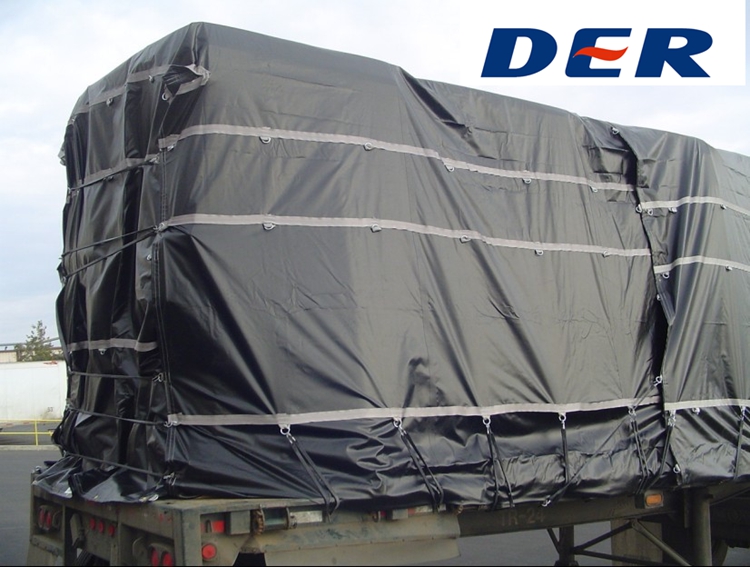
Actual DERFLEX website images showing flatbed, steel-load, trailer and multi-panel tarp directions.
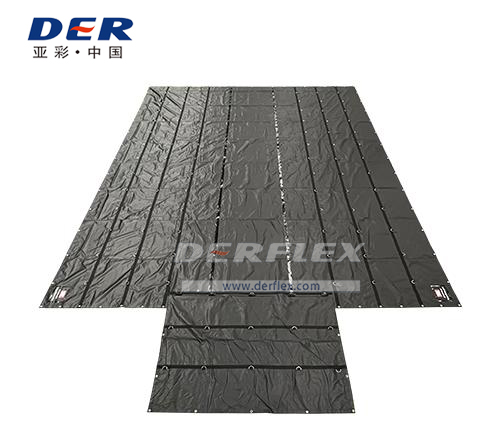
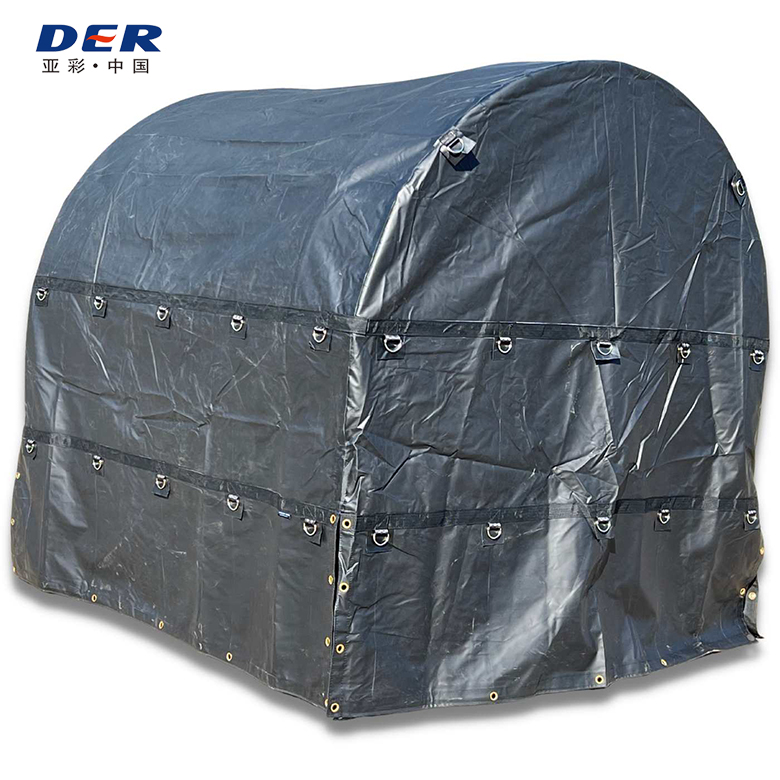
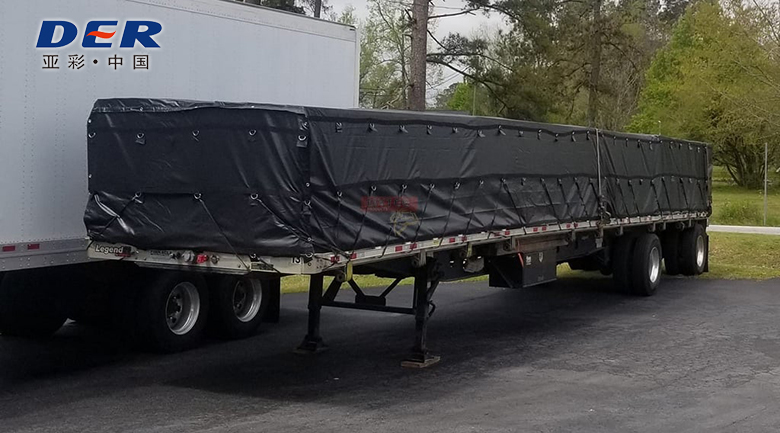
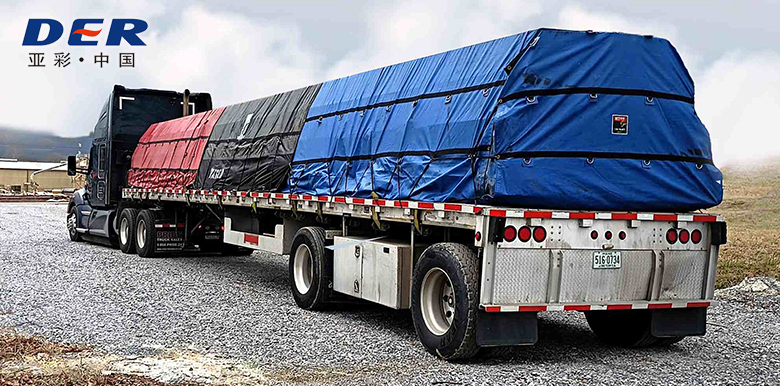
Tarp width should be calculated from the loaded profile, not the empty trailer deck. Measure the cargo after loading—or use the maximum planned load envelope—then add the required drop on both sides plus practical allowance for overlap, hems and tensioning.
Length should cover the loaded cargo and any required front or rear overlap. Tall cargo may need a tail flap or separate end section. Irregular machinery may require shaped panels rather than adding excessive flat-sheet material.
The final drawing should also identify likely corner contact, strap paths and hardware rows. These details often influence service behavior more than a small change in fabric weight.
This is a starting formula, not a final pattern. End flaps, angled sides, curved equipment, lowboys, step decks and oversized cargo require additional review.
The table is a procurement framework. Final values should be confirmed against the application, test method, target market and approved sample or drawing.
| Specification Area | DERFLEX Standard / Custom Direction | Buyer Decision Point |
|---|---|---|
| Product Type | Flatbed load tarp, steel tarp, lumber tarp, machinery tarp, cargo tarp, oversized load tarp, mesh cover or custom system tarp. | Select by load geometry and deployment method rather than product name alone. |
| Body Material | PVC coated polyester, vinyl-coated polyester, PVC laminated constructions and selected mesh fabrics. | Balance weather protection, abrasion, flexibility, weldability, airflow and system compatibility. |
| Typical Weight Direction | Approximately 550, 650, 750, 900 or 1100gsm; lighter or project-specific structures can be discussed. | Higher weight may increase robustness but also affects lifting, folding, storage volume and shipping weight. |
| Finished Size & Drop | Custom finished width, length, 4 ft / 6 ft / 8 ft / 10 ft+ side drops, flat sheets, multi-panel sets and shaped patterns. | Confirm finished dimensions after seams, hems, reinforcements and flap construction. |
| Surface Direction | Gloss, semi-gloss, matte or lacquered surface; one-color, two-color and selected custom color routes. | Consider cleaning, blocking, appearance, printing and local climate. |
| Weather Options | UV-resistant, cold-flexible, anti-mildew, flame-retardant, anti-static or other project directions subject to confirmed formulation and testing. | State the required standard, test method and acceptance value before sampling. |
| Tie-Down Hardware | D-rings, grommets / eyelets, webbing loops, straps, buckles, sleeves, pockets and buyer-specified components. | Hardware rows should follow load height, pulling direction and driver working method. |
| Reinforcement | Webbing hems, double-layer edges, D-ring patches, corner patches, wear strips and localized cargo-contact protection. | Provide load photos or drawings to position reinforcement where wear is expected. |
| Seam & Edge Work | Hot-air welding, hot-wedge welding, high-frequency welding, sewing or combined construction according to design. | The suitable process depends on material, seam direction, hardware and finished application. |
| OEM Details | Printed logo, color matching, labels, barcodes, instruction sheets, cartons, pallets and private-label packing. | Approve artwork, label language and packing method before production. |
| Supply Format | Coated fabric rolls, cut panels, semi-finished assemblies, replacement tarp bodies and finished load tarp sets. | Choose according to local fabrication capability, freight cost and after-sales model. |
DERFLEX can support a documented OEM workflow for distributors, fleets, converters and truck-equipment programs.
Confirm vehicle, load shape, route, climate, handling frequency, quantity and target market.
Define material, finished size, drop, flap, seams, hardware, reinforcement and supply format.
Review drawing, color, workmanship, hardware positions, labels and application fit before bulk production.
Use approved specifications and packing instructions to support controlled repeat supply.
The practical choice depends on cargo consistency, order volume, branding, local fabrication and repeat-order requirements.
Six closely related pages connect load tarp sourcing with specific cargo profiles, materials and truck systems.
Practical answers for fleets, distributors, importers, tarp converters and industrial shippers.
A load tarp is a flexible cover used over cargo transported on a flatbed, step deck, open trailer or other exposed vehicle. The term can include steel tarps, lumber tarps, machinery tarps, flat sheets, oversized tarp sets and selected mesh covers.
PVC coated polyester, often called vinyl-coated polyester, is commonly used where buyers need a weather-resistant surface, textile reinforcement, weldability and custom fabrication. Mesh may be selected where airflow and lower wind pressure are more important than full rain protection.
Measure the loaded cargo width, length and height. For a simple rectangular profile, a starting width is the top width plus two side drops plus working allowance. Add suitable front and rear overlap, and confirm flaps or shaped panels for irregular loads. The finished size should be stated after seams and hems.
No. A tarp helps cover and protect cargo, but it does not replace rated straps, chains, binders, blocking, edge protectors or other securement equipment required for the load and jurisdiction.
Not necessarily. Heavier material can support demanding abrasion and duty cycles, but it also increases lifting effort, folded bulk and shipping weight. Material weight should be balanced with cargo edges, route exposure, deployment frequency, reinforcement design and driver handling.
DERFLEX can discuss custom oversized, multi-piece and shaped tarp constructions based on a drawing, dimensions, load photographs or an approved sample. Final feasibility depends on material, panel layout, welding, hardware and shipping requirements.
Supply formats can include PVC coated fabric rolls, cut panels, semi-finished assemblies, replacement tarp bodies and completed load tarp sets. The practical route depends on the buyer’s local fabrication capability and commercial model.
Send the vehicle type, loaded dimensions, required finished tarp size and drop, preferred material weight, color, D-ring and grommet layout, reinforcement areas, logo, packing, quantity, destination and any required test standard. Photos or drawings improve specification review.
Share the cargo profile, truck or trailer type, finished dimensions, material direction, hardware map, reinforcement needs and order quantity. DERFLEX can review a practical roll-material, panel or finished-tarp supply route for your project.