


 Industrial coated textiles · marine cover sourcing
Marine Heavy Duty Tarp Materials for Boat & Equipment Protection
Select a heavy duty boat tarp by the load on the finished cover, not by fabric weight alone. DERFLEX's PVC-coated polyester material range can be evaluated for stationary boat storage, dockside machinery, marine equipment and protective cover manufacturing. Start with where the cover rubs, how water drains, how often it is removed and what its joining method demands. Then compare grade-specific material evidence and approve the finished-cover details separately.
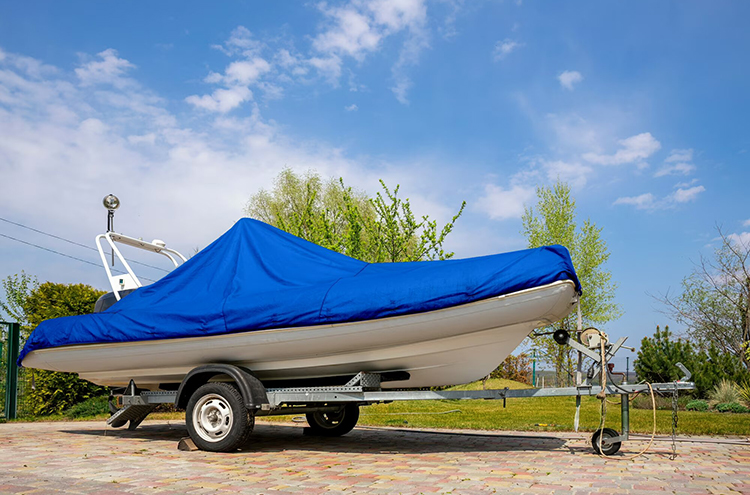
What does “heavy duty marine tarp” actually mean?
Short answer. Heavy duty is the combined ability of a specified cover assembly to tolerate its intended handling, exposure and mechanical stress. For marine protection, assess reinforcement, coating integrity, UV exposure, friction at fittings, seam construction, attachment spacing and ventilation. No single GSM value or generic “marine grade” label certifies the whole cover.
A boat storage tarpaulin can be watertight as a flat sheet but perform poorly when it flaps against a cleat or pools water at an unsupported deck span. A dockside equipment cover may need high resistance to scraping at corners but be removed every day, making manageable handling mass equally important. Therefore, a good purchase specification records the intended service cycle, not merely a product adjective.
DERFLEX's existing marine tarpaulin range provides the broader material supply entry. This page addresses a narrower job: establishing a defensible heavy-duty requirement and a verifiable acceptance plan for coated material and the converted cover.
Map the wear zones before selecting the fabric
A single roll material can experience five very different stresses after conversion. Identify these areas on the cover sketch and decide which need additional reinforcement, fabric testing or a revised pattern.
Repeated wind-driven rubbing can damage a coating even where nominal tensile strength looks sufficient. Mark contact patches, protect the surface of the covered asset and specify removable or permanently attached chafe pads.
A strong field fabric does not automatically give a strong attachment point. Review patch size, hole spacing, stitch or weld path, pull direction and the condition of the matching fastener.
Water mass can develop on flat or sagging surfaces. A supported ridge, suitable slope and drainage design usually matter more than adding an unverified heavy coating to a poor geometry.
Daily handling places stress at folded edges and reinforced corners. Confirm flexibility after conditioning, adequate fold radius, manageable panel size and a clean, dry storage method.
Check coating, color and actual retained performance after an identified weathering protocol. Test duration is not a warranty and cannot be converted directly into years of outdoor life.
Water-barrier film is not automatically breathable. Plan sheltered air exchange, clean runoff paths and inspection access to limit condensation and persistent wetness.
Match the construction to the protection task
Specify a protective cover material only for its documented job. The marine environment is not one use case: stationary winter covers, frequently handled equipment tarps and coastal storage enclosures create different failure points.
| Application | Material priority | Finished-cover decision | Approval question |
|---|---|---|---|
| Boat storage tarp / winter lay-up | Water barrier, cold flexibility where required, UV and controlled handling mass | Support pitch, venting, bow and stern clearance, strap locations | Will the cover drain and remain inspectable? |
| Dockside equipment covers | Abrasion and tear resistance at contact points, coating adhesion and easy cleaning | Corner pads, access openings, removable panels and fastener protection | Which surfaces rub or need daily access? |
| Marine machinery covers in storage | Water and dust protection with suitable exposure and compatibility review | Allow safe clearance, drainage and any necessary ventilation | Is the machine cool, inactive and safe to cover? |
| Marina furniture / removable deck gear | Repeated foldability, finish and abrasion resistance | Soft contact areas, manageable panel mass and identifiable storage bags | How often is the cover removed and refitted? |
| Boat cover offered for towing | Material alone insufficient for approval | Independent complete-cover design and restraint validation | Has the complete system been assessed for road use? |
Application directions are not tested claims for an unspecified DERFLEX SKU. For a finished cover program, see custom boat cover tarps; for seasonal cover geometry, see boating tarp applications.
What needs to appear on a heavy-duty marine material specification?
Compare like-for-like grade data. The fields below are required decisions—not a list of guaranteed values, stock grades or certifications. Confirm material code, method, conditioning, color and tolerances for each approved sample.
| Field to approve | What to request | Why it matters |
|---|---|---|
| Reinforcement and coating | Polyester yarn / weave description; PVC coating construction; selected material ID | Material architecture affects tear path, coating bond and conversion behavior. |
| Mass & thickness | Nominal g/m² and measured thickness in mm, with separate tolerances | Mass influences handling; thickness is a different measurement and cannot be calculated from GSM alone. |
| Usable roll width | Finished usable width, edge condition and roll length | Panel nesting, seam count, cutting yield and transport handling. |
| Tensile and tear | Warp/weft results, units, specimen conditions and exact test method | Oriented mechanical properties need comparable evidence; field results do not certify grommets. |
| Water and seam integrity | Fabric water test; intended welded or sewn seam trial; inspect openings and sealants | Waterproof fabric does not prove a leak-free cover assembly. |
| Weathering and surface | Exposure cycle, color changes, retained properties, coating adhesion and cleaning instructions | UV hours alone do not establish a service-life warranty. |
| Cold folding / repeated flex | Conditioned sample performance at project temperature and after repeated folding | Cold handling and packability depend on formulation and construction. |
| Hardware and corrosion | Fastener material, grommet grade, corrosion evidence and pull-out tests if applicable | Metal-component performance is separate from textile performance. |
For a detailed coated-material supply overview, compare DERFLEX boat-cover fabric rolls and the general PVC tarpaulin material range. Ask DERFLEX to match the test reports to the actual nominated construction rather than transferring claims across grades.
PVC-coated polyester, marine canvas or lightweight poly tarp?
Material choice should follow the cover's required water barrier, air exchange and fabrication route. These are broad material-family distinctions; they do not establish that DERFLEX sells every family, nor do they replace model-level testing.
A practical candidate for waterproof, reinforced cover panels that may be joined by a verified welding method. Evaluate coating bond, chafe points, foldability and separate ventilation. This is the main DERFLEX material family considered here.
Worth comparing when textile hand, appearance and air exchange are priorities. Water repellency, seam leakage and cleaning behavior depend on the exact treatment and construction; it is not automatically equivalent to a continuous PVC barrier.
May suit temporary or cost-sensitive coverage when a shorter service cycle and lower handling weight are accepted. Request evidence before assuming resistance to prolonged sun exposure, repeated abrasion or highly loaded edge fittings.
A higher GSM can make large covers cumbersome without addressing localized chafe, drainage or attachment pull-out. Compare a reinforced design and an appropriately tested material against actual deployment needs.
Understand the cover before approving a grade
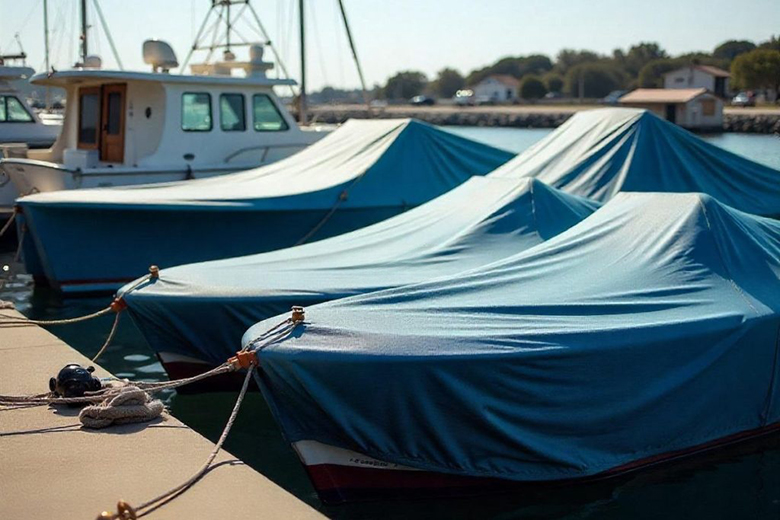
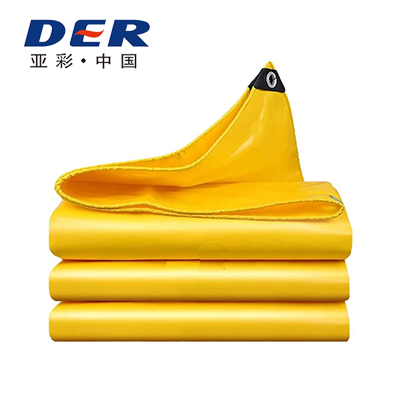
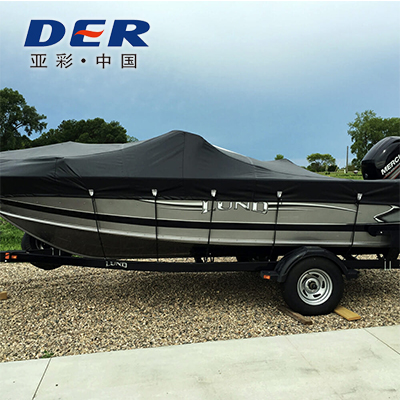
The following photos are existing DERFLEX website visual references. They demonstrate cover shape and material appearance; they do not establish test values, certification, specific material identity or transport suitability.
Before you sign off the material
Request an actual color and coating sample, a welded or stitched seam sample made with your intended process, a high-contact-point reinforcement sample and a matching grade-specific performance summary.
Photographs help assess shape and surface finish; they cannot confirm the coating recipe, tensile or tear strength, UV resistance or the service life of a finished cover.
Need a broader view of strength and industrial cover options? Visit heavy duty tarp materials.
Specify the seam, tie-down and ventilation as a system
A cover that fails usually has a local explanation: fabric against a metal fitting, a fastener loaded in the wrong direction, a fold line where water pools, or condensation trapped under an otherwise waterproof panel. A disciplined design review helps separate material defects from finished-cover and operating conditions.
Draw the actual covered profile, obstructions, openings and water-shedding slope; record cut vs finished dimensions.
Test the intended weld or stitch, edge reinforcement, chafe patch and fastening detail before bulk production.
Control approved material, visual appearance, panel dimensions, seam quality, reinforcement and packaging.
Use boundary: Marine cover fabrics described here are for protective covering and material sourcing. They are not sails, structural tension members, lifting slings, flotation or life-saving equipment. Suitability for use underway, on a moving trailer, in direct exhaust heat or at a hazardous worksite requires a separate complete-system assessment.
Inspection idea. Keep the master material sample with the pattern revision and assembly sample. For each replacement batch, compare roll identification, color and finish, dimensional tolerance, any agreed grade test reports and representative seam coupons. This makes supplier discussions specific without pretending every cover can pass a universal one-size-fits-all marine certification.
What to send for a usable OEM marine tarp quote
A sketch, photos and a target quantity are enough to begin material matching. If you have a finished-cover factory, identify who will cut, weld, stitch, add hardware and accept the completed product. Roll goods, fabricated panels, complete covers and installation are separate quotation scopes.
- Application and location: stationary boat storage, dockside equipment, winter lay-up or another defined job; climate and season of exposure.
- Geometry: length, beam or equipment outline, side drop, protrusions, panel count, intended support and access points.
- Duty cycle: frequency of removal, folding, cleaning, expected rubbing points, wind movement and inspection access.
- Material brief: roll goods or fabricated scope, usable width, color, target weight if available, joining process and documentation requirements.
- Commercial brief: quantity by size or roll, packaging, labeling, destination and planned buying date.
Project cost depends on material structure, usable roll width, seam length and complexity, reinforcement zones, hardware, order mix and agreed delivery terms. It is more useful to compare quotes against the same scope than to assume a single price per square meter covers all conversion work.
Continue into DERFLEX's relevant material programs
Use these existing pages when your next question shifts from heavy-duty performance screening to stock families, conversion scope, or application-specific covers.
Heavy Duty Marine Tarp Material FAQ
What makes a marine tarp heavy duty?
Heavy duty is a construction and duty-cycle decision, not a universal GSM label. Specify the coated textile, tear and tensile behavior, coating adhesion, weathering response, and the way seams and chafe areas will be built and checked.
Is a waterproof PVC boat-cover fabric breathable?
A continuous PVC coating should not be assumed to allow air through the fabric. Storage covers need a separate ventilation and drainage design to control condensation below the cover.
Can a heavy duty boat tarp be used while towing or underway?
Do not infer towing or underway suitability from a material description. Moving-vehicle covers require a separately engineered complete assembly and appropriate testing, fastening and jurisdictional review. This page does not certify such use.
Does salt-spray testing prove marine fabric performance?
No. Testing metal eyelets for corrosion cannot establish fabric UV durability, waterproof seams, tear resistance or safe overall cover attachment. Ask for evidence relevant to each material and component.
How do I choose weight and thickness for marine equipment covers?
Start with handling frequency, actual span, friction points, climate and conversion method. Ask for grade-specific mass per area and measured thickness separately; GSM is not a direct thickness conversion and neither number alone proves durability.
What should an OEM buyer send for a marine cover material quote?
Send the intended stationary storage or dockside application, photographs or drawings, approximate dimensions, season and climate, target grade or weight if known, color, quantity, intended seam method, packing requirement and any mandatory test documentation.