



Roof Tear-Off Tarps for Contractor Procurement
Roof tear-off tarps are used to collect, stage and manage roofing debris during shingle removal and renovation. For contractors, rental fleets and distributors, the buying decision goes beyond a fabric weight: define the cleanup method, sharp-debris exposure, finished dimensions, perimeter reinforcement and repeat-order controls. DERFLEX can discuss PVC-coated tarp materials, cut panels and custom non-lifting cover configurations. Mechanically lifting debris is a separate safety-critical product category requiring written assembly-specific approval.
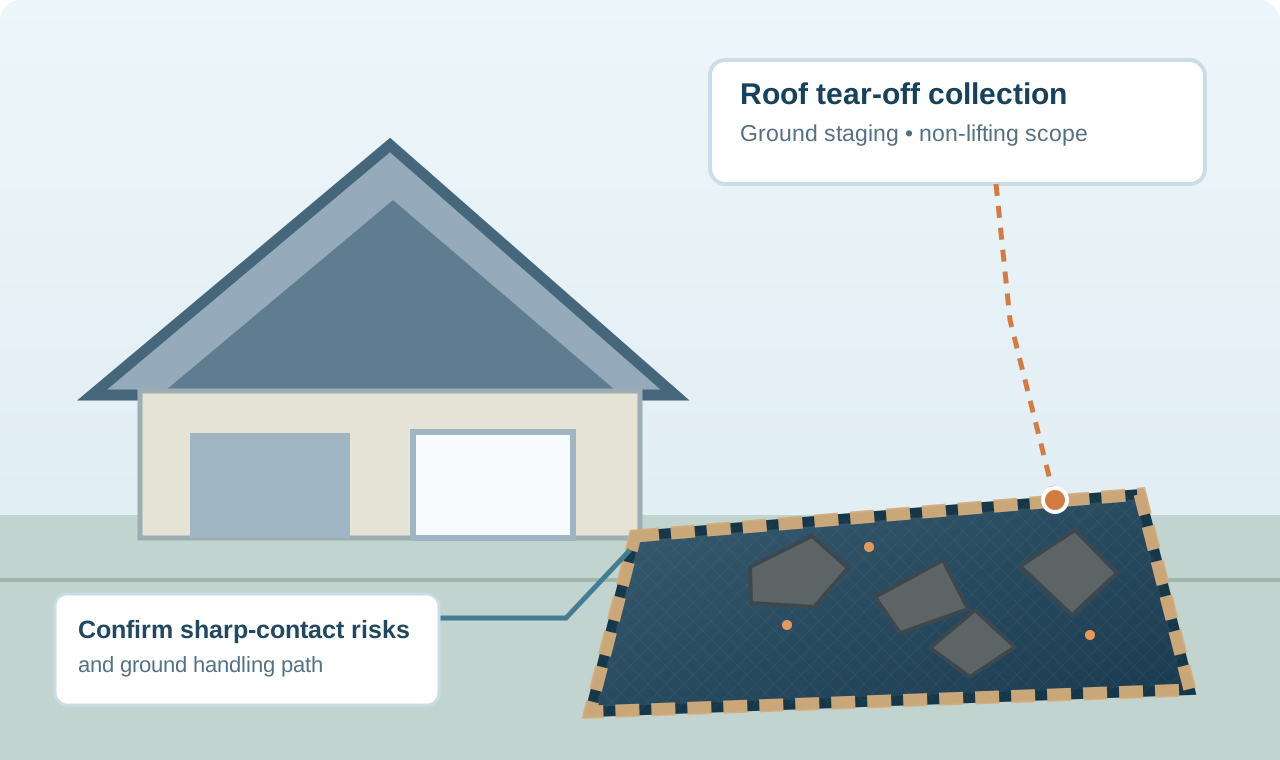
What is a roof tear-off tarp?
A roof tear-off tarp, also called a roofer's tear-off tarp or roofing debris collection tarp, is a flexible sheet used in a planned debris-removal workflow. Roofing contractors may position a robust sheet in a controlled ground-level collection zone, protect adjacent areas from loose debris or specify a specialized assembly for moving a load. The exact method changes the product requirements.
For non-lifting use, the purchasing priorities are surface durability, debris containment, ease of cleaning, manageable sheet weight and a finishing design suited to the placement method. The site should also have its own fall protection, falling-object control, traffic exclusion and waste-handling procedures. A tarp is not a substitute for those protections.
Quick answer: Choose the tarp by the debris-handling method first, then the fabric, size and reinforcement. A protective sheet with webbing, grommets or rings is not automatically approved for overhead lifting. For the separate lifting category, see the DERFLEX debris lifting tarp guide.
Four tarp types that should not be confused
"Roofing tarp" describes more than one job. Contractors should keep debris collection, roof weather protection, perimeter screening and powered lifting on different specification lines.
| Task | Material / construction direction | Primary procurement check | Important boundary |
|---|---|---|---|
| Ground debris collection | Robust solid coated sheet; reinforced corners or edges if required | Sharp-contact and abrasion behavior; finished size; cleanup route | Not rated to lift a suspended load |
| Temporary roof rain cover | Waterproof PVC or other suitable cover with secure weather-oriented finishing | Overlap, drain direction, wind and anchor plan | Not a roof repair or debris-lifting device |
| Scaffold/perimeter screening | Mesh or project-specific enclosure fabric | Airflow, particle-retention needs and supporting system | Not automatically a catch net or fall-arrest system |
| Mechanical lifting of roofing debris | Purpose-designed, tested lifting assembly with documented load path | Identified WLL, rigging configuration, allowed contents, instructions and inspection | No lifting claim without assembly-specific evidence |
DERFLEX already covers broader contractor jobsite tarps and emergency roof weather protection. This page focuses on specification and procurement of the tear-off cleanup use case rather than repeating those guides.
Build the purchase order around finished construction
The items below are RFQ fields to confirm, not an advertised stock SKU or a claim that every option is currently available. A buyer-approved drawing or sample should govern the finished product.
| Specification field | What to request | Why it matters to a roofing crew |
|---|---|---|
| Supply format | Roll goods, cut sheet, finished non-lifting collection tarp or separately reviewed specialty assembly | Clarifies whether the purchaser or DERFLEX performs final fabrication |
| Base & coating | PVC-coated polyester construction; target fabric properties and approval sample | Influences handling, coating wear, weldability and cleanability |
| Mass / thickness | Proposed GSM (g/m²), thickness (mm), tolerance and product code | Balancing durability against crew handling and storage volume |
| Mechanical performance | Relevant tear, tensile, puncture or abrasion test reports and methods | Roofing scrap can contain nails, shingles and sharp edges |
| Finished dimensions | Width × length with units; cut vs finished size; dimensional tolerance | Controls coverage, space for containment and fit in staging areas |
| Seams & perimeter | Joint layout, weld or stitch method, hems, corner patches, webbing where justified | Controls wear zones and edge damage during repeated use |
| Interfaces | Grommets, straps or handles if appropriate for the non-lifting task | Attachment and handling points require specific placement and review |
| Repeat orders | Color, size label, drawing revision, packing unit, approved sample reference | Allows branch teams and resellers to reorder consistent items |
GSM describes mass per area, not puncture strength or thickness. A cited industry size or fabric weight is not a confirmed DERFLEX model. For deeper testing detail, consult tear-resistant PVC tarp selection and abrasion-resistant cover materials.
Reinforce the wear zones, not just the fabric weight
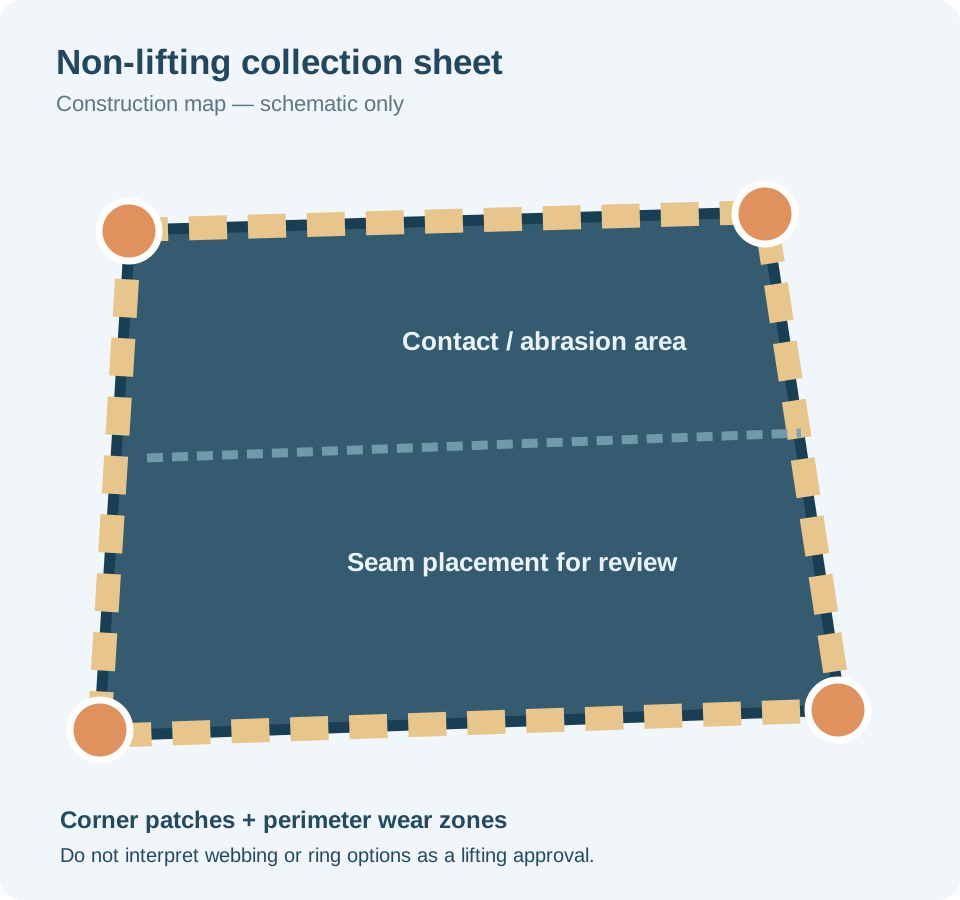
Roofing tear-off operations create a specific damage profile: granules scuff the surface; nails and broken edges can puncture it; dragging abrades corners; repeated folding flexes the coating and seams. An effective sourcing brief needs the load-contact map, not only a phrase such as "extra heavy duty."
Contact surface
Ask what touches the sheet: asphalt shingles, fasteners, flashing or general renovation waste. Sharp scrap may be unsuitable for reuse without secondary containment.
High-wear perimeter
Discuss corner wear pads, hems and the direction of pulling or folding. Hardware requires a defined function, not decoration.
Panel seams
Place joints away from known dragging and concentrated contact zones where practical. Approve the seam design for the actual product.
Handling & storage
Review clean-down, drying, stacking, fold size and crew handling so a durable cover remains practical across jobs.
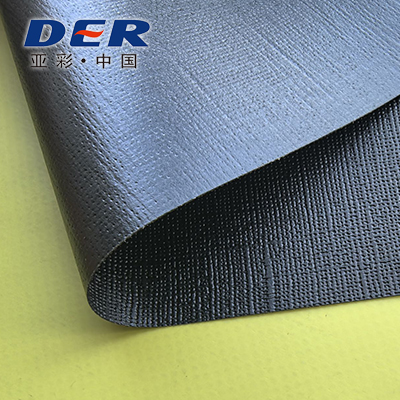
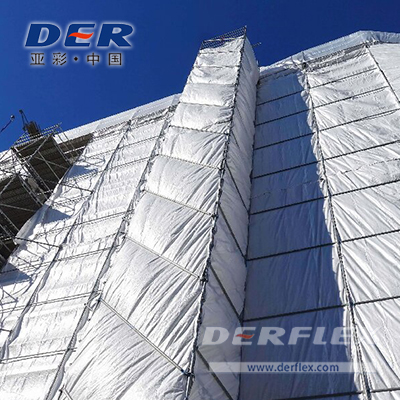
Explore PVC-coated polyester fabric for a material-level discussion, or construction tarpaulin options for a broader jobsite protection comparison.
Size for the collection zone; calculate sheet mass separately
A practical width and length are driven by the ground layout, protection area and the route for containing or manually removing debris—not by roof square footage alone. A 10 × 10 ft sheet, for example, covers a nominal 100 ft² (about 9.29 m²) before any folds, overlaps or unavailable edges. That is a calculation example, not an offered DERFLEX stock size.
Nominal fabric mass planner
Estimate fabric-only mass to compare crew handling and shipping assumptions. This excludes reinforced hems, rings, webbing, retained water and debris. It is not a lifting-capacity calculation.
Example: 100 ft² × 700 g/m² ≈ 6.50 kg of fabric only.
Method: area (m²) = width (ft) × length (ft) × 0.09290304; mass (kg) = area (m²) × GSM ÷ 1,000. Real finished goods may differ after trimming and assembly.
The tare mass helps procurement estimate handling. It says nothing about a safe payload, rigging design, lifting-point capacity or approval to hoist the tarp.
How contractors and distributors can buy repeatably
A contractor fleet may prioritize rugged cleanup sheets by work crew; a distributor needs clear size tiers and consistent labels; a fabricator may purchase roll material and build the finished covers itself. Use one controlled specification for every replenishment.
- Describe the debris and movement.Identify shingle types, nails and flashing, whether the tarp stays on the ground and how debris is moved after collection.
- Confirm measurements.Provide finished width and length, sketch, wear zones, quantity by size and access constraints.
- Approve a material and prototype.Review coating, tear and abrasion evidence, seams, edges, cleaning and the sample's actual handling.
- Lock the repeat-order record.Agree drawing revision, color, inspection points, label text, private-label package and destination market.
Roofing contractors
Compare site conditions, crew handling and replaceability. Keep non-lifting ground sheets separate from any certified lift-related purchasing program.
Rental & fleet suppliers
Use durable product identification, cleaning instructions, return inspection criteria and controlled reordering specifications.
Importers / private label
Request sample confirmation, size mixes, carton identification, consistent colors and agreement on inspection methods.
The wider DERFLEX heavy-duty tarp range addresses other uses; the construction tarp buying guide supports projects requiring a separate weather-cover or enclosure specification.
Documentation and worksite boundaries to settle first
For stationary collection and cleanup
- Identify sharp, hot, wet or chemically contaminated debris before selecting fabric.
- Prevent material from falling toward pedestrians, occupied areas, windows and landscaping.
- Agree which parts of the tarp can be dragged or folded, and where padding or alternative containers are needed.
- Check the ground surface, drainage, weather and site traffic plan.
- Inspect cuts, punctures, seam damage and contamination before reuse.
For any proposed mechanical lifting
- Ask for the finished assembly's model, intended contents, WLL and approved rigging configuration.
- Require traceable verification, instructions, markings and inspection/retirement criteria before purchase.
- Do not infer capacity from PVC thickness, GSM, webbing break strength or the number of rings.
- Have qualified site personnel plan lifting, equipment compatibility and exclusion zones.
- Do not use a general contractor tarp for suspended lifting without written product-specific approval.
DERFLEX's general PVC tarpaulin and non-lifting custom-cover supply are established product directions. The availability of a certified, load-rated roofing-debris lifting assembly—and its responsible manufacturer, WLL, test evidence and destination compliance—must be separately confirmed in writing before any such product is promoted or ordered.
Roof tear-off tarp FAQ
What are roof tear-off tarps used for?
Roof tear-off tarps help roofing crews collect or contain shingles, nails, felt and other removed roofing debris in a planned cleanup zone. Some specialty products are designed for mechanical lifting, but a collection tarp must never be assumed to be a rated lifting assembly.
Are roofers' tear-off tarps the same as emergency roof tarps?
No. A tear-off tarp manages removed roofing debris; an emergency roof tarp is installed to temporarily limit weather entry through a damaged roof. Their size, attachment details and risk assessments are different.
Which material should I specify for shingle debris?
For reusable non-lifting collection sheets, PVC-coated polyester is a practical material family to evaluate because of its coating, flexible fabrication and cleanability. Request tear, abrasion, puncture and seam evidence for the actual grade; sharp objects may require additional protection or an alternate handling method.
Can a reinforced roof tear-off tarp be hoisted with a crane?
Only if the specific complete finished assembly is expressly designed, identified, tested and documented for that lifting application, with a valid working load limit and approved rigging instructions. No DERFLEX lifting rating is asserted on this page.
What sizes can contractors request?
Supply can be discussed by finished width, length, construction, reinforcement pattern and packing. Common sizes seen in the market are comparison references only; DERFLEX availability, minimum quantity and tolerances must be confirmed against an approved drawing and quotation.
What information is needed for a wholesale quotation?
Send the use case (ground collection or proposed lifting), debris description, finished dimensions and size mix, expected reuse, quantity, preferred material and reinforcement, destination, label or packaging requirements and any test or inspection documents required before purchase.
Get a Roof Tear-Off Tarp Procurement Review
Send your cleanup method, debris type, size mix, quantities, target material or an existing sample, reinforcement and packaging needs. DERFLEX can review the appropriate material and non-lifting fabrication scope. If the request involves overhead lifting, identify that explicitly so rating and documentation requirements are not overlooked.
Request a QuoteInclude in your RFQ
- Ground collection or proposed mechanical lifting?
- Debris: shingles, nails, flashing, mixed renovation scrap
- Finished dimensions, size quantities and preferred color
- Expected reuse, cleaning and climate conditions
- Edge, webbing, grommet and packing drawings
- Destination, required documents and order timing