



Canvas Drop Cloth Sizes and Finished Coverage Guide
Compare painter’s tarp sizes in feet and metres, distinguish cut size from finished size, and estimate floor coverage after joins, hems and allowance for handling. This guide helps painting contractors, importers and private-label buyers plan a clear size mix—from a 6 × 9 drop cloth to a 12 × 15 or extra-large sheet—without confusing common market references with confirmed DERFLEX stock.
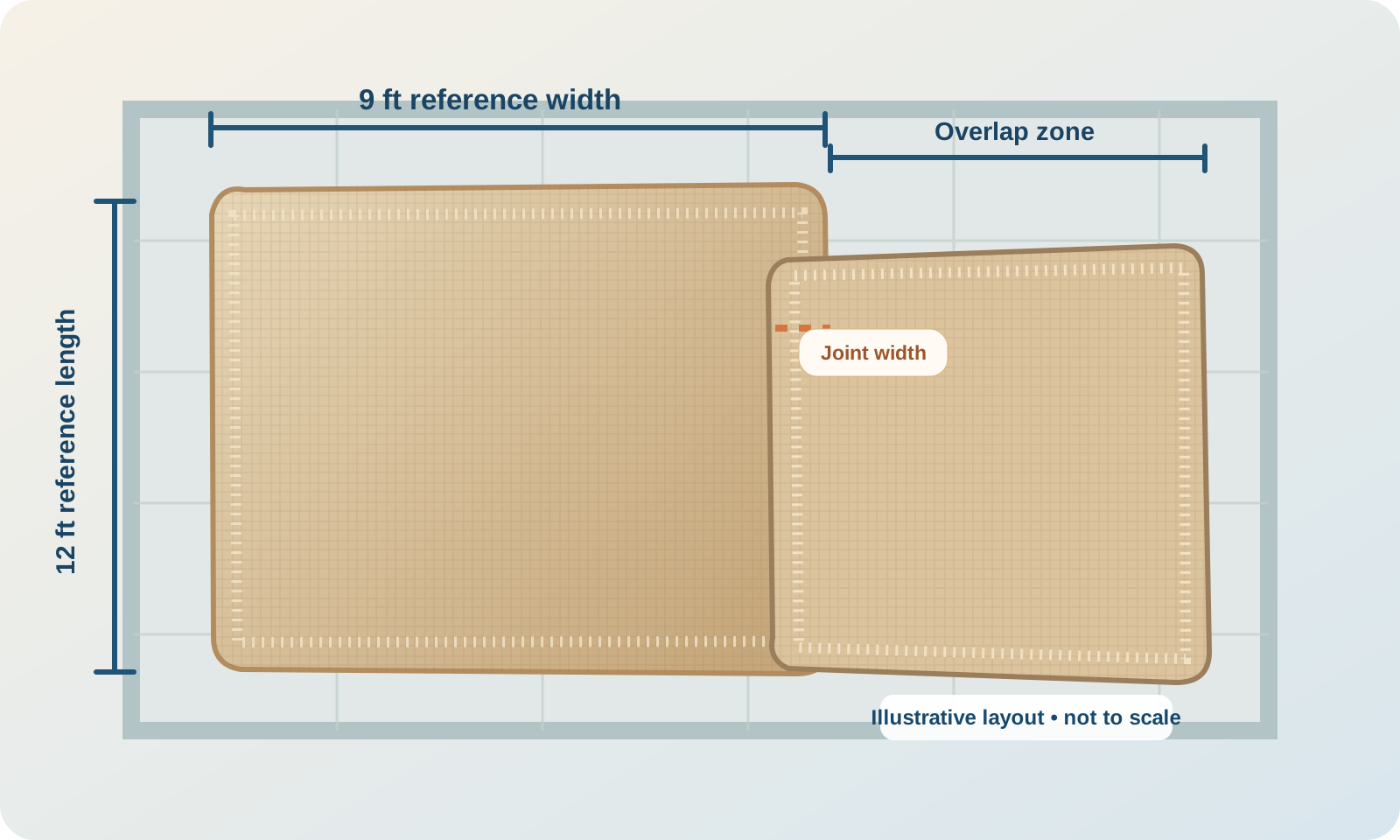
What Size Canvas Drop Cloth Do You Need?
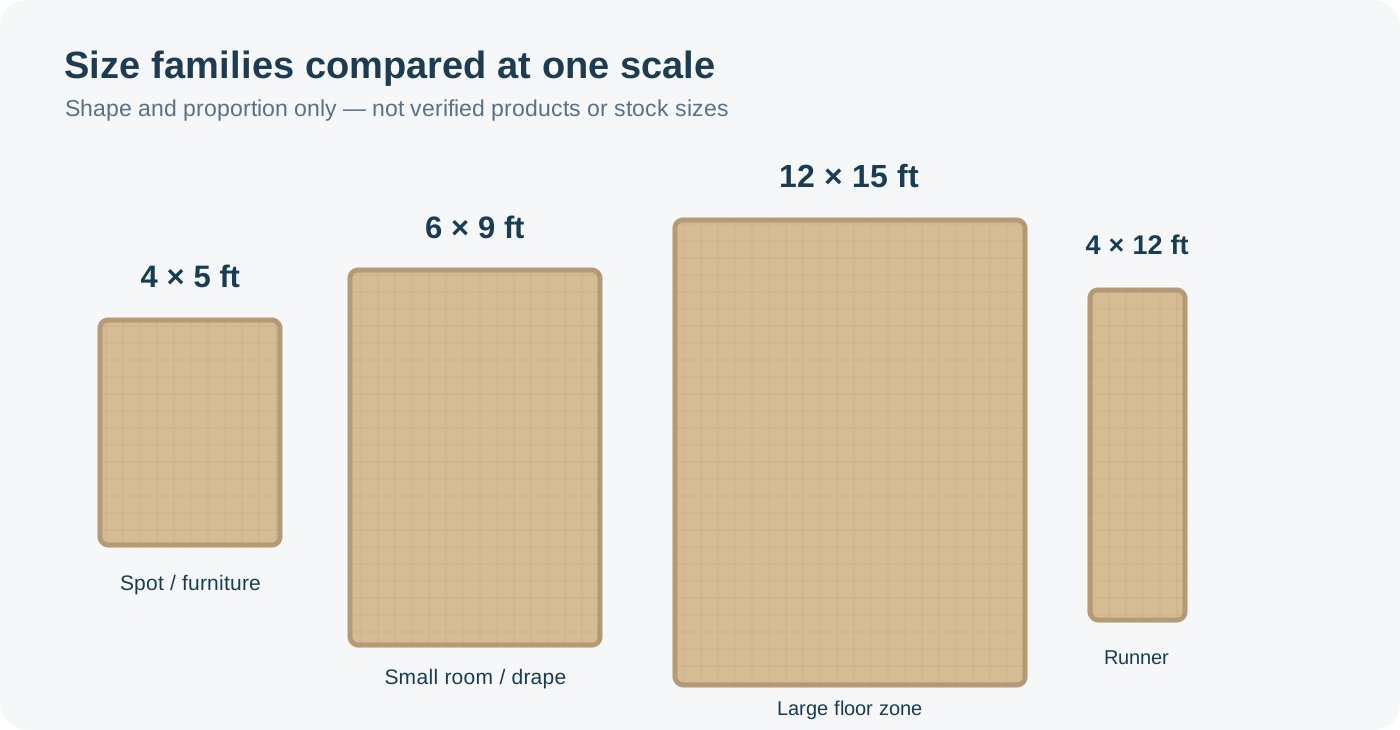
A 6 × 9 ft canvas drop cloth is a practical reference for furniture or smaller work areas; 9 × 12 ft is widely used for general room painting; and 12 × 15 ft provides greater continuous floor coverage. Larger sheets can reduce the number of joins but are heavier to move, fold and clean. The correct choice depends on the actual finished dimensions, floor geometry, amount of overlap, and whether the cloth must drape over furniture rather than lie flat.
Small & movable
4 × 5 and 6 × 9 ft are convenient reference formats for furniture covers, touch-ups and repositionable protection.
Room coverage
9 × 12 and 12 × 15 ft are useful comparison points when covering interior work zones or a portion of a larger floor.
Long or oversized
Runner formats and extra-large panels require separate layout decisions, fabric-width checks and practical handling review.
Canvas Drop Cloth Size Chart: Feet, Metres and Nominal Area
These market-reference and buyer-requested examples keep common painter’s tarp sizes on one chart. Metric figures are rounded; areas assume a full unobstructed rectangle before hems, seams, overlap, shrinkage or exclusion zones. None is represented as a confirmed DERFLEX stock SKU.
| Nominal trade size | Approx. dimensions (m) | Nominal area | Common planning use | Procurement check |
|---|---|---|---|---|
| 4 × 5 ft | 1.22 × 1.52 | 20 ft² / 1.86 m² | Spot work, small furniture | Cloth drape and fold size |
| 4 × 12 ft | 1.22 × 3.66 | 48 ft² / 4.46 m² | Hallway / trim runner | Flat hems, floor movement |
| 6 × 9 ft | 1.83 × 2.74 | 54 ft² / 5.02 m² | Furniture and smaller zones | Cut / finished size |
| 9 × 12 ft | 2.74 × 3.66 | 108 ft² / 10.03 m² | Room painting, broad furniture | Hem allowance / joins |
| 12 × 15 ft | 3.66 × 4.57 | 180 ft² / 16.72 m² | Large rooms and work zones | Fabric width / seam map |
| 15 × 20 ft | 4.57 × 6.10 | 300 ft² / 27.87 m² | Extra-large work area | Joining, handling, packing |
| 20 × 30 ft | 6.10 × 9.14 | 600 ft² / 55.74 m² | Oversize layout request | Fabrication feasibility / weight |
Conversion: 1 ft = 0.3048 m; 1 ft² = 0.09290304 m². The two largest sizes are planning requests rather than verified standard market SKUs. Runner-specific installation is covered separately from this general size guide.
Why quoted coverage can differ from the label
A trade-size label names a product family; it does not always guarantee the same usable rectangle after sewing and preparation. A larger canvas cloth can also include joined fabric panels, raised seam ridges, a border hem and a different packed weight.
For fabric and construction selection, see the canvas drop cloth material and bulk supply guide. To compare contractor weight classes, use the heavy duty canvas drop cloth grades reference.
Room and Furniture Coverage: Choose by the Actual Shape
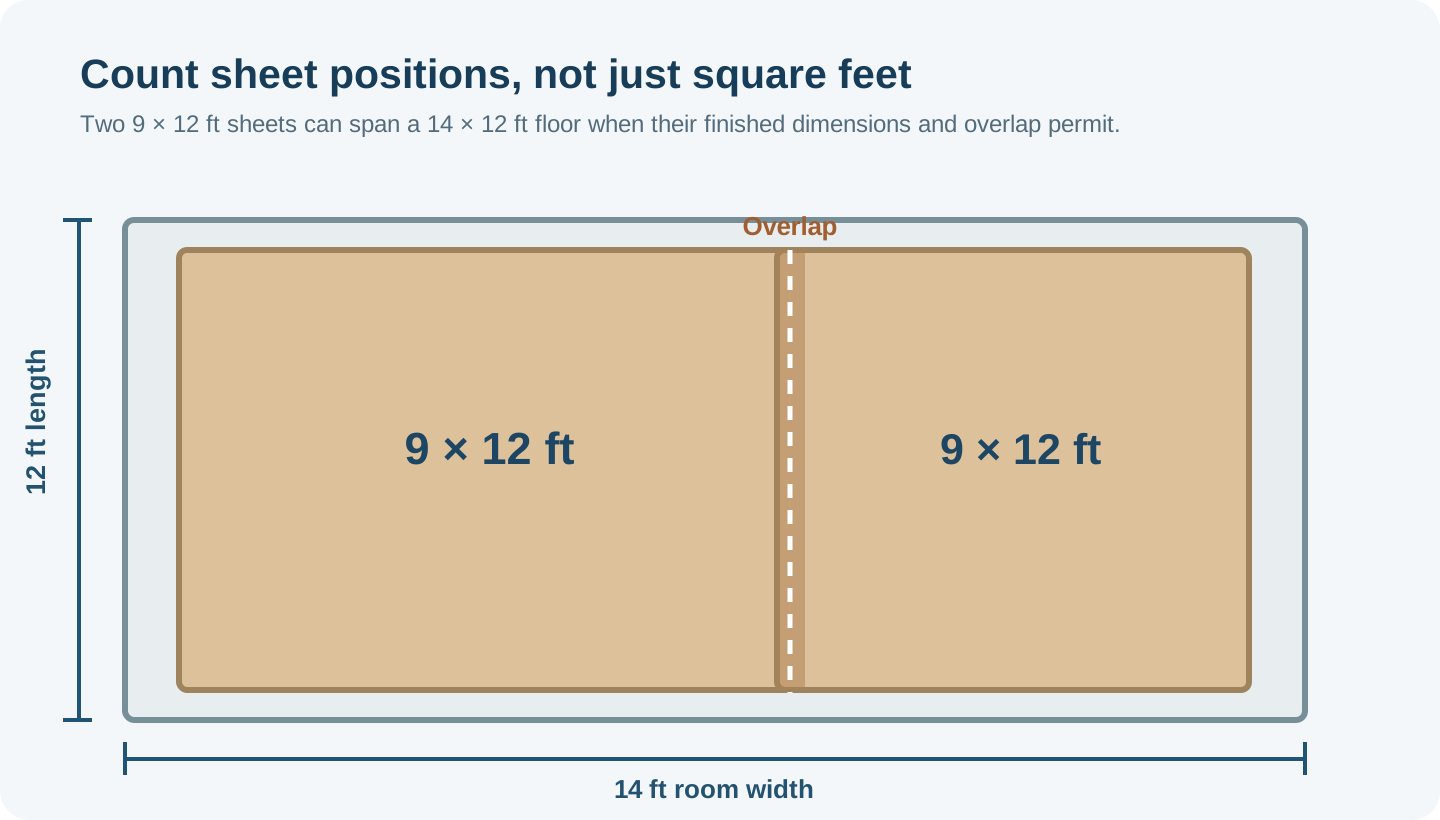
A room’s square footage is only a starting point. A sheet placed flat needs enough width and length to reach each work edge. Two sheets also lose some effective combined width to overlap. A furniture drape needs material for the top footprint plus two side drops along each dimension, if the sides are intended to be covered.
| Work area | Useful starting format | Measurement to take | What changes the answer |
|---|---|---|---|
| Chair / small workpiece | 4 × 5 ft | Top footprint and desired side drop | Height, shape, paint access and folds |
| Sofa / table drape | 6 × 9 ft | Furniture length, width, side fall | Full vs partial side coverage; leg and edge clearance |
| Ordinary room work zone | 9 × 12 ft | Usable floor rectangle and painter access | Doors, corners, masking, overlaps |
| Large continuous zone | 12 × 15 ft or a sheet mix | Maximum continuous width and length | Fabric joins, handling and wet-paint management |
| Wide commercial floor | Extra-large request or a planned multiple-sheet layout | Floor map, exclusions and walkways | One-piece feasibility, staged installation, seams and trip risk |
Furniture drape formula
If a table is 5 ft long and 3 ft wide and you need a 1 ft drop on every side, the minimum unfolded drape footprint is approximately 7 × 5 ft, before tuck, fold and fastening allowance. A 6 × 9 sheet may be oriented to satisfy that footprint in some conditions; test the actual shape rather than assuming every table can be covered identically.
Drape guidance assumes a simple rectangular object. The fabric may not remain in place on slopes or slippery surfaces.
Cut Size vs. Finished Size: What Buyers Must Specify
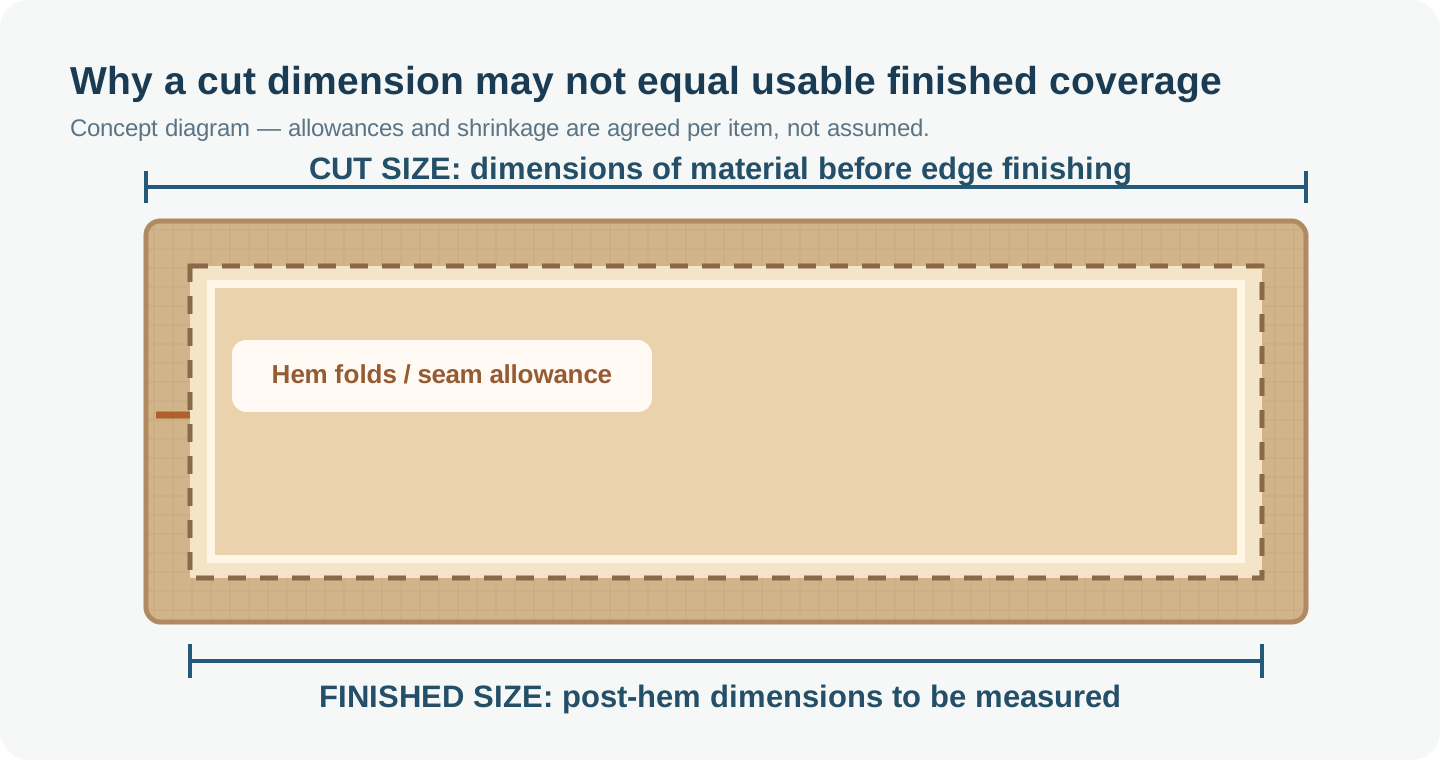
Cut size is the starting rectangular blank before hems and other sewing allowances. Finished size is the measured dimension of the completed product under a stated measurement condition. These are not interchangeable, especially for a retailer listing a precise 9 × 12 drop cloth.
Which measurement appears on the label?
Write “finished width × finished length after hemming” if the buyer requires usable post-production dimensions. State the acceptable deviation and where measurements are taken.
Are there joins or sewn panels?
Ask for the number of panels, seam orientation and the distance from the seam to finished edges. A join can increase packing bulk or create a line on the floor even when nominal width is unchanged.
When is dimensional change measured?
If laundering matters, agree on a specific wash/dry or conditioning procedure and the permitted change. A fabric cannot be assigned a universal shrinkage percentage from its fiber name alone.
For exact branding and packaging size declarations, see custom canvas drop cloth OEM specifications. Keep a signed drawing and physical reference sample for each repeat-order size.
Allow for Overlap, Edge Finishing and Potential Shrinkage
Start from the correct reference
Use finished dimensions when provided. Only subtract hem allowance from a supplier’s cut-size dimensions; do not deduct it twice.
Count shared material once
Each neighboring pair shares a strip. For two 9 ft widths with a 0.5 ft overlap, nominal combined width is 17.5 ft, assuming full 9 ft usable widths.
Test rather than assume
Canvas dimensional change depends on material and laundering. Set any assumed shrinkage to zero until a buyer has evidence or intentionally models a hypothetical allowance.
Where a true liquid-blocking barrier is required, canvas absorbency should not be confused with waterproof coverage. Compare the industrial paint protection fabric options and floor-protection tarp construction choices.
Canvas Drop Cloth Coverage Estimator
Enter a rectangular floor zone, a trade-size reference and any buyer-selected allowances. The estimator tests both sheet orientations and returns the smaller rectangular-grid count. It is a planning calculation, not a supplier quote or verified stock availability.
Estimate the number of sheets
Units: ft and inches · Sheets laid flatLimitations: counts a simple rectangular grid on a flat floor; excludes doorways, cut-outs, obstacles, furniture, irregular shapes, wall upturns, underlay, fasteners and slip or trip assessment. Confirm product dimensions with an approved supplier sample.
Prepare a Size-by-Size Wholesale Quote Brief
For B2B sourcing, a total order quantity is not enough. Record the quantity for each size and lock the measurement convention, cloth grade, construction and packaging in the same RFQ. The example sizes below are planning rows, not a DERFLEX availability list.
| Requested size | Metric reference | Quantity (sheets) | Line nominal area |
|---|---|---|---|
| 4 × 5 ft | 1.22 × 1.52 m | 0 ft² | |
| 6 × 9 ft | 1.83 × 2.74 m | 0 ft² | |
| 9 × 12 ft | 2.74 × 3.66 m | 12,960 ft² | |
| 12 × 15 ft | 3.66 × 4.57 m | 14,400 ft² | |
| 15 × 20 ft | 4.57 × 6.10 m | 0 ft² | |
| 4 × 12 ft runner | 1.22 × 3.66 m | 0 ft² | |
| Total requested | 200 sheets | 27,360 ft² | |
Total area counts nominal rectangles only, not finished usable coverage or floor area after overlaps. The initial quantities are an editable example, not a company minimum order.
Copy or download the mix, then attach or paste it into your RFQ. This page does not transmit your entries to DERFLEX.
What to Confirm Before Buying a Large Painter's Tarp
Approve one size convention
For each SKU, identify width × length, unit, cut or finished basis, seam plan, tolerance and conditioning. Compare production samples on the same basis.
Check surface contact
Canvas can soak through; unbacked sheets are not inherently waterproof or nonslip. Test possible dye transfer, wet paint penetration, edges and folded ridges on the intended floor.
Define a repeatable carton
Agree labeled size, fiber specification, weight, folds, unit pack, carton count, drawing and approved sample ID. Ask which party will weave, cut and sew the cloth.
DERFLEX's coated-textile and canvas tarp product listings provide adjacent manufacturing context; they do not by themselves prove that a particular cotton painter's drop cloth is in stock or made on an in-house cotton weaving line. For industrial exterior cover materials, use canvas tarps and canvas tarpaulin product guidance; those products can use treatments unsuitable for absorbent floor covering.
Canvas Drop Cloth Sizes FAQ
What are the most common canvas drop cloth sizes?
Common market reference sizes include 4 × 5 ft, 6 × 9 ft, 9 × 12 ft, 12 × 15 ft and 4 × 12 ft runner formats. Other large dimensions are possible sourcing requests, not proof of DERFLEX inventory. Confirm each supplier’s size convention and finished dimensions.
Is a 9 × 12 canvas drop cloth big enough for a 12 × 12 ft room?
Not as a single flat floor sheet without gaps. A nominal 9 × 12 ft sheet covers at most a 9 × 12 ft rectangle before allowances. Use more than one sheet, rotate the layout where practical, or choose a larger finished sheet; include overlaps and edge clearances in the count.
Are canvas drop cloth dimensions cut size or finished size?
They can be either. Cut size is measured before hemming or joining; finished size is measured after fabrication under an agreed method. Ask for the measurement convention, dimensional tolerance, wash conditioning and a signed sample before printing size claims on retail packaging.
How much overlap should I allow between painter's tarps?
Choose overlap according to movement, paint exposure, fastening method and the floor, rather than relying on a universal number. A 6 in (152 mm) overlap is a planning example in the calculator, not a DERFLEX installation specification. Inspect edges and prevent wrinkles or trip hazards.
Will a canvas drop cloth shrink after washing?
Some cotton-based constructions can change dimensions after laundering. The amount depends on fibers, weave, finishing and wash/dry conditions. No universal shrinkage rate can be assigned; request a conditioning test for the specific fabric and agree whether the sold size is before or after laundering.
What details are needed for a wholesale size-mix quote?
List every requested finished size, quantity per size, material or target weight, hem and seam details, desired label or pack format, destination market and target date. Note whether you require sheets, pre-cut material or roll goods. DERFLEX must confirm the proposed supplier route and each configuration before quotation.
Get a Size Mix Quote
Send the requested canvas drop cloth sizes and quantities per size, together with fabric content, target weight, finishing convention, packing and destination. DERFLEX can review the proposed supply route, sample requirements and commercial feasibility for the requested assortment.
- Each nominal and finished sheet size
- Number of sheets by size
- Fabric, seams, labels and cartons
- Buyer market and preferred delivery timing
Supply scope, confirmed product sizes, minimum order quantities, sampling and lead times are subject to DERFLEX's review and written quotation.