


One-Side vs Double-Sided Silicone Coated Fiberglass
Which coating structure should an insulation-jacket factory, expansion-joint fabricator, welding-curtain producer or technical-textile buyer specify? Compare protected faces, coating mass, flexibility, handling, cleanability, seam behavior, cost and application duty before you freeze the roll specification.

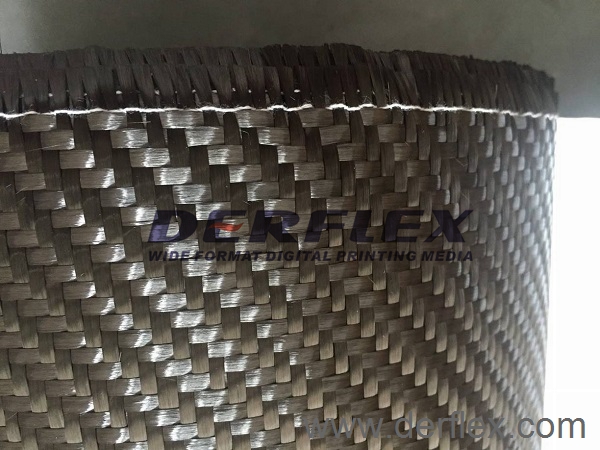
DERFLEX silicone-coated fiberglass reference image. The visible surface does not by itself identify coating mass, coated sides, temperature capability or the exact ordered grade.
Is one-side or double-sided silicone coated fiberglass better?
Neither is universally better. Choose one-side silicone coated fiberglass when exposure is mainly directional and lower coating mass, softer drape, lower bulk or cost control matters. Choose double-sided silicone coated fiberglass when both faces need protection from moisture, oil, abrasion, handling or repeated cleaning. Two-side coating can increase total weight, thickness, stiffness and cost, but it does not automatically increase the temperature rating; temperature capability still depends on the silicone formulation, fiberglass base, exposure time and the complete fabricated assembly.
The Real Buying Question Is “Which Face Needs the Silicone?”
Industrial buyers often compare single sided silicone coated fiberglass fabric and double sided silicone coated fiberglass fabric as if the second option were simply a higher grade. That is too simplistic. The number of coated faces changes the way the roll is handled, folded, sewn, cleaned and exposed inside the finished product.
For a directional outer shell, liner or layered component, adding silicone to the reverse face may add cost and stiffness without solving a real problem. For a reusable curtain, expansion-joint belt or jacket shell that can be touched, folded or contaminated from either side, leaving one face uncoated can create a practical handling or durability trade-off.
Start with these five questions
- Which face sees moisture, oil, weather, abrasion, sparks or process contamination?
- Will the part be installed in one fixed orientation or can either face become exposed?
- How often is the finished product removed, folded, rolled, cleaned or serviced?
- Is minimum weight and easy drape more important than balanced surface protection?
- What will happen at cut edges, needle holes, seams, overlaps and clamp zones?
These are broader DERFLEX purchasing directions, not a promise that every weight, thickness, width and coating-side combination is available or appropriate for every application.
Single-Sided vs Double-Sided Silicone Fiberglass: Layer by Layer
A silicone coated fiberglass fabric is a composite: woven fiberglass provides the reinforcing textile core, while silicone rubber forms the protective coated surface. Changing from one coated face to two changes the composite structure without changing the basic identity of the glass reinforcement.
One-Side Silicone Coated Fiberglass
Use when one face performs the main protective role and the reverse face can remain closer to the original fiberglass textile.
Double-Sided Silicone Coated Fiberglass
Use when either face may be exposed, handled, contaminated, cleaned or repeatedly flexed during the service life of the finished product.
One-Side vs Double-Sided Silicone Coated Fiberglass: Key Differences
| Selection Factor | One-Side Silicone Coated Fiberglass | Double-Sided Silicone Coated Fiberglass | Buyer Decision Note |
|---|---|---|---|
| Coated faces | Silicone on one face; reverse face remains uncoated or closer to the base-cloth texture. | Silicone on both faces. | Choose by actual face exposure, not by the assumption that “more coating is always better.” |
| Surface protection | Strong on the designated coated face. | More balanced protection on both faces. | Double-side is useful where either face can contact moisture, oil, dirt or equipment. |
| Total coating mass | Usually lower for a comparable base cloth and coating direction. | Usually higher because both faces receive silicone. | Compare actual TDS values rather than using side count as a weight proxy. |
| Flexibility / drape | Can preserve a lighter, softer or less bulky structure. | May feel more substantial; additional coating can increase stiffness depending on loading. | Test fold radius and sewing behavior on the production grade. |
| Repeated handling | Good when the coated face stays oriented toward the main exposure. | Often preferred for reusable products handled from either side. | Think about installation crews, maintenance, storage and cleaning cycles. |
| Cleanability | One coated face is easier to wipe down; the reverse face behaves differently. | More consistent wipe-down surface on both faces. | Relevant for oily, dusty or maintenance-intensive environments. |
| Edge / seam exposure | Needs extra attention because the reverse surface differs from the coated face. | Both faces are coated, but cut edges and needle holes still interrupt the surface. | Neither construction makes a sewn assembly automatically waterproof or sealed. |
| Temperature rating | Grade-specific. | Grade-specific. | Two-side coating does not automatically raise continuous temperature capability. |
| Cost direction | Can be more economical when one protected face is sufficient. | Can cost more because of added silicone, processing and total material mass. | Compare total installed performance, not just price per square meter. |
| Typical starting applications | Directional outer shells, liners, layered insulation components, one-way protective wraps. | Reusable jackets, welding curtains, flexible connectors, expansion-joint belts, reversible covers. | Final selection must match actual heat, media, flexing and fabrication conditions. |
When Should You Choose One-Side or Double-Sided Silicone Coating?
| Operating Condition | Starting Material Direction | Why It May Fit | Confirm Before Ordering |
|---|---|---|---|
| Directional moisture, oil, weather or abrasion exposure | One-side silicone coated fiberglass | Protects the working face without adding a second coated surface that may not be needed. | Coated-face orientation, edge exposure, reverse-face behavior and seam route. |
| Weight, drape or low bulk is a priority | One-side coating | Can reduce coating mass and preserve a more textile-like reverse face. | Actual GSM, stiffness, fold test, base weave and required surface protection. |
| Reusable product removed and reinstalled frequently | Double-sided silicone coated fiberglass | Both faces receive a protective coated surface during handling, storage and maintenance. | Fold radius, seam bulk, cleaning method, closure design and total weight. |
| Either side may become the exposed working face | Double-sided coating | Reduces orientation sensitivity in reversible or frequently handled fabrications. | Surface finish, marking/identification and application-specific test route. |
| Dust, oil mist, water or workshop contamination on both sides | Double-sided coating | Provides more consistent coated surfaces for wipe-down and handling. | Whether the finished seams, edges and closures also need barrier protection. |
| Layered insulation assembly where the reverse face sits against insulation | Often one-side; project-dependent | A second coated face may be unnecessary if the reverse side is protected inside the assembly. | Inner-layer abrasion, insulation compatibility, condensate route, sewing and maintenance. |
| Expansion-joint belt or flexible connector with repeated movement | Often double-side; validate by system | Balanced surface protection can be valuable when both faces are flexed, handled or environmentally exposed. | Layer function, movement, pressure, media, cycle count, clamp geometry and splice/seam design. |
| Lowest purchase cost is the only reason for choosing one side | Do not decide yet | A lower-cost roll can become more expensive if orientation, maintenance or premature surface damage creates rework. | Whole-life handling, conversion yield, service exposure and replacement cost. |
How Coating Side Changes the Best Fit by Application
Removable Insulation Jackets
One-side can work when the protective outer face is clearly defined and the reverse face remains inside the jacket system. Double-side is often evaluated for jackets that are removed, folded, cleaned and handled repeatedly.
Welding Curtains & Blankets
A fixed directional barrier may use one protected face, while reusable curtains or mobile screens can benefit from both faces being coated. Welding suitability still depends on actual spatter, radiant heat and the required test method.
Fabric Expansion Joints
Two-side coating is commonly evaluated where the flexible belt is repeatedly flexed and exposed from either side. One-side can still make sense for directional outer-protection roles in multi-layer joints.
Flexible Duct Connectors
Choose according to whether the inner and outer faces see different media, condensation, weather or abrasion. Pressure, vibration, seam route and clamp zones can be more important than side count alone.
Thermal Covers & Equipment Wraps
Single-side is efficient when the exposed face is known. Double-side can simplify handling for covers that are reversed, stored loosely or repeatedly moved between equipment.
OEM Technical Textiles
Converters should freeze base cloth, coated sides, coating amount, total weight, thickness, color, width and surface appearance on the approved sample before repeat production.
Does Double-Sided Silicone Coating Increase the Temperature Rating?
No—not automatically. Adding silicone to both faces changes surface protection and coating mass. It does not automatically change the silicone chemistry into a higher-temperature compound.
Current DERFLEX material information discusses selected silicone-coated fiberglass constructions around approximately 230–287°C (446–549°F) for continuous exposure at the silicone surface. The exact continuous limit, short peak exposure and finished-product suitability must be confirmed for the specific ordered grade.
The fiberglass reinforcement itself can tolerate more heat than the polymer coating. For procurement, use the approved temperature of the coated composite and finished assembly, not the bare fiberglass number.
Temperature selection checklist
- Continuous temperature at the actual coated fabric layer
- Peak temperature, duration and frequency
- Radiant heat, flame, sparks or hot-surface contact
- Oil, steam, condensate, chemical or cleaning exposure
- Thread, binding, adhesive, hook-and-loop, buckles or hardware
- Whether one or both coated faces receive the thermal load
Coating Side Also Changes How the Material Should Be Converted
Mark the Working Face
For one-side material, keep orientation unmistakable through cutting, sewing, packing and installation. A simple roll-direction or face-marking rule can prevent the uncoated face from ending up on the exposed side.
Validate Needle & Seam Behavior
The coated face and raw reverse face can feed differently through sewing equipment. Run the actual needle, thread, stitch density, overlap and reinforcement pattern on the approved production grade.
Design Around Cut Edges
Silicone on one or both faces does not make a cut edge or needle hole automatically sealed. Edge binding, overlap direction, seam placement and local reinforcement should match the finished product.
Check Fold Radius Before Bulk
Double-side coating may add stiffness or bulk depending on the silicone loading. Confirm folding, rolling and repeated flexing before ordering large quantities for jackets, belts or mobile curtains.
Plan Width Around Yield
Roll width affects panel nesting, seam count and scrap. DERFLEX commonly publishes 1000 / 1200 / 1500 mm width directions in this material family; project-specific options depend on the exact product route.
Freeze Sample-to-Bulk Controls
Record base cloth, coated sides, coating mass direction, total weight, thickness, width, color, surface appearance, roll packing and any required test documentation before repeat orders.
Seven Common Mistakes When Comparing One-Side and Two-Side Silicone Fiberglass
1. Assuming two sides means higher heat rating
Temperature is controlled by the actual grade and complete assembly, not coating-side count alone.
2. Comparing only GSM
Similar total weights can hide different base cloths and different silicone loading, producing different stiffness and handling.
3. Ignoring reverse-face exposure
One-side material is only economical when the uncoated face truly does not require the same protection.
4. Calling the roll “waterproof” without checking seams
The coated surface can resist water, but a fabricated assembly includes needle holes, edges, closures and overlaps.
5. Ordering before a fabrication trial
Sewing, fold radius, cutting, local reinforcement and clamp zones should be checked on the real production grade.
6. Using generic “fireproof” language
Define the required test method and acceptance criteria instead of relying on a broad marketing term.
7. Buying the cheapest side configuration
Include conversion yield, orientation control, cleaning cycle, service life and replacement risk in the purchasing decision.
Real DERFLEX Coated-Fiberglass & Technical Textile Images
The hero image loads normally for LCP performance. Below-fold reference images use lazy loading and descriptive alt text for image search.
Primary material image for the coating-side comparison and silicone fiberglass sourcing context.

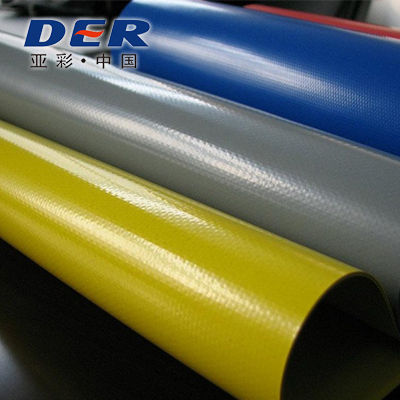
Useful beside discussions of coating coverage, roll handling and converted-product fabrication.
Shows the textile substrate beneath one-side or two-side silicone coating.
Supports broader OEM coating, surface and custom roll manufacturing messaging.
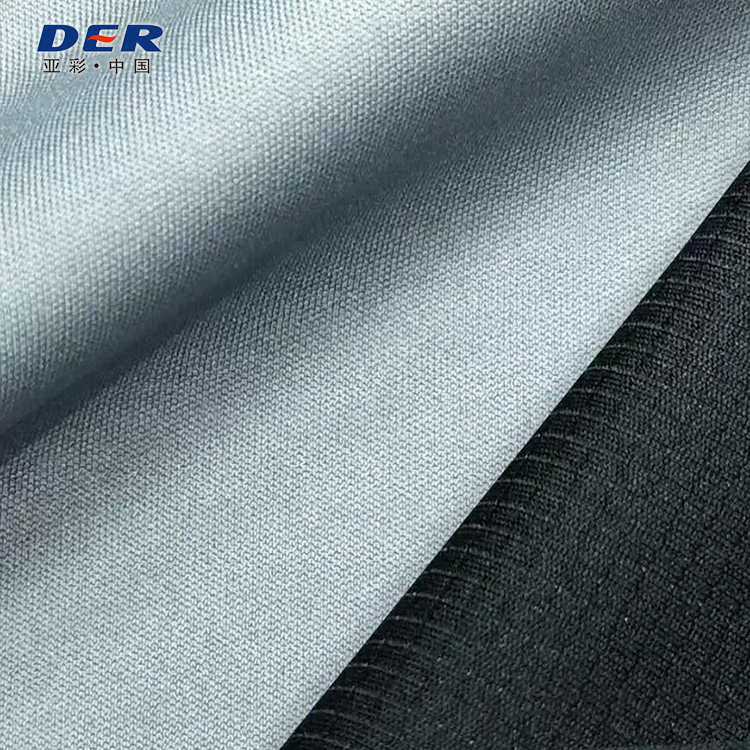
Useful for explaining why substrate + coating architecture matters more than a single GSM number.
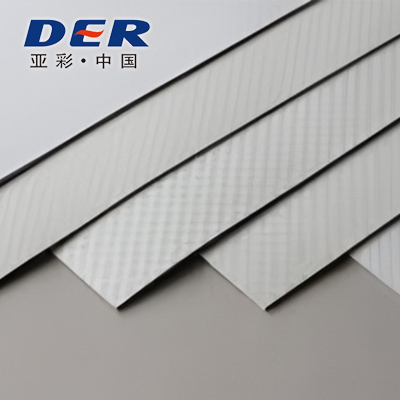
Use to cross-link buyers who actually need non-stick, low-friction or chemical-facing PTFE behavior instead of silicone.
What Should You Send to a Silicone Coated Fiberglass Manufacturer?
Application & Environment
- Finished product: jacket, curtain, blanket, connector, expansion joint, cover or other component
- Continuous and peak temperature at the actual fabric layer
- Moisture, oil, steam, dust, chemical, weather or cleaning exposure
- Repeated folding, movement, abrasion and maintenance cycle
- Which face is exposed and whether the part can be reversed
Material & Commercial Requirement
- One-side or double-side silicone coating preference
- Target weight / thickness or an existing approved sample
- Required roll width, color, surface finish and roll length
- Sewing, cutting, punching, grommeting or other conversion method
- Required test method / documentation, trial quantity and forecast quantity
Build the Coating Structure Around the Finished Product
One- or Two-Side Options
DERFLEX can review single-side or double-side silicone coating according to exposure direction, handling cycle and product architecture.
Project-Matched Construction
Base cloth, coating amount, total weight, thickness, width, color, roll length, packing and selected OEM requirements can be discussed by project.
Converter-Oriented Selection
For sewing, folding, repeated flexing or belt/jacket fabrication, selection should be validated on the intended process instead of approved only from a catalog description.
Continue the Silicone Fiberglass Buying Journey
One-Side vs Double-Sided Silicone Coated Fiberglass FAQs
What is the difference between single-sided and double-sided silicone coated fiberglass?
Single-sided silicone coated fiberglass has silicone rubber on one face and an uncoated or base-fabric-like reverse surface. Double-sided silicone coated fiberglass has silicone on both faces. One-side material is often selected for directional exposure, lower coating mass and greater drape; double-side material is often selected when both faces need protection, cleaning or repeated handling.
Is double-sided silicone coated fiberglass better?
Only when the application benefits from two protected faces. Double-side coating can be valuable for reusable jackets, mobile curtains, flexible connectors and expansion-joint belts that are handled or exposed from either side. If exposure is clearly one-directional, a one-side construction can be lighter and more economical.
Does double-sided silicone coating improve heat resistance?
Not automatically. The continuous temperature capability depends on the silicone formulation, fiberglass base, coating construction, exposure duration and complete finished assembly. Adding a second coated face changes coating mass and surface protection, not necessarily the approved temperature grade, .
Which coating side is better for removable insulation jackets?
One-side coating can be practical when the exposed outer face is clearly defined and the reverse side remains protected inside the jacket system. Double-side coating is often evaluated when the jacket is removed, folded, cleaned and handled repeatedly. The correct choice also depends on the hot-face layer, insulation core, thread and closures.
Should welding curtains use single-side or double-side silicone fiberglass?
A fixed directional curtain can use a one-side construction when the uncoated reverse face is acceptable. Double-side material is often evaluated for reusable curtains, mobile screens or workshop barriers that may be touched or exposed from either side. Welding performance still has to be validated for the actual spark, spatter and radiant-heat duty.
Is one-side silicone coated fiberglass waterproof?
The silicone-coated face can provide strong water resistance, but the reverse surface, cut edges, needle holes, seams and closures can behave differently. A finished product should not be described as waterproof without considering the complete construction and required test method.
Which side should face the heat?
There is no universal rule based only on the words “single-sided silicone coated fiberglass.” The correct orientation depends on the actual grade, heat source, whether the silicone face is intended as the protective outer layer, the temperature at each layer and the finished-system design. Confirm orientation in the approved technical specification.
Is single-sided silicone fiberglass always cheaper?
It can have a lower material-cost direction because only one face is coated, but final price also depends on base cloth, coating loading, weight, thickness, width, color, production quantity, testing, packing and conversion. Compare the complete approved specification rather than side count alone.
What information is needed to quote one-side vs double-side silicone fiberglass?
Send the finished application, temperature, exposure media, handling and flexing cycle, preferred coating side, weight or thickness, width, color, fabrication method, required test route, quantity and destination. A drawing or existing sample can help the supplier recommend the coating structure.
Not Sure Whether You Need One Coated Face or Two?
Send DERFLEX your application drawing, continuous and peak temperature, exposure direction, folding / handling cycle, target weight or thickness, width, color and quantity. We can review a practical one-side or double-sided silicone coated fiberglass direction for sampling and quotation.
Technical note: published ranges are selection directions for DERFLEX silicone-coated fiberglass programs. Final coating structure, tolerances, continuous/peak temperature, flame-performance evidence and finished-product suitability must be confirmed for the exact ordered grade and application.