01 / Installed cost
Bring both quotes to the same scope
Include the cover, drive, mounts, freight, installation, electrical or hydraulic work and any body modification. Confirm which items are excluded and who approves fitment.



Dump trailers · Fleets · Trailer OEMs
Choose a cover around the work your trailer does. A flexible tarp can retract for open-top loading and provide a replaceable fabric surface. A rigid hard cover can provide a durable closure with powered operation, depending on its design. Compare the complete installed systems, their open positions and your daily cover cycles before buying. DERFLEX supplies custom dump trailer tarps, mesh and PVC/vinyl materials, reinforced panels and OEM finishing options matched to an existing or proposed tarp mechanism.
The quick decision
A tarp is often a practical choice when open-top loading, adaptable coverage and fabric replacement are priorities. A hard cover is worth evaluating when a rigid closure and a repeatable powered operating cycle justify its installed cost. Neither option wins automatically: loading clearance, cargo shape, weather exposure and maintenance can reverse the decision.
Side-by-side buying comparison
Here, “hard cover” means rigid hinged, folding or removable panels made for a tipper or dump trailer. A pickup-bed tonneau cover is a different product. Fabric mounted on a lifting frame is still a flexible cover.
| Decision factor | Flexible tarp system | Rigid hard cover |
|---|---|---|
| Initial cost | A simple manual arrangement can limit equipment cost. Add fabric, mechanism, mounts, installation and any electric drive. | Price the panels, support structure, hinges, locks, controls and hydraulic integration where applicable. Obtain a body-specific installed quote. |
| Loading access | Fabric rolls or gathers into a parked position. Arms, roller housing, bows or rails may still occupy part of the loading envelope. | Some folding designs leave the top edge clear. Others need side or overhead room for the open panels. Verify the actual design. |
| Uneven loads | Flexibility can accommodate some load variation within the approved system geometry. Sharp protrusions and excessive heaps can damage fabric or prevent closure. | The panel path and closing profile define clearance. A load that intrudes into that path can obstruct closure or damage the system. |
| Daily handling | Manual pulling or cranking adds operator effort; electric or hydraulic tarp systems change the comparison considerably. | Powered folding lids can reduce manual cover handling. Confirm controls, locking checks and the procedure if power is unavailable. |
| Weather protection | Mesh allows airflow and is not waterproof. Solid coated fabric blocks water through intact material; seams, edge overlap and support determine overall rain protection. | Panels block rain through their surfaces, but joints, seals, edges and drainage determine the performance of the whole closure. |
| Damage & repair | Inspect punctures, seams, pockets and edge wear. Repairability and fabric replacement depend on the material and damage location. | Inspect bent panels, hinges, seal wear, latches and drive components. Structural repair or replacement may require specialist service. |
| Weight & payload | Compare the full assembly weight, including roller, arms, drive and fabric. Fabric GSM alone does not describe installed mass. | Obtain the full assembly mass. Lightweight aluminum designs mean that “rigid” does not automatically mean a large weight penalty. |
| Stored equipment | A retracting system normally keeps the cover on the trailer; a loose tarp needs storage for fabric and attachments. | A removable lid needs lifting and storage provisions; an attached folding cover needs a protected parked position. |
| Security | Fabric is vulnerable to cutting and depends on its attachments. | A rigid closure may restrict casual access if fitted with suitable locks. Do not assume every hard cover is a rated security enclosure. |
For load-specific flexible options, review DERFLEX dump truck and dump trailer tarp materials. Use this comparison to decide the cover architecture first, then specify the fabric and mechanism.
Cost / The quote is only the starting point
Request prices for the same trailer, cargo and operating duty. A fabric-only replacement price cannot be compared with a complete hydraulic lid. No single retail range represents every dump trailer size or cover configuration.
01 / Installed cost
Include the cover, drive, mounts, freight, installation, electrical or hydraulic work and any body modification. Confirm which items are excluded and who approves fitment.
02 / Operating cost
Measure uncovering plus covering, walking, attachment or latch checks and routine cleaning. A fast drive does not eliminate every manual step.
03 / Service cost
Use your own fabric replacement, seals, hinges, motor or hydraulic service records. Include downtime and payload-related costs if they materially affect your operation.
A useful time check: saving 1 minute per cycle over 1,200 cycles per year, at an assumed labor cost of 30 per hour, represents 600 per year. This is an illustrative calculation, not a measured speed advantage for either cover. Extra capital of 1,800 would take 3 years to recover from that time saving alone, before service differences.
Use one currency throughout. Enter measured cycle times and your own estimates. “Cycle” means uncovering and covering for one load. The example button loads hypothetical inputs, not DERFLEX prices or market averages.
| Your inputs | Tarp system | Hard cover |
|---|---|---|
| Complete installed cost | ||
| Annual service / other operating costs | ||
| Minutes for one complete cycle |
Simple undiscounted comparison. Financing, tax, resale value and inflation are excluded. Put estimated downtime or payload effects into annual other costs if needed. No input is sent or stored.
Access / Fit the loading operation
Evaluate the parked cover as carefully as the closed cover. A retracted tarp can still leave hardware in the bucket path, while a well-designed folding hard cover can clear the top edge. “Hard covers block loading” is too broad a claim.
A / Opening geometry
Record the inside opening, roller or panel position, remaining bows, side overhang and maximum open height. Check loader approach from the side as well as from above.
B / Closing geometry
Compare the highest permitted cargo profile with the tarp travel or panel closing path. Flexible fabric is not permission to overload the trailer or cover sharp projections.
C / Discharge geometry
Have the trailer and cover supplier confirm the required cover position, tailgate clearance, raised-body envelope and any interlocks. Do not assume every design dumps in the same cover position.
Specify the mechanism independently of the cover material. DERFLEX’s guide to materials for truck tarp systems helps frame roller, arm and attachment compatibility. Confirm hardware, structural mounts and controls with the mechanism or trailer supplier.
Compare operator position, crank reach, pull force, walking distance and number of fastening steps. A powered tarp may address the same daily handling problem that motivates a hard-cover purchase. Follow the system’s operating instructions and keep people clear of moving arms and panels.
For tarps, look for rail abrasion, damaged pockets, seam wear and strain around attachments. For hard covers, check alignment, hinges, latches, seals and the drive system. Repeated damage at one spot usually calls for a geometry or contact review as well as a replacement part.
Material / Match the cargo
Start with the load’s containment and moisture requirements. Then match the fabric to the mechanism, climate and wear pattern. A heavier tarp is not automatically an easier or longer-lasting cover.
| Operating situation | Direction to evaluate | Confirm before ordering |
|---|---|---|
| Aggregate, mulch or general landscape loads | Transport mesh when airflow is useful and rain protection is not the priority. | Mesh opening relative to cargo, perimeter coverage, abrasion locations and route requirements. |
| Moisture-sensitive bulk materials | Solid PVC/vinyl coated fabric or a suitable rigid closure. | Complete water-shedding design, seams, edge closure, drainage and contamination requirements. |
| Many short trips per day | A system-compatible tarp with a manual or powered drive selected around duty cycle. | Full-cycle time, roller build-up, pocket fit, flexing and the availability of replacement panels. |
| Sharp mixed construction debris | Contain protrusions within the approved load envelope; evaluate protected fabric contact zones or a compatible rigid system. | Loader impact risk, puncture points, closing clearance and discharge behavior. Neither cover should be struck by loading equipment. |
| Hot asphalt or other hot loads | A purpose-selected cover with verified heat suitability. | Actual contact temperature, exposure time and system requirements. Do not assume standard PVC fabric is suitable for hot contact. |
| Cold-weather operation | Fabric formulation and a mechanism suitable for the expected operating temperature. | Cold-flex requirements, icing, winding behavior, seal condition and maintenance procedures. |
Mesh has openings, so it cannot provide the same water barrier as intact solid fabric. Specify its structure, edge reinforcement and roller interface together. See mesh replacement tarp measurement and finishing details when reproducing an existing panel.
Coated polyester provides a flexible water barrier through the fabric surface. Overall protection also depends on seams, perimeter coverage and support against pooling. Review PVC tarpaulin material options before fixing the weight or coating requirement.
Specification / Make the cover reorderable
DERFLEX can discuss roll material, cut panels and finished custom tarps for fabricators, distributors, fleets and trailer OEMs. Specify the fabric component against an approved mechanism drawing or verified existing installation.
| Specification | DERFLEX sourcing direction | Buyer’s approval point |
|---|---|---|
| Material construction | Transport mesh or solid PVC/vinyl coated polyester, selected for the application. | Cargo, moisture exposure, climate and contact conditions. |
| GSM, thickness & base fabric | Project-dependent; request the proposed material data and available specification. | Handling mass, flexibility, tear direction and mechanism limits; do not order on GSM alone. |
| Finished size | Custom width and length to drawing, approved sample or verified measurements. | Working coverage, required engagement and travel; distinguish finished size from cut size. |
| Roller & pull-bar interfaces | Pockets, sleeves or project-defined attachment details. | Bar diameter, flat pocket width, insertion direction, seam orientation and retention. |
| Edges & wear zones | Reinforced hems, webbing, corner or local reinforcement as specified. | Rail contact, pull direction, accumulated thickness and winding clearance. |
| Attachments & identification | Project-specific grommets, straps or other finishing; color, logo, label and OEM packaging options. | Attachment layout, approved artwork, SKU identification and packing method. |
| Performance verification | Required properties and available material evidence to be confirmed with DERFLEX. | Agree the test method, acceptance values and sample validation before production. |
Pocket construction and reinforced edges add thickness to the wound cover. Check the available roller space and travel path before making a “stronger” panel that is difficult to retract. Use the roll tarp material and finishing guide to plan the interface.
Approximate fabric mass in kg = area in m² × GSM ÷ 1,000, before pockets, webbing and hardware. As a hypothetical example, 20 m² at 650 GSM is 13 kg of base material. Complete system weight and actual performance still need separate confirmation.
Where fit is critical, request a sample or pilot installation. Record finished dimensions, pocket geometry, reinforcement and labeling after approval. Do not reproduce an old tarp’s stretched dimensions without checking the actual trailer. DERFLEX’s custom tarp manufacturing options support a documented repeat-order specification.
Material in practice
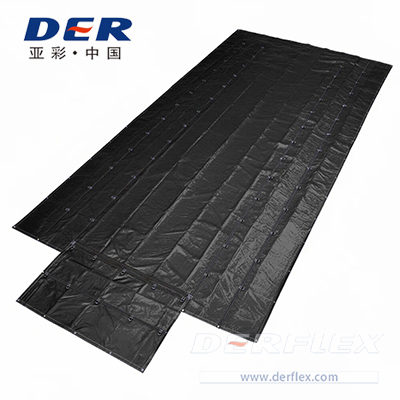
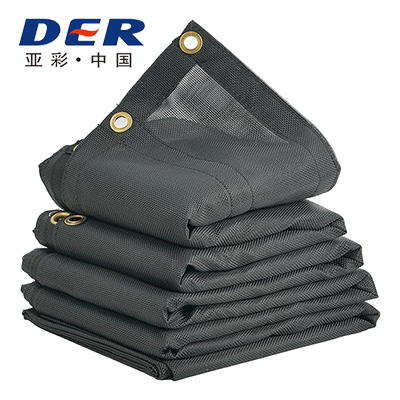
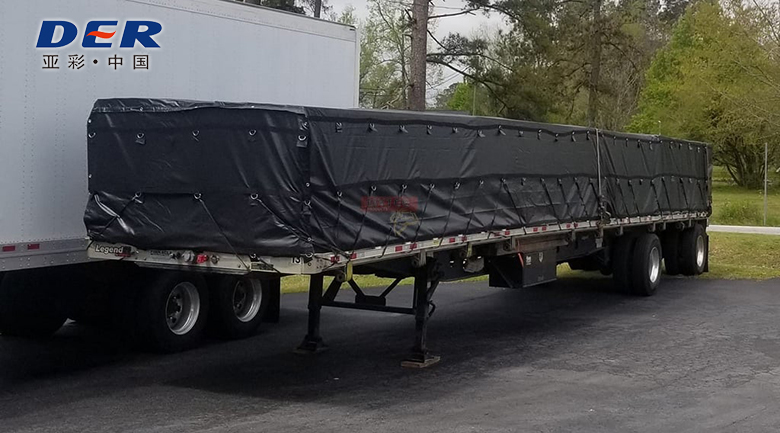
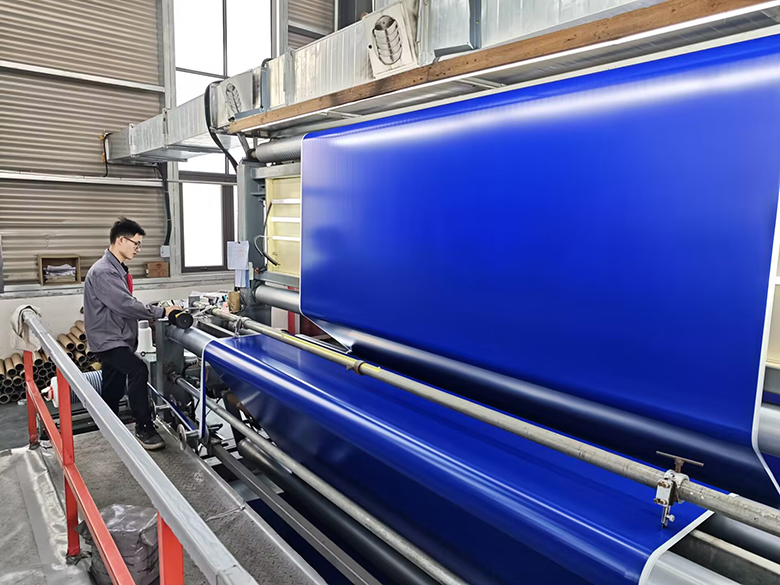
Actual DERFLEX-hosted images illustrate flexible cover products and material manufacturing. The transport example below shows a flatbed trailer; it is not presented as a dump trailer hard-cover installation.
Make the next quote easier to compare
Request a custom dump trailer tarp quotation with the measurements and operating conditions below. DERFLEX can review material, finishing and OEM supply requirements. For a rigid lid conversion, obtain the cover and structural approval from the trailer or hard-cover system supplier.
MOQ, sample availability, lead time and price are confirmed for the selected material, finished design and order quantity.
Buyer questions
A simple manual tarp arrangement can have a lower installed cost, but a powered tarp system can narrow the difference. Compare fabric, mechanism, mounting, installation, service and labor over the same ownership period. A fabric-only replacement quote is not comparable with a complete rigid cover.
Some do, but not all. Folding designs can leave the top edge clear. Check the open panels, hinges, side projection and overhead clearance against the loader’s working path. Retracted tarps also need clearance for rollers, arms, bows or rails.
Intact solid PVC/vinyl fabric blocks water through its surface; mesh does not. Whole-cover rain protection depends on seams, support and perimeter coverage. A hard cover also depends on its joints, seals and drainage. Compare the installed closure rather than the surface material alone.
Only within the trailer’s approved loading envelope and the cover system’s allowed geometry. Flexibility does not permit overloading or eliminate protrusion hazards. Check travel clearance, permitted load profile, attachments and sharp contact points with the suppliers.
Compare the operating mechanisms. An electric or hydraulic tarp can reduce manual effort, as can a powered hard cover. Measure a complete uncover-and-cover cycle, including walking, fastening, latch checks and cleaning, using the actual trailer.
DERFLEX can discuss custom mesh or PVC/vinyl tarp materials and finished panels with pockets, reinforcement and OEM finishing. Send verified measurements, a drawing or sample, system photos, cargo, quantity and destination. Fit, material, MOQ, sample terms and lead time are confirmed for the project.