Fewer joining operations
When the required panel fits inside the roll width, converters can reduce the number of longitudinal welds or sewn joins needed before edge finishing.



 Wide-Panel PVC Tarpaulin Supply
DERFLEX supplies seamless tarpaulin fabric and wide PVC-coated polyester rolls for buyers who want to reduce panel joints, simplify fabrication, and build cleaner large-area covers. Selected DERFLEX tarpaulin structures are published in widths up to approximately 5.1 m, subject to product construction and order confirmation.
Whether you source raw seamless tarpaulin roll material or need a finished cover, the key is to define what “seamless” should mean for your project: one-piece fabric within the roll width, or a larger fabricated cover using welded panels.
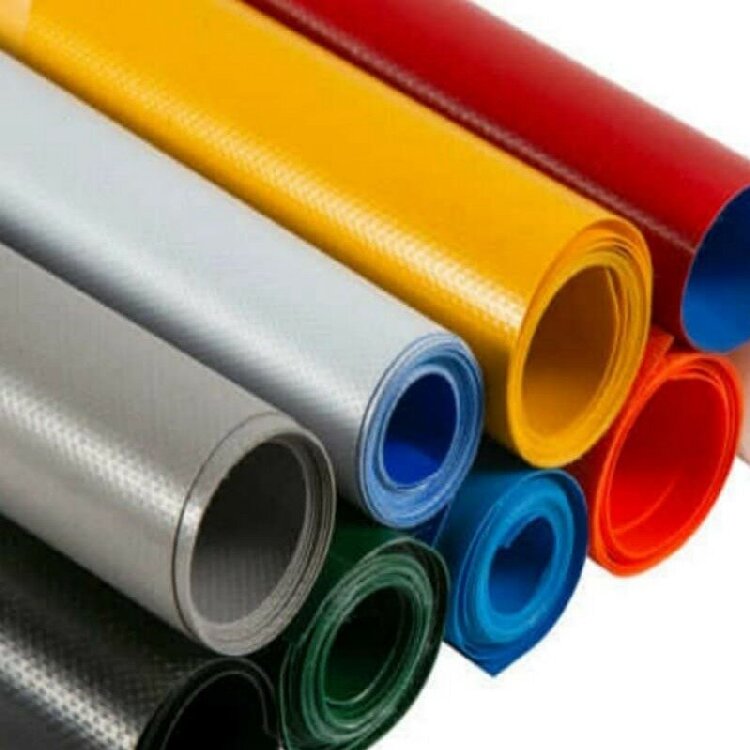
In industrial sourcing, “seamless tarpaulin” can describe more than one construction. Clarifying the term before quoting avoids incorrect expectations about roll width, finished size and joint design.
A seamless tarpaulin fabric is typically a continuous coated or laminated sheet produced in one piece across its manufacturing width. No longitudinal sewn or welded center joint is needed inside that width.
This format is useful when appearance, liquid-shedding continuity, fabrication speed or reduced joint count matters.
The value of wide seamless tarpaulin is usually practical rather than cosmetic. Buyers should evaluate how width affects conversion time, joint count, appearance and the geometry of the finished product.
When the required panel fits inside the roll width, converters can reduce the number of longitudinal welds or sewn joins needed before edge finishing.
One-piece sections can give tents, covers, curtains and liners a more uniform appearance where visible center joints are undesirable.
Wide rolls may simplify nesting and cutting for selected dimensions, but the best roll width still depends on final size, scrap rate and handling equipment.
Every added weld introduces another area that may need process control and inspection. Reducing joints can simplify quality checks on suitable designs.
Distributors and tarp workshops can order roll material and complete local cutting, welding, printing, hemming and accessory installation.
Wide width should not replace engineering. GSM, yarn, weave, coating, finish and climate exposure still determine whether the material is suitable.
For common DERFLEX tarp directions, a reinforced polyester textile provides the load-bearing core while PVC layers provide the flexible protective surface. Construction can be adjusted for the intended use.
Knife-coated PVC tarpaulin is commonly selected for more demanding industrial covers where coating adhesion, surface consistency and repeated outdoor use are important.
Laminated PVC tarpaulin can be a practical choice for lighter-duty protection, temporary covers and price-sensitive applications.
The correct process depends on use environment, service cycle, flexing, welding method and budget—not only on GSM.
The ranges below combine currently published DERFLEX tarp-roll and tarpaulin directions. Exact availability should be confirmed by grade, quantity and required test conditions.
| Parameter | Typical direction | Buyer decision |
|---|---|---|
| Material | PVC coated / laminated polyester fabric | Match coating route to duty level, welding needs and target cost. |
| Weight | Approx. 350–1300 gsm for published tarp-roll range; other tarpaulin structures may differ | Do not select by weight alone—check base fabric, coating build and actual application. |
| One-piece roll width | 1.0 m to approximately 5.1 m on selected DERFLEX structures | Confirm whether your finished panel fits inside the selected material width. |
| Roll length | 50 m / 100 m / custom by product direction | Plan converter handling, storage, container loading and local cutting efficiency. |
| Base-fabric options | Common 500D / 1000D / 1300D directions are available across DERFLEX tarp families | Choose yarn and density around tensile, tear and dimensional requirements. |
| Surface | Glossy / matte / semi-gloss; application-specific lacquer options | Consider cleanability, glare, friction, printing and outdoor exposure. |
| Color | Standard colors plus project-specific matching | Provide Pantone/RAL reference or a physical sample where color consistency matters. |
| Temperature direction | Published DERFLEX tarp-roll guidance includes approximately -30°C to +70°C | Confirm the exact formulation if the application is exposed to severe cold or heat. |
| Finishing | Cutting, welding, hemming, webbing, eyelets, pockets and custom packing | Send a drawing or finished-size list to quote the full conversion requirement. |
Specification values are product-family references rather than a universal guarantee. Final technical data should follow the confirmed production grade, sample approval and order documentation.
The right application is usually one where fewer central joints provide a fabrication, appearance or maintenance benefit.
Wide panels can reduce longitudinal joining on selected truck tarp dimensions. Reinforcement zones, abrasion points and fastening hardware should be specified separately.
Useful for machinery, pallets and storage covers where a clean continuous main panel simplifies fabrication and routine inspection.
Wide coated fabric can help reduce visible joins on roof and wall panels, while flame-retardant requirements should be handled by project-specific tested grades.
Crop, hay, machinery and farm-storage covers can use wide PVC-coated rolls where weather exposure, folding and handling requirements justify the construction.
Selected wide-panel materials can reduce joint count in non-potable containment, pond and liner applications. Chemical or potable-water contact must be evaluated separately.
Tarpaulin workshops can keep wide rolls for local cutting and custom finished-goods production, reducing the need to buy multiple narrow-width panels for every order.
Neither format is automatically better. The correct option depends on finished dimensions, handling, fabrication equipment and project economics.
| Decision point | One-piece panel within roll width | Welded multi-panel tarp |
|---|---|---|
| Center joints | Avoided within the one-piece panel | Required when final width exceeds available roll width |
| Maximum practical size | Limited by available production width and roll handling | Can be fabricated to much larger dimensions |
| Fabrication steps | Potentially fewer joining operations | Additional welding and joint inspection required |
| Visual surface | Cleaner uninterrupted panel appearance | Visible or detectable weld lines may remain |
| Material utilization | Can create more trim waste on certain dimensions | Panel layout may improve yield for some large formats |
| Best fit | Truck panels, covers, tent sections, curtains and converter stock that fit available width | Oversized covers, very large roofs, liners and project-specific fabricated structures |
A good RFQ gives the manufacturer enough information to decide whether a one-piece roll is practical and which structure should be sampled.
List width × length for every cover or panel. Mark which direction must remain one-piece if that matters to the design.
Truck cover, tent, machinery cover, pond liner and warehouse partition expose the material to different loads and failure modes.
Describe wind, sunlight, rain, abrasion, folding frequency, operating temperature and expected service cycle.
Converters may only need raw rolls; end users may need hemming, webbing, eyelets, reinforced corners and pockets.
If flame retardancy, anti-mildew, cold resistance, printing, antistatic treatment or another requirement applies, define the target test or use condition.
For repeat orders, align color, hand feel, surface, roll width and key mechanical criteria before mass production.
Wide rolls do not remove the need for process control. DERFLEX’s published tarp-roll quality guidance includes checks related to mechanical strength, coating uniformity, adhesion and weather-performance requirements.
DERFLEX has published PVC tarpaulin manufacturing experience dating to 2001 and supports coated-fabric rolls as well as finished tarp conversion. For seamless-tarpaulin projects, the practical advantage is the ability to discuss material and fabrication in the same specification conversation.
Selected DERFLEX tarpaulin structures are published up to approximately 5.1 m, allowing some covers to be cut from a single main panel.
Knife-coated and laminated PVC tarpaulin directions are available, helping buyers match construction to duty level rather than forcing one process onto every application.
Buyers can source seamless tarpaulin rolls for local conversion or discuss cutting, welding, hemming, reinforcement and accessory installation.
Weight, width, base fabric, color, surface finish and selected functional additives can be reviewed against the actual operating environment.
These six related pages help buyers move from material width to roll format, duty level, fabrication route and supplier evaluation.
Answers for importers, distributors, converters and project buyers comparing seamless tarpaulin suppliers.
It usually means the main tarpaulin panel is produced as one continuous piece across the available roll width, without a center sewn or welded joint. A finished tarp may still include hems, reinforced edges, eyelets or pockets.
DERFLEX currently publishes selected tarpaulin structures in widths up to approximately 5.1 m. Width availability depends on the exact product construction, weight and order requirement, so it should be confirmed during quotation.
Normally no. If the finished width exceeds the available production width, separate panels need to be joined. Hot-air or high-frequency welding can create strong, water-resistant joints, but the finished product is technically a welded multi-panel tarp rather than a single-piece seamless sheet.
Yes. DERFLEX supplies PVC tarpaulin roll material for distributors, workshops and OEM converters. Common published roll lengths include 50 m and 100 m, with custom directions reviewed by grade.
There is no single correct GSM. Published DERFLEX tarp-roll directions span approximately 350–1300 gsm, but the right choice also depends on denier, weave, coating method, wind load, abrasion, folding frequency and service environment.
Send finished dimensions, application, target roll or finished-tarp format, expected climate and duty cycle, preferred color/finish, special requirements, estimated quantity and any drawing showing hems, reinforcements, eyelets or pockets.
Send DERFLEX your target width, length, application, GSM preference and whether you need roll material or a finished cover. The team can review a suitable wide-width material direction and fabrication route for quotation.