Polyester Reinforcement
High-tenacity woven polyester provides the load-bearing structure. Yarn denier and weave construction influence tensile strength, tear behavior, dimensional stability and resistance around hems and fixing points.




DERFLEX supplies heat welded tarpaulin for B2B buyers who need more than a standard cover: weldable PVC coated polyester material, defined seam construction, reinforced edges and a supply format matched to the converter, fleet, contractor or OEM program.
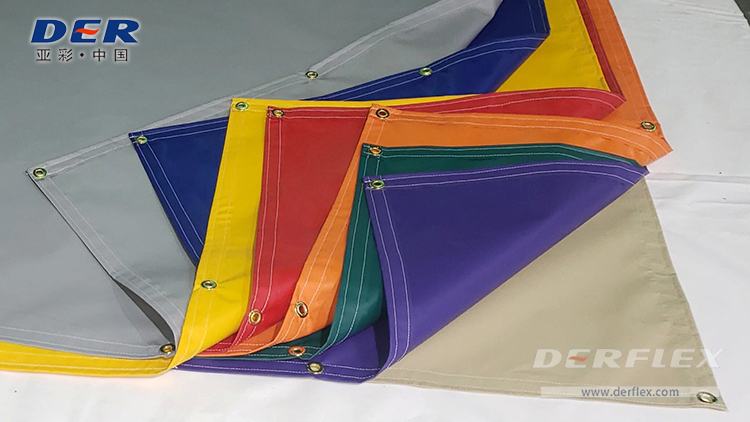
A heat welded tarpaulin is a fabricated cover in which compatible thermoplastic-coated panels are joined by controlled heat and pressure. With PVC coated polyester, the coating forms the weldable interface while the woven polyester scrim carries tensile and tear loads.
“Heat welded tarpaulin” normally describes the finished cover or joined panel. A heat welded tarpaulin roll is more accurately a roll of heat-weldable tarpaulin fabric supplied for conversion. DERFLEX supports both supply routes so buyers can source material only or move further into pre-cut and finished fabrication.
Seam performance is not created by the welding machine alone. The base textile, PVC coating and surface system must work together within a practical welding window.
High-tenacity woven polyester provides the load-bearing structure. Yarn denier and weave construction influence tensile strength, tear behavior, dimensional stability and resistance around hems and fixing points.
The PVC coating or laminated surface provides water resistance and the thermoplastic interface used for hot-air, hot-wedge or compatible high-frequency welding. Coating adhesion remains important after the seam cools.
UV packages, cold-flex direction, anti-mildew treatment, lacquer, texture, print compatibility and flame-retardant options can be discussed according to the end use and specified test method.
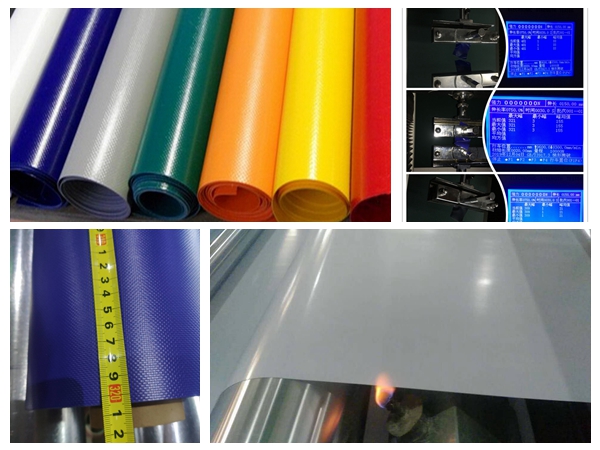
For fabricators, the correct roll is the one that runs consistently through cutting, panel alignment, welding and finishing—not simply the one with the highest GSM.
Tell DERFLEX the welding process, equipment, target seam construction, roll width, finished application and performance priorities before sampling. Production-representative material can then be evaluated before bulk conversion.
A stable seam is the result of material compatibility, overlap geometry, heat input, pressure, speed and cooling. The production window should be qualified on the approved tarp grade rather than copied from another material.
Clean and align the panels with the defined overlap, seam direction and reinforcement layout.
Hot air, a heated wedge or a compatible RF/HF process softens the thermoplastic joining zone.
Rollers or tooling consolidate the surfaces while the process controls speed, pressure and dwell.
The seam cools into a bonded joint, then moves to visual, peel, leak or application-specific checks.
The table is a sourcing framework, not a universal fixed SKU. Final construction, tolerances and test methods should be stated in the quotation and approved sample.
| Specification | Typical DERFLEX Direction | Why It Matters to the Buyer |
|---|---|---|
| Product Type | Heat-weldable PVC tarp roll, cut panel, pre-welded component or finished heat welded tarpaulin | Clarifies whether conversion is completed locally or by DERFLEX. |
| Base Fabric | High-tenacity polyester; common projects may use 500D–1500D yarn structures | Select according to finished size, tie-down load, tear exposure and handling frequency. |
| Finished Weight | Approx. 450–1200 gsm; lighter or heavier structures can be reviewed by project | GSM influences handling and durability but does not define seam strength by itself. |
| Thickness | Commonly approx. 0.35–1.20 mm depending on coating route and measurement method | Must suit machine capacity, folding behavior and final cover stiffness. |
| Roll Width | Approx. 1.0–5.1 m subject to construction and production route | Wider material may reduce seam count but can change cutting, handling and freight efficiency. |
| Surface | Glossy, semi-gloss, matte, semi-matte, lacquered or embossed options | Surface finish affects appearance, blocking, cleanability, printing and the welding setup. |
| Welding Methods | Hot-air, selected hot-wedge and HF/RF directions subject to grade compatibility | State the process and machine before sampling so the material can be matched to conversion. |
| Functional Options | UV, cold-resistance, anti-mildew, anti-static, abrasion-focused and FR directions | Regulated or safety-related requirements should name the test method and acceptance criteria. |
| Finished Details | Welded hems, webbing, rope edges, eyelets, D-rings, straps, pockets and reinforcement patches | Hardware zones often see higher local loads than the center panel and require separate reinforcement logic. |
| Branding & Packing | Custom color, logo printing, labels, barcodes and private-label packing | Useful for distributors, importers and OEM programs managing repeat market supply. |
Heat welding is not one single process. The best method depends on material chemistry, seam geometry, production volume, water demand, tooling and how the finished tarp will be loaded.
| Decision Factor | Hot-Air Welding | HF / RF Welding | Industrial Sewing |
|---|---|---|---|
| Typical Fit | Long overlaps, variable custom sizes, truck covers, tents and large panels | Repeatable PVC shapes, controlled seams, patches and compatible sealed products | Complex fitted geometry, non-weldable textiles, webbing and repair-focused details |
| Water Path | No stitch perforation across the welded overlap when the seam is properly formed | No stitch perforation across the qualified RF seam | Needle holes are created and may require a separate sealing strategy |
| Flexibility | High for long seams and changing dimensions | High repeatability once tooling and parameters are established | High for curves, mixed materials and multilayer attachments |
| Main Risks | Underheating, overheating, dirty surfaces, inconsistent pressure or speed | Material incompatibility, incorrect energy, tooling pressure or alignment | Thread wear, perforation tear-out, skipped stitches and leakage through holes |
| Common Heavy-Duty Strategy | Hybrid construction: welded primary weather seams plus engineered reinforcement, sewing or mechanical attachment where straps, webbing, pockets and hardware transfer high local loads. | ||
Buyers often ask whether a heat welded tarp is waterproof. A qualified welded overlap can reduce seam leakage paths, but the complete cover also depends on corners, transitions, penetrations, drainage and installation.
Insufficient heat or pressure may leave channels inside a seam that appears closed from above.
Excessive heat can distort the coating, expose scrim or create a brittle transition next to the joint.
Changes in layer count need their own seam and pressure strategy rather than the straight-seam setting alone.
Hardware penetrations require reinforcement and load distribution; a strong center seam cannot correct a weak edge.
Standing water can increase load on panels, seams and supports; the installation should encourage drainage where possible.
Sharp cargo edges, repeated folding and dragging can damage the coating next to otherwise sound welded joints.
DERFLEX can discuss heat welded tarpaulin fabric and finished products at different conversion stages, allowing the buyer to keep fabrication in-house or reduce local processing.
Continuous PVC tarpaulin roll material for workshops that control cutting, heat welding, eyelet installation, reinforcement and final inspection in their own plant.
Defined panel dimensions and selected welded components for buyers who want to reduce cutting and preparation while retaining final assembly or installation.
Completed tarps with project-specific seams, hems, webbing, grommets, D-rings, straps, pockets, printing, labels and packing subject to drawing and sample confirmation.
Heat-welded panel construction is especially useful when finished covers exceed roll width, need broad water-shedding surfaces, or require repeatable large-format fabrication.
Flatbed tarps, cargo covers, replacement panels and side systems exposed to road weather, tension and repeated folding.
Temporary roofing, scaffold enclosure, building materials and jobsite covers requiring broad joined panels.
Hay, crop, equipment and seasonal storage protection where large welded surfaces can reduce primary seam penetrations.
Custom protective covers for machinery, warehouse assets, process areas and temporary outdoor storage.
Large roof and wall panels for work shelters, temporary structures and storage systems requiring durable panel joins.
Repeat supply for distributors, fleets and private-label buyers that need controlled color, sizing, finish, ing and packaging.
“Strong waterproof heat welded tarp” is too vague for repeat production. A useful request identifies the finished application, conversion method and acceptance criteria so quotations represent comparable constructions.
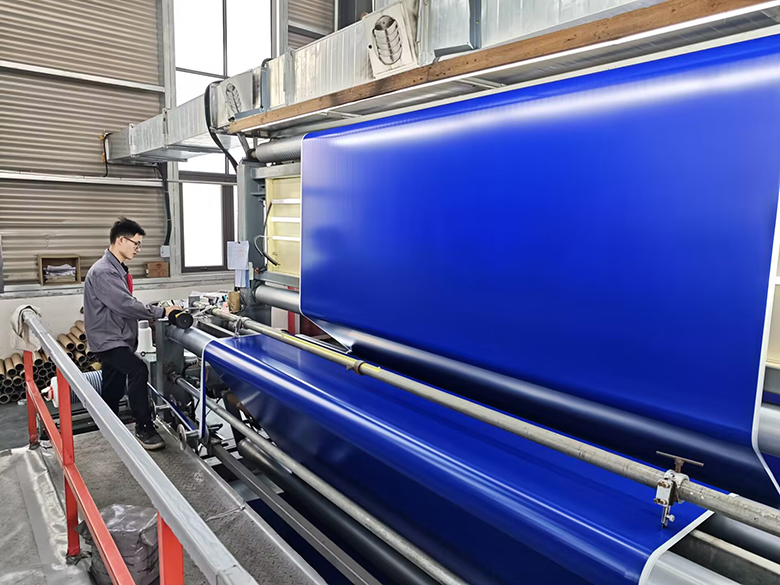
DERFLEX works with PVC coated and laminated tarpaulin materials and can discuss roll supply, cut-panel programs, welded components and finished custom covers. For B2B buyers, the useful advantage is the ability to align the fabric specification with the intended welding process and final reinforcement plan.
Projects can be reviewed around measurable items such as base fabric, finished weight, width, surface, color, welding method, edge construction, hardware layout, packing and agreed inspection requirements.
It is a tarp whose compatible thermoplastic-coated panels are joined using controlled heat and pressure. In PVC coated polyester tarpaulin, the PVC surface forms the weldable layer while the polyester scrim provides mechanical strength.
A correctly designed and qualified welded overlap can provide strong water resistance because it avoids a stitched needle line. Final water performance still depends on the material, seam geometry, corners, hardware penetrations, drainage and installation.
DERFLEX can discuss roll goods selected for hot-air, hot-wedge or compatible HF/RF fabrication. Buyers should provide the intended welding process, equipment, roll width, target GSM, finish and finished application so representative material can be sampled.
Heat-weldable tarpaulin fabric is supplied as raw roll material for conversion. A finished heat welded tarp has already been cut and fabricated into the required dimensions with specified seams, hems, reinforcement and hardware.
Neither method is universally better. Hot-air welding is practical for long seams, large panels and frequently changing sizes. HF/RF welding can be highly repeatable for compatible PVC structures and defined tooling. The correct choice depends on the material, seam geometry, production model and acceptance requirements.
Send the application, finished size or roll requirement, target GSM or reference sample, welding process and machine, seam layout, color, finish, environmental conditions, reinforcement and hardware details, quantity, packing, destination and any required tests.
Share the end use, roll or finished size, target material, welding equipment, seam layout, reinforcement, quantity and destination. DERFLEX can review a practical material and fabrication route for sampling and quotation.