Material Platform
Decide whether the project is better served by a PU, PVC or another synthetic leather construction. The decision should reflect hand feel, surface design, use environment, conversion method and commercial position.



 Custom roll material · International B2B supply
DERFLEX supplies synthetic leather rolls for importers, distributors, furniture manufacturers, automotive interior suppliers, bag and luggage factories, footwear programs and private-label brands. Instead of treating artificial leather as a single catalog item, we help define the surface, backing, thickness, converting behavior, roll format and export requirements around the finished product.
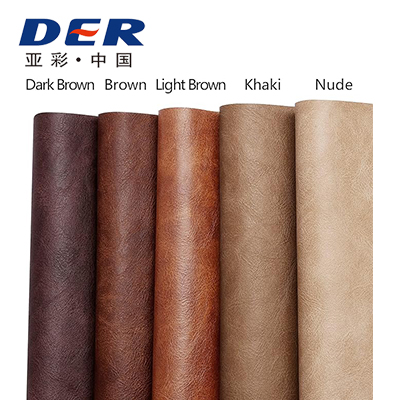
The search for a synthetic leather exporter usually begins after a buyer already knows that genuine leather is not the required material route. The harder questions come next: which synthetic leather family fits the product, how the roll behaves during cutting or upholstery, how the visual standard is approved, and whether a future order can still reproduce the intended look and processing behavior.
For an importer, the risk is rarely limited to the invoice price. A material that looks acceptable in a photograph may create cutting waste, seam problems, wrapping difficulty, shade complaints or slow-moving inventory after it reaches the destination market. This is why DERFLEX organizes the export conversation around the buyer's finished product and production route.
PU synthetic leather, PVC synthetic leather and other engineered leather-look constructions are not interchangeable by name alone. Surface chemistry, backing choice, embossing, thickness, softness, stretch and top finish can change both appearance and downstream processing. Final suitability should therefore be confirmed with a physical sample and written project requirements.
This page is structured around the decisions that affect product fit, repeat orders and international supply—not around a generic catalog.
Decide whether the project is better served by a PU, PVC or another synthetic leather construction. The decision should reflect hand feel, surface design, use environment, conversion method and commercial position.
Grain, color, gloss, embossing depth and touch create the visible identity of a collection. Physical references are more reliable than screen colors for approval.
Backing, thickness, body, stretch and coating construction influence cutting, stitching, folding, wrapping, quilting, bonding and upholstery installation.
Roll width, roll length, core, labels, packing marks, collection codes and order references matter because the material must still be identifiable after it reaches a warehouse or production line.
If abrasion, flexing, hydrolysis, cleanability, UV, flame behavior or another property matters, define the method and acceptance criteria before relying on broad marketing adjectives.
A distributor or OEM program should be able to refer back to an approved material code, physical reference and written specification instead of rebuilding the product from memory on every order.
Synthetic leather is a family of constructions. The notes below are sourcing directions, not universal performance claims.
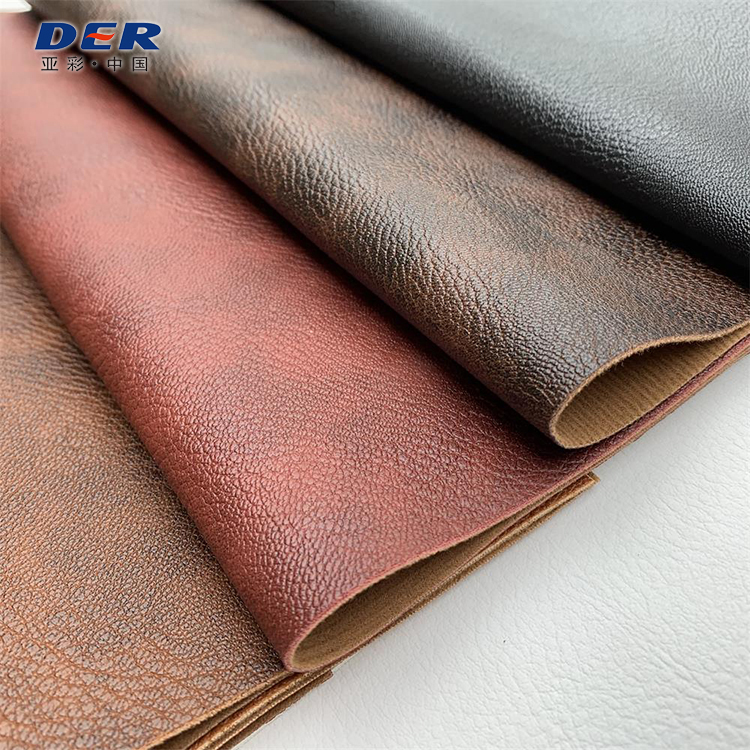
Often discussed when a buyer wants a softer hand, refined surface design or leather-like drape. Final durability and processing behavior depend on the complete coating and backing construction.
Common in commercial upholstery and other applications where controlled surface design, practical cleanability direction and cost structure are important. Formulation and backing still need project review.
Where the application needs a different body, dimensional behavior or touch, microfiber or other engineered backing directions can be discussed subject to the selected material program.
Hydrolysis resistance, abrasion, UV/weathering direction, flame-test pathways, mildew resistance and cleaner compatibility should be linked to a named test or real end-use requirement when relevant.
Two quotations can use the same product name while describing materially different constructions. A clearer specification reduces that ambiguity.
| Specification Area | Options / Direction | Why It Matters to the Buyer |
|---|---|---|
| Material family | PU synthetic leather, PVC synthetic leather, project-specific engineered leather-look construction | Changes surface character, handling, commercial level and suitability for different manufacturing routes. |
| Surface | Smooth, pebbled, napa-style, lychee-style, fine grain, printed, embossed, matte, semi-matte or semi-gloss direction | Defines collection identity and visual consistency across finished products. |
| Color | Standard collection colors or custom matching based on an approved reference | Physical approval helps reduce the uncertainty of screen-based color comparison. |
| Backing | Knitted, woven, nonwoven, polyester, microfiber or project-matched backing direction | Affects body, stretch, sewing, wrapping, lamination, bonding and dimensional behavior. |
| Thickness & hand | Application-specific thickness, softness, flexibility and body | Influences drape, folding, cushion wrapping, panel covering and finished-product feel. |
| Roll format | Usable width, roll length, core, winding direction, labeling and protective packing | Connects the exported roll to cutting markers, machines, warehouse handling and load planning. |
| Performance | Named abrasion, flex, ageing, hydrolysis, adhesion, cleanability, UV, mildew or flame route when required | Lets purchasing compare measurable requirements instead of relying on undefined claims. |
| Commercial program | MOQ, sample route, order quantity, replenishment cycle, private-label marking and delivery window | Determines whether the material can support the buyer's stock, OEM or distribution model. |
Each checkpoint gives the buyer and supplier a clearer record of what has been approved and what still needs confirmation.
Define the finished product, component, target market, converting method and expected order scale.
Select the synthetic leather family, surface, backing, thickness and handling direction for sampling.
Identify the approved swatch or trial material and record color, grain, gloss and construction details.
Where the project risk justifies it, test the material in cutting, sewing, wrapping, bonding or upholstery production.
Confirm roll format, quantity, tolerance approach, labels, packing marks and any project-specific test requirements.
Compare relevant appearance and order details with the approved reference during commercial production.
Coordinate packing information, shipping marks and buyer-requested commercial documents before dispatch.
Retain usable material identification so a future purchase can refer to the same program instead of restarting.
Ask how backing, thickness, surface finish and construction affect your real manufacturing process. A useful answer should connect the material to the product rather than repeat a catalog description.
A coded and retained reference helps purchasing, development and production teams communicate about repeat orders with less dependence on photographs or informal descriptions.
If a property is commercially important, ask for the test method, condition and acceptance requirement to be agreed before shipment rather than after a dispute appears.
Usable width, roll length, core, roll protection, labels and packing marks can affect cutting yield, warehouse handling and container efficiency.
Importers and distributors need a repeat-order path. Confirm how color references, grain references, item codes and written specifications are maintained for future supply.
Do not assume one document covers every construction. Destination-market requirements and project-specific documentation should be confirmed for the selected material and order.
The same synthetic leather category can serve many industries, but each industry creates a different sourcing brief.
Hand feel, large-surface appearance, seam behavior, cushion wrapping, color continuity and cleaning routines often matter most.
Wrapping behavior, stitch response, backing stability, surface consistency and project-specific ageing or contact requirements may be important.
Fold behavior, edge handling, body, grain consistency, sewing response and scuff zones should be reviewed against the actual product construction.
Flexibility, backing, thickness, folding, bonding and repeated movement can influence the suitable synthetic leather direction.
Visual consistency, cleanability direction, replacement supply and project phasing can matter across hotels, restaurants and commercial interiors.
Collection codes, sample books, repeat colors, custom embossing, roll labels and coordinated packaging help turn material into a managed product line.
For a manufacturing buyer, the commercial value of a synthetic leather roll is influenced by what can actually be converted into finished products. A small price difference can become irrelevant when it is offset by cutting waste, shade sorting, rework, short rolls, surface defects or inconsistent processing behavior.
For distributors, the cost can appear later as difficult-to-sell colors, mismatched replenishment or poorly identified rolls. For OEM brands, the cost can appear as product-line inconsistency and repeated sampling. This is why a sourcing comparison should include usable width, roll consistency, sample-to-bulk control, packing efficiency and repeat-order logic.
DERFLEX can discuss material and commercial variables together so the quotation is closer to the buyer's real conversion and supply model. Exact specifications, MOQ, lead time, performance data and shipping terms are confirmed for the selected material and order.
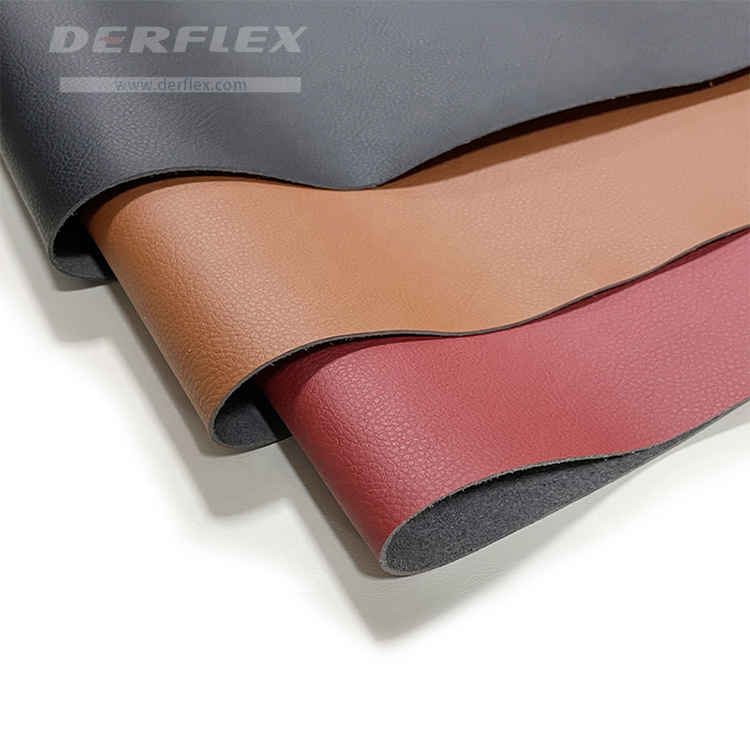
DERFLEX's published company information describes an integrated production base and international customer reach that support coated-material development and B2B supply programs.
Surface, backing, thickness and handling direction can be discussed around furniture, automotive, bag, footwear and other OEM uses.
Custom color, embossing, finish, backing, roll format and labeling can be reviewed according to project feasibility.
Sampling, written specifications, roll identification and packing details can be organized to support ongoing importer and distributor programs.
Six related pages cover factory capability, supplier evaluation, China sourcing, custom development and product-family selection.
The more complete the project brief, the easier it is to avoid irrelevant samples and quotations that cannot be compared.
| Share This | Useful Detail | Why It Helps |
|---|---|---|
| Finished product | Sofa, car seat, door panel, handbag, luggage, footwear, contract seating or other exact component | Sets the application context before material selection. |
| Visual reference | Physical swatch, sample, grain photo, color card or target collection | Gives the development team a clearer surface direction. |
| Processing method | Cutting, sewing, quilting, folding, wrapping, bonding, laminating or upholstering | Helps align backing, body and flexibility with the factory operation. |
| Performance requirement | Named test method and pass criterion where abrasion, hydrolysis, UV, flame or another property is required | Avoids vague “heavy duty” or “premium” descriptions that cannot be verified. |
| Commercial plan | Estimated quantity, number of colors, order frequency, destination and target delivery window | Supports MOQ, production and packing discussions around the real purchasing model. |
| Private-label needs | Roll labels, collection codes, language, barcode, carton/roll marks and packaging direction | Makes the export program easier to receive, store, sell and reorder. |
Practical answers for importers, distri, butors and factories comparing synthetic leather suppliers.
Look for a supplier that can connect the finished product to material family, surface, backing, thickness, converting behavior, sample approval, roll format and repeat-order control. Export packing and documentation also matter, but they should not replace material understanding.
DERFLEX publishes PU leather and PVC leather material programs for B2B applications. The suitable route depends on the required surface, backing, processing behavior, use environment and commercial target. Final construction and availability are confirmed for the specific project.
Custom color, grain, embossing, gloss, hand feel, backing and thickness directions can be discussed. Physical references are recommended for final color and surface approval because screen images are not a reliable production standard.
An existing sample is a useful starting point. Send the sample together with the finished application, processing method, order quantity and any important performance requirements so the visible surface and underlying construction can be reviewed together.
MOQ depends on material family, construction, color, embossing, backing, roll format and customization scope. A more reliable MOQ discussion can be made after the material direction and number of colors are defined.
Documentation and test support should be confirmed against the selected material, destination market and buyer requirement. Where a performance or compliance claim matters, request the relevant test method, report scope and material identification rather than assuming one document applies to every product.
Send DERFLEX the application, sample or target surface, preferred material family, grain, color, backing, thickness direction, roll width, estimated quantity, destination and any named test requirements. The team can review a practical sampling and bulk-supply route.