News
Industry News

Roofing Tarp Manufacturer & Supplier | Custom Waterproof Roof Tarps | DERFLEX

Update:2026/8/21 18:07:52 Views:
Contractor ? Distributor ? OEM ? Project Supply

Roofing Tarp Manufacturer for Temporary Roof Protection & Bulk Supply

DERFLEX develops roofing tarp programs for emergency repair, construction protection, property maintenance and wholesale distribution, with PVC and PE material options, custom sizes, reinforced edges and project-specific fastening layouts.

A roofing tarp works as a temporary protective layer—not a permanent roofing system. The useful specification depends on exposure time, wind conditions, roof geometry, edge contact, anchoring method and how often the tarp will be handled or reused.

Custom roofing tarp sizes Heavy duty PVC options Waterproof surface structures Wholesale & private label programs
Material Choice PE woven tarpaulin, PVC laminated fabric or PVC coated polyester.
Reference Weight 180–900 gsm roofing tarp options, subject to final construction.
Fastening Layout Eyelet spacing, reinforced hems, webbing and corner patches can be specified.
B2B Supply Finished tarps, project batches, distributor programs and private-label packing.
Roofing Tarp Engineering

Most Roof Tarp Problems Start Before the Tarp Reaches the Roof

Failure is often linked to the specification rather than a single material property. An undersized cover can channel water under the sheet; weak corner-only tie-downs can concentrate wind load; sharp edges can abrade the fabric; and excessive sag can allow water to pool.

  • Insufficient overlap above the damaged area
  • Too few or poorly positioned fixing points
  • Material grade mismatched to exposure time
  • Unprotected contact with sharp roof edges
  • Weak seams or hem construction
  • Oversized covers that become difficult to handle
Procurement Perspective

Buy the Roof-Covering System, Not Only the Sheet

For a contractor or distributor, a roofing tarp is a combination of material, finished size, edge design, hardware, packaging and installation logic. DERFLEX works from the application backwards: first define the roof condition and deployment method, then select a practical tarp construction.

This approach is useful for buyers comparing a roofing tarp supplier, planning a standard stock program, or developing a custom roofing tarp for repeat project use.

For broader jobsite protection, see DERFLEX construction tarps for scaffold, material and temporary enclosure applications.

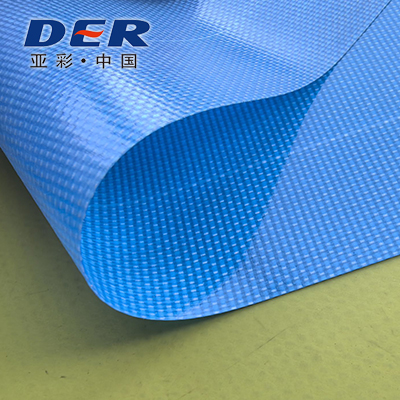
DERFLEX blue roofing tarp material for temporary roof protection
DERFLEX roofing tarp material display. Final color, weight, coating and finishing should be confirmed against the application and purchase specification.
Product Definition

What Is a Roofing Tarp?

A roofing tarp is a flexible cover installed over a damaged, open or unfinished roof area to reduce direct exposure to rain, wind-driven moisture and debris until repair or construction work can continue. Roofing tarps are commonly used after storms, during reroofing, around temporary openings and during maintenance on warehouses or commercial buildings.

Light PE tarps are often selected when rapid deployment and low handling weight matter. A heavy duty roofing tarp made from PVC coated polyester is more appropriate when buyers need stronger tear resistance, weldable seams, reinforced edge construction or repeated use.

  • Temporary protection for damaged or unfinished roof areas
  • Custom dimensions for project-specific roof geometry
  • Waterproof material options with reinforced perimeter construction
  • OEM color, label, carton and distributor packaging options
Selection Logic

Choose Roofing Tarp Construction by Exposure and Handling

Weight alone does not determine field performance. Use duration, wind exposure, handling frequency and reinforcement needs should be considered together.

Rapid Response

Emergency PE Roofing Tarp

Suitable for short-term storm response, temporary leak coverage and programs that prioritize fast deployment and compact packing.

  • Lightweight woven PE construction
  • Easy folding and bulk distribution
  • Useful for short emergency coverage windows
Contractor Grade

PVC Coated Roofing Tarp

Selected when a project needs stronger tear performance, stable welding and a more robust edge system for outdoor use.

  • Polyester reinforcement with PVC coating
  • Custom GSM, color and seam layout
  • Suitable for repeated contractor handling
Custom Program

Reinforced Roof Cover

For demanding sites, the tarp can be developed with closer eyelet spacing, webbing, corner patches or application-specific fixing zones.

  • Reinforced hems and corners
  • Project-specific hardware layout
  • Private label and wholesale packaging

For a broader comparison of durable tarp grades, review DERFLEX heavy duty tarp options.

Material Structure

Why a Waterproof Roofing Tarp Is More Than a Coated Surface

Waterproof performance is influenced by the fabric structure, coating, seams, edge treatment and installation. A correctly selected material can still leak if water is allowed to run underneath an upper edge or collect in a low point.

For PVC roofing tarp programs, DERFLEX can work with coated polyester structures that combine a woven reinforcement layer with PVC surface protection. PE roofing tarp programs use woven polyethylene structures for lighter, more economical temporary coverage.

Buyers developing PVC specifications can also reference PVC tarpaulin material for coating, base fabric and fabrication considerations.

1. Surface Protection Waterproof coating or laminated surface selected for rain exposure, cleaning and outdoor handling.
2. Reinforcing Fabric Woven PE or polyester reinforcement provides dimensional support and helps resist tearing under tension.
3. Seams & Panel Layout Large finished sizes may require joined panels. Seam construction should match the material and waterproofing objective.
4. Reinforced Perimeter Hems, webbing, corner patches and fixing points distribute tie-down loads around the tarp edge.
5. Installation Geometry Overlap, slope direction, drainage and anchoring determine whether rain is carried away from the exposed roof area.
Specification Range

Roofing Tarp Manufacturing Options

The following range is intended for RFQ planning. Final values should be confirmed according to the selected base fabric, coating, seam construction, test requirements and order configuration.

Specification Item Available Direction Procurement Consideration
Material Structure PE woven tarpaulin, PVC laminated fabric, PVC coated polyester fabric Choose by expected exposure, handling, budget, reinforcement needs and fabrication method.
Reference Weight 180, 200, 250, 300, 450, 500, 650, 900 gsm or custom development Heavier is not automatically more suitable; consider total roof area, lifting, installation and reuse.
Water Protection Waterproof PE or PVC material options Finished waterproof performance also depends on seams, perimeter design, drainage and installation.
Outdoor Functions UV-stabilized, mildew-resistant, cold-crack and flame-retardant options by project Specify required standards or test methods in the RFQ instead of relying on general product labels.
Finished Size Standard programs or custom roofing tarp dimensions Allow adequate overlap above and around the damaged roof zone; confirm panel layout on very large covers.
Edge Construction Heat-welded hem, sewn hem, double-fold hem, reinforced webbing Wind-exposed projects usually need better load distribution and stronger perimeter reinforcement.
Eyelets / Grommets Aluminum, brass or stainless steel; typical 30–100 cm spacing Closer spacing may improve load distribution, but the full fixing method should be designed as a system.
Color Blue, silver, white, green, black, gray and custom color direction Color can be selected for visibility, heat-reflection preference, site identification or retail positioning.
Packaging Folded carton, bale, pallet, roll and private-label packaging Wholesale buyers should define barcode, carton marking, pack count and pallet plan before production.
Note: Roofing tarps are temporary protective covers. They should not be presented as a substitute for permanent roof repair, nor as a guarantee against all weather conditions. Installation should follow local safety requirements and project-specific engineering judgment.
Custom Manufacturing

Build a Custom Roofing Tarp Around the Roof, the Crew and the Supply Program

A made-to-order roof tarp can address fit, fastening, handling and packaging details that standard stock sheets may not cover.

Finished Dimensions Specify roof width, slope length, required overlap, panel joining and finished dimensions.
Perimeter Reinforcement Choose hem structure, webbing, corner patches, rope edge or localized reinforcement zones.
Fastener Layout Define grommet material, spacing, position and any D-ring or strap requirements.
Material Grade Select PE or PVC construction, target GSM, color and optional outdoor performance direction.
Branding Logo printing, private-label information, technical markings and distributor packaging can be discussed.
Pack Configuration Folded size, pack count, cartons, bales, pallet dimensions and container planning can be standardized.
Sampling Material or finished-product samples can be reviewed before a bulk program is finalized.
Repeat-Order Control Approved specifications help keep size, material, color, labeling and packaging more consistent across repeat orders.

For drawing-based or made-to-measure projects, see DERFLEX custom tarps.

Manufacturer Workflow

From Roofing Requirement to Finished Tarp Program

The goal is to confirm critical details before mass production, so a roofing tarp manufacturer is working from a controlled specification rather than a generic description.

STEP 01

Application Review

Define emergency repair, construction cover, maintenance, disaster-response or resale use.

STEP 02

Material Matching

Compare PE and PVC options by handling, outdoor exposure, strength direction and budget.

STEP 03

Edge & Hardware Plan

Confirm hems, reinforcement, grommet material, spacing and fixing zones.

STEP 04

Sample / Specification

Review dimensions, construction, color, marking and packing before bulk production.

STEP 05

Bulk Supply

Produce to the confirmed specification with inspection and export-oriented packaging.

Applications

Where Roofing Tarps Are Commonly Specified

Different applications can require different material weights, colors, edge structures and packaging formats.

Emergency Roof Repair

Temporary coverage after wind, hail, fallen branches, missing shingles or other roof damage.

Reroofing & Renovation

Weather protection when roof sections are opened during replacement, deck work or phased renovation.

Commercial Roof Maintenance

Temporary protection around warehouse, factory, skylight, HVAC and membrane maintenance zones.

Construction Projects

Covering unfinished roof decks, insulation, equipment and interior areas before the permanent roof is complete.

Disaster-Response Supply

Standardized tarps prepared for rapid distribution to contractors, relief partners or reconstruction programs.

Wholesale & Retail Programs

Standard size and color ranges packed for distributors, importers and private-label roofing supply channels.

Buyer Guide

What to Send a Roofing Tarp Supplier for an Accurate RFQ

A clear RFQ reduces back-and-forth and helps the supplier recommend a construction that matches the real working conditions.

1. Application

State whether the tarp is for emergency repair, construction, long project exposure, warehouse maintenance, disaster response or resale.

2. Finished Size

Provide finished dimensions, roof geometry, overlap requirement and whether one large tarp or multiple overlapping sections are preferred.

3. Material Target

Give PE/PVC preference, target GSM if known, color, UV or flame-retardant direction and expected exposure period.

4. Edge Design

Define hem type, webbing, corner patches, grommet material and spacing, plus any D-rings, straps or rope edge.

5. Quantity & Packing

Share order quantity, pack count, carton or bale requirement, private label, barcode and pallet preference.

6. Verification

List any required test method, inspection document, sample approval, artwork or specification sheet needed before production.

Wholesale Programs

Roofing Tarp Wholesale Supply for Distributors and Project Buyers

Wholesale purchasing is not only about a lower unit price. Distributors also need a controlled size matrix, clear grade differentiation, consistent labeling and packaging that works through warehousing and resale.

DERFLEX can support roofing tarp wholesale programs using multiple material grades, standard or custom finished sizes, color systems, private-label packaging and repeat-order specifications.

For Roofing Distributors Build a practical range by size, material grade, color and pack format instead of a single generic tarp.
For Contractors Standardize frequently used roof tarp constructions to improve site preparation and repeat purchasing.
For OEM / Private Label Buyers Develop artwork, carton marks, labels and controlled specifications around your market positioning.
Installation Thinking

Size for Drainage, Not Only for the Hole

A tarp that covers only the visible damaged spot can still allow runoff from the upper roof to move underneath the cover. For sloped roofs, buyers should consider how far the tarp needs to extend upslope and how water will be shed around the protected area.

On very large roofs, one oversized tarp can also become difficult to lift, position and secure. Multiple panels with planned overlap may be easier to handle in some projects.

Safety Note

Roof Work Requires Site-Specific Safety Control

Roofing tarp installation can involve fall hazards, wind load and unstable surfaces. DERFLEX supplies material and finished tarp products; installation methods should be selected by qualified personnel according to the roof structure, weather conditions and local safety rules.

If you are evaluating whether a tarp construction is genuinely suitable for waterproof protection, see DERFLEX waterproof tarp guide.

FAQ

Roofing Tarp Questions from Contractors and Buyers

What material is suitable for a roofing tarp?

PE woven tarpaulin is commonly used for lightweight emergency coverage, while PVC coated polyester is often selected for heavier-duty roofing tarp applications that need stronger tear resistance, weldable seams and reinforced finishing. The suitable material depends on exposure time, roof conditions, handling frequency and budget.

Can DERFLEX manufacture a custom roofing tarp?

Yes. DERFLEX can discuss custom finished dimensions, PE or PVC material, target GSM, color, hem construction, corner reinforcement, grommet spacing, logo printing, labels and export packaging according to the RFQ.

Is a waterproof roofing tarp enough to stop every roof leak?

A waterproof tarp material can reduce direct water penetration through the sheet, but successful temporary roof protection also depends on overlap, seam construction, drainage, anchoring and avoiding water pooling. A tarp should not be treated as a permanent roof repair.

What should a roofing tarp wholesaler specify before ordering?

Define the size range, material grades, colors, finished dimensions, packaging, carton markings, labels, target quantity, reinforcement level and any required test or inspection documents. A clear size-and-grade matrix helps keep the wholesale program consistent.

How should a heavy duty roofing tarp be secured in windy conditions?

The fixing method should distribute load across reinforced edges rather than relying on weak corner points. Grommet spacing, webbing, corner patches, straps or other anchoring methods should be selected for the roof structure and local conditions. Roof installation should be performed with appropriate safety controls.

Can DERFLEX supply roofing tarps for OEM or private-label programs?

DERFLEX can support B2B programs with custom material and size specifications, color, printing, labeling, retail or bulk packing and repeat-order documentation. Final commercial terms are confirmed according to quantity and project requirements.

Need a Roofing Tarp Manufacturer for a Project or Wholesale Program?

Send DERFLEX your application, finished size, quantity, preferred material, target weight, edge reinforcement, grommet layout, color and packaging requirements. We can use those details to discuss a suitable roofing tarp specification and quotation.

Consulting Services
+86-021-54361792 / 54361798
Email
sales@derflex.com