


Winter Pool Cover Fabric — Heavy Duty Seasonal Pool Cover Material
DERFLEX supplies reinforced PVC-coated polyester fabric for solid winter and seasonal pool cover programs where debris exclusion, light blocking, weather exposure, welded fabrication and repeat-order consistency all matter.
This page focuses on fabric for seasonal/off-season covers. A heavy-duty winter cover material is not automatically a certified safety cover, and it is different from automatic/retractable cover fabric and solar bubble cover material.
What Is Winter Pool Cover Fabric?
Winter pool cover fabric is the reinforced sheet material used to close and protect a swimming pool during the off-season.
For a solid heavy-duty cover, PVC-coated polyester is a practical material route because the woven polyester scrim provides reinforcement while the PVC coating provides a continuous water barrier, a cleanable surface and compatibility with welded panel fabrication. Seasonal cover design also has to account for wind uplift, cold-weather handling, debris, rain or snowmelt, edge abrasion and repeated folding or storage.
There is no single “best thickness” for every winter cover. Material weight, scrim construction, coating, seam method, span, pool geometry, fixing system and climate should be specified together. DERFLEX has existing pool-cover material references based on 1000D × 1000D polyester, approximately 15–18 oz/yd2 and 0.3–0.5 mm thickness, with final construction confirmed for the specific cover program.
Seasonal Winter Cover Fabric Is a Different Buying Problem
Pool-cover searches often mix four products that look similar in images but work under different mechanical and maintenance conditions. Keeping them separate reduces specification errors and prevents buyers from paying for the wrong performance package.
This page is intentionally about seasonal closure.
Winter / seasonal cover fabric: installed for the off-season, usually prioritizing debris exclusion, light control, climate exposure and secure perimeter installation.
Safety cover fabric: part of a complete system with load, anchoring, openings, labeling and applicable testing requirements.
Automatic cover fabric: repeatedly rolls and travels through a mechanism, so cycling, track-edge wear and dimensional behavior become critical.
Solar cover material: typically a bubble or thermal material focused on heat retention and evaporation control rather than winter structural protection.
Winter Pool Cover Fabric Specification: What to Freeze Before Bulk Production
The reference values below come from existing DERFLEX pool-cover material information. They are a starting direction, not a universal winter-cover standard. Final values should be confirmed through an approved sample, the converter's fabrication process and the intended finished-cover design.
| Specification item | DERFLEX reference / available direction | What the buyer should define |
|---|---|---|
| Material | PVC-coated polyester fabric for solid waterproof cover programs | Seasonal winter cover, pool type, expected exposure and supply form |
| Base fabric | Existing pool-cover reference includes 1000D × 1000D, 20 × 20 | Required tensile/tear target, span, fixing pattern and handling expectation |
| Weight | Existing pool-cover reference includes approximately 15–18 oz/yd2 | Balance durability, handling weight, panel size and climate conditions |
| Thickness | Existing pool-cover reference includes approximately 0.3–0.5 mm | Do not specify thickness without scrim, weight and mechanical performance |
| Roll format | Existing pool-cover reference includes 3.2 m × 50 m; other directions subject to grade | Cutting table, seam count, yield, roll handling, pallet/container plan |
| Color | Blue and custom colors available by project | Top/back color, light-control goal, brand color and color tolerance |
| Surface / finish | Custom surface and lacquer direction can be discussed | Cleanability, blocking behavior, abrasion, folding/storage and appearance |
| Outdoor performance | UV and weather-resistant formulation direction available by specification | Exposure months, UV level, rainfall/snow, mildew risk and storage conditions |
| Fabrication | RF/high-frequency and hot-air welding direction; sewing may be used in reinforced details | Equipment type, seam width, webbing/hem design and production acceptance method |
| Supply program | Roll material and OEM/custom development can be discussed | Trial quantity, repeat-order volume, labels, packaging, destination and sample approval route |
Important: “heavy duty” should describe a verified material and finished-cover specification, not be inferred from thickness or GSM alone.
Five Winter Loads That the Material and Finished Cover Must Manage Together
A seasonal cover fails at interfaces more often than at the visually perfect center of the sheet. The procurement specification should be built around the highest-stress zones.
Solid PVC vs PE Winter Cover vs Mesh: Which Route Fits the Product Line?
Current winter-cover search results frequently compare solid and mesh products. B2B buyers should add a third decision: whether the solid cover will be a reinforced PVC program or a lighter woven PE program.
| Material route | Strengths | Trade-offs | Typical buying logic |
|---|---|---|---|
| Reinforced PVC-coated polyester | Water barrier, welded panel fabrication, custom coating/finish, robust edge and OEM construction options | Heavier than many seasonal PE covers; standing water still requires a designed management method | Reusable heavy-duty solid covers, commercial seasonal programs, converters and private-label lines needing controlled specifications |
| Woven PE seasonal cover | Lightweight, cost-focused, easy to fold and common in retail above-ground winter cover programs | Mechanical performance and longevity vary widely with weave, coating and construction; different fabrication behavior from PVC | High-volume seasonal retail covers where low handling weight and price positioning are priorities |
| Drainage mesh | Lets rain and snowmelt pass through, reducing standing-water maintenance and handling weight | Not a solid water barrier; fine debris and light control depend on mesh density | Programs where drainage and easier seasonal maintenance outweigh full debris/water exclusion |
Match the Fabric Direction to Climate, Pool Type and Closure Method
| Seasonal program | Material direction | Fabrication priority | Buyer should verify |
|---|---|---|---|
| Inground residential winter cover | Solid coated polyester where debris and light blocking are priorities | Welded panels, overlap, reinforced perimeter and water-bag/anchor interface | Pool geometry, wind exposure, cover pump/drain plan, local closure practice |
| Above-ground winter cover line | Material selected around handling weight, cable/winch or tie system and expected retail positioning | Perimeter reinforcement, grommet/cable zone, fold pack and size tolerance | Top-rail contact, overlap, wind control, packaging and customer installation instructions |
| Hotel / resort seasonal shutdown | Solid PVC-coated polyester for repeatable maintenance-cover programs | Large-panel welding, cleaning, labeled sections and storage plan | Closure months, staff handling, standing-water procedure and site geometry |
| Cold / snowy region | Material construction developed with low-temperature handling and strong reinforcement priorities | Seam consistency, wear patches, perimeter load distribution | Snow/ice management plan, actual support and attachment system; do not rely on fabric GSM alone |
| Private-label OEM program | Fixed scrim, coating, weight, finish, color and roll format | Repeatable welding window, inspection criteria, packaging and revision control | Approved master sample, tolerances, SKU matrix, labels, annual forecast and destination market |
Why Reinforced PVC-Coated Polyester Works for Solid Winter Covers
Polyester Scrim Carries Tension
The woven base controls tensile behavior, tear propagation and dimensional stability. Scrim construction should be selected with panel span, fixing pattern and reinforcement layout in mind.
PVC Coating Creates the Barrier
The coating provides the solid water barrier, cleanable surface and heat-weldable interface used to join panels. Coating weight and adhesion affect folding, welding and long-term outdoor behavior.
Finish Tunes Seasonal Handling
Surface finish can influence cleanability, blocking during folding, abrasion and appearance. UV, mildew and weather directions should be defined before quotation rather than assumed from a generic pool-fabric name.
Four Details That Matter More Than Calling the Fabric “Heavy Duty”
Map the Seam Plan
Use roll width and panel orientation to reduce unnecessary seams, then verify the selected coating on the converter's RF or hot-air process.
Reinforce the Load Path
Hems, webbing, patches and attachment zones should distribute pull away from single grommets or sharp geometry transitions.
Protect Contact Zones
Identify coping, rails, steps, corners and hardware that can abrade the cover during months of wind movement and seasonal tension.
Approve a Conversion Sample
Color approval alone is not enough. Confirm seam behavior, folding, surface blocking and reinforcement construction on production-representative material.
A Waterproof Winter Cover Still Needs a Water Plan
Solid winter pool cover material keeps outside water from passing through the sheet, which is useful for debris control and a cleaner off-season barrier. The same property means rain and thawed snow can accumulate above the cover.
For the finished product, define whether the cover uses a pump, drain panel, drain strip, slope/support strategy or another engineered method. This decision affects panel geometry, reinforcement, instructions and customer maintenance expectations.
Do not treat “waterproof” and “handles any snow load” as the same claim. One describes the sheet barrier; the other depends on the entire installed system.
Before approving a solid winter cover program, answer these questions:
- Where will rainwater and snowmelt go?
- Who removes standing water and how often?
- Which zones touch coping, rails or deck edges?
- How is wind uplift transferred into hems, straps, water bags, anchors or cables?
- What does the cover look like after repeated cold-weather folding and storage?
- Is the product sold as a seasonal debris cover or a tested safety cover system?
Build an OEM Winter Pool Cover Material Program Around the Converter
Material Code
Freeze base fabric, weight, coating direction, thickness, color and finish so repeat orders start from the same approved construction.
Roll & Yield Planning
Confirm roll width and length against cutting tables, seam count, nesting, handling equipment, roll weight and export packing.
Color & Surface
Blue and project-specific colors can be discussed, together with surface finish and the desired light-control or branding direction.
Welding Route
RF/high-frequency and hot-air welding directions can be matched to the converter's production route; a representative welded sample should be approved.
Finished-Detail Integration
Where the program includes converted covers, define hems, webbing, grommets, rope/cable zones, wear patches, labels and folded packaging.
Private Label Control
For distributor programs, freeze carton marks, label language, SKU naming, folding direction, barcode requirements and repeat-order revision rules.
Common Winter Pool Cover Fabric Buying Mistakes
Mistake: specifying only thickness
A thick sheet with the wrong scrim, coating adhesion or seam construction can still perform poorly. Specify construction, weight, tensile/tear targets and fabrication together.
Mistake: ignoring standing water
A solid waterproof cover requires an explicit rain/snowmelt management method. Leaving this unresolved shifts excessive load into fabric, seams and perimeter details.
Mistake: choosing roll width after panel design
Roll width affects seam count, labor and cutting yield. The material and panel map should be developed together rather than sequentially.
Mistake: treating seasonal and safety covers as the same product
Heavy-duty fabric does not establish finished-system safety compliance. Keep seasonal protection claims separate from tested safety-cover claims.
Mistake: approving color but not weldability
A visually approved sample does not prove reliable conversion. Run the material through the actual welding and reinforcement process before freezing bulk supply.
Mistake: forgetting winter storage behavior
Cleaning, drying, folding, blocking, crease formation and repeated seasonal storage are part of the service cycle and should influence the material finish.
What to Send DERFLEX Before Requesting a Winter Pool Cover Fabric Quote
A useful quotation starts with the finished-cover problem, not only a price-per-square-meter request.
- Cover type: seasonal winter cover, general debris cover or another system
- Pool type: inground, above-ground, hotel/resort, club or OEM product line
- Supply form: roll fabric, cut panels or converted finished cover support
- Reference construction: denier, density, weight, thickness or physical sample
- Target dimensions: roll width/length, cover sizes, overlap and SKU matrix
- Fabrication: RF welding, hot-air welding, sewing, webbing, grommets, cable/rope zones
- Environment: UV exposure, cold conditions, rainfall/snow, mildew and storage
- Water strategy: pump, drain panel, drain strip or another design direction
- Color/finish: top color, back color, surface requirement and brand standard
- Commercial plan: trial quantity, annual forecast, labels, packaging and destination
- Approval method: swatch, material sample, welded sample, trial roll or prototype
- Any finished-product test, labeling or destination-market requirement
Real Pool Cover & Manufacturing References
These images use existing DERFLEX website assets. Alt text and captions are written around winter/seasonal cover search intent rather than generic product photography.
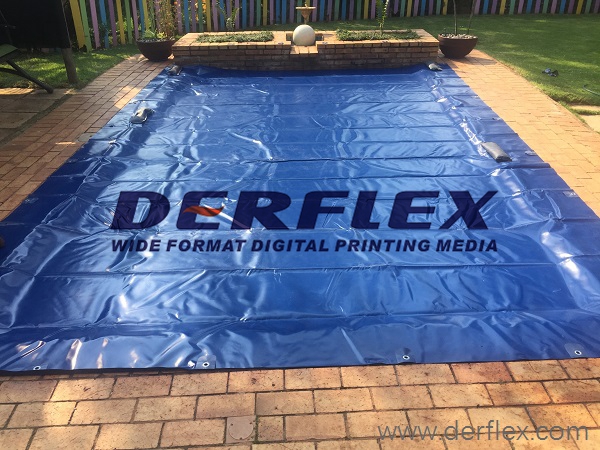
Blue solid PVC-coated pool cover reference showing full pool coverage and perimeter fixing points.
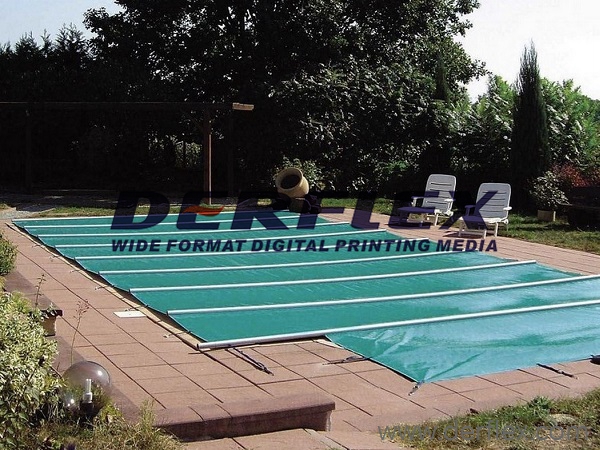
Application reference illustrating why panel layout, span and perimeter design should be defined before fabric conversion.
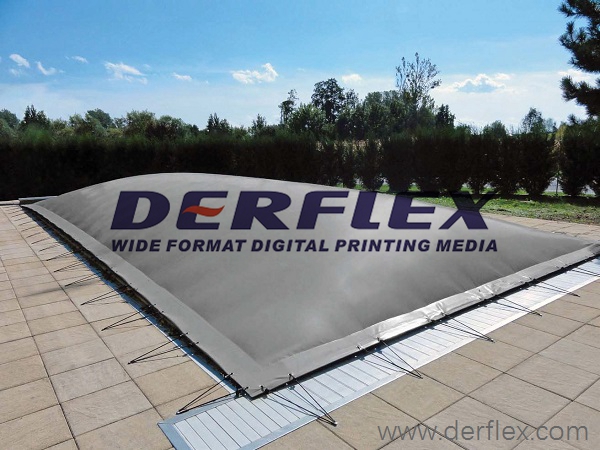
A solid pool cover with visible edge and strap interfaces where load distribution and abrasion protection matter.
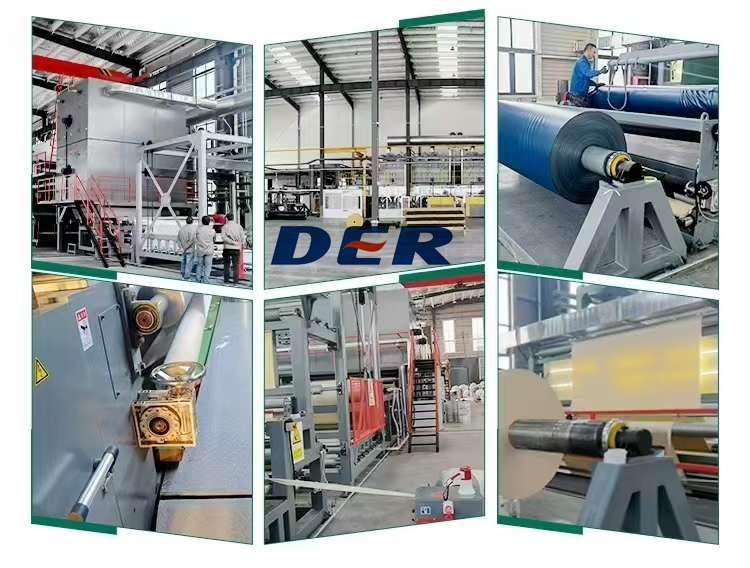
DERFLEX tarpaulin and coated-fabric manufacturing reference for roll-goods and OEM programs.
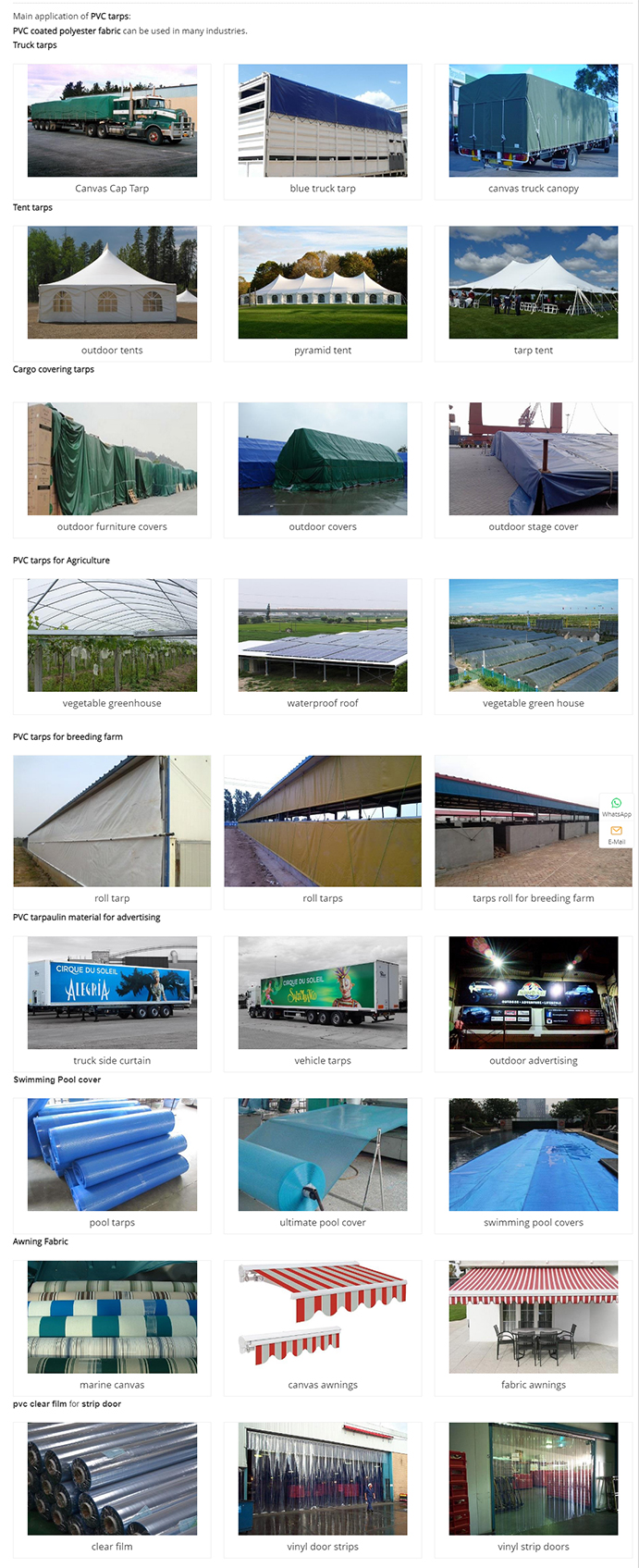
DERFLEX coated-fabric application reference including pool-cover materials and other outdoor protective textile uses.
Use the Page That Matches the Actual Pool-Cover Buying Intent
General finished-cover and roll-material sourcing for custom swimming pool protection.
Safety Pool Cover FabricMaterial direction for solid commercial safety-cover programs and finished-system compliance considerations.
Automatic Pool Cover FabricPVC roll material for retractable systems with repeated cycling, track wear and dimensional-control needs.
PVC Coated Swimming Pool CoversExisting DERFLEX pool-cover material and application reference.
PVC Coated Polyester FabricCore coated-textile construction, fabrication and material-selection guide.
UV Resistant PVC TarpaulinOutdoor weather and UV-focused tarp material for long exposure programs.
Why Pool Cover Buyers Work with DERFLEX on the Material Specification
Material-Level Discussion
Buyers can define scrim, coating, weight, thickness, width, color, finish and welding behavior instead of selecting only a finished-cover size.
Converter-Aware Planning
Roll width, seam count, cutting yield, welding route, reinforcement and packing can be discussed together with the converter's production process.
Repeat-Order Control
Approved material code, surface, color, roll format, packaging and revision rules can be frozen for OEM and private-label seasonal cover programs.
Winter Pool Cover Fabric FAQ
What material is best for a heavy-duty winter pool cover?
There is no universal best material. Reinforced PVC-coated polyester is a strong option for solid reusable winter covers because it combines a woven structural scrim with a waterproof, weldable coating. Woven PE is common when lower weight and retail cost are priorities, while mesh is useful where drainage is more important than a solid barrier.
How thick should winter pool cover fabric be?
Thickness alone should not decide the specification. Existing DERFLEX pool-cover references include approximately 0.3–0.5 mm, but the correct choice also depends on scrim construction, material weight, tensile/tear requirements, cover size, seam design, attachment method and climate.
Is solid or mesh better for a winter pool cover?
Solid fabric gives stronger water, fine-debris and light blocking, but rain and snowmelt must be removed or drained by design. Mesh allows water to pass through and reduces standing-water maintenance, but fine debris and light transmission depend on the mesh construction. The better route depends on climate, maintenance preference and the finished-cover concept.
Can winter pool cover fabric handle snow?
Snow performance cannot be determined from fabric GSM or thickness alone. Accumulation, melting, span, support, seam layout, perimeter attachment and water removal all influence load. The finished cover system should be engineered and maintained for the intended winter environment.
Is PVC-coated polyester winter pool cover fabric waterproof?
The PVC-coated sheet can provide a solid water barrier, and welded seams can create large waterproof panels. The complete cover still requires a strategy for water that accumulates on top, such as pumping or a designed drainage method.
Can DERFLEX winter pool cover fabric be RF or hot-air welded?
DERFLEX existing pool-cover references include RF/high-frequency and hot-air welding directions. Actual seam quality depends on the selected coating, thickness, equipment and seam design, so a production-representative welded sample should be approved before bulk conversion.
Is a heavy-duty winter pool cover the same as a safety pool cover?
No. “Heavy duty” describes material or construction direction; it does not establish safety-cover compliance. A safety cover is a complete system involving material, seams, reinforcement, attachments, anchors, openings, installation, labeling and any applicable test requirements.
What information should an OEM buyer send for a quotation?
Send the cover type, pool type, reference material or target construction, weight/thickness if known, roll width, colors, fabrication method, reinforcement details, climate, water-management concept, trial quantity, annual forecast, packaging, destination and any finished-product test or labeling requirement.
Specify the Winter Cover Around the Real Closure Environment
Send DERFLEX your pool-cover type, reference material, target weight/thickness, roll width, color, fabrication process, winter climate, water-management method, order quantity, destination and packaging requirement. The team can review a practical PVC-coated polyester material direction for sampling and repeat supply.
Product suitability, seasonal-load performance, finished-cover safety classification, testing and labeling must be confirmed for the intended market and complete cover design.