Main 22 oz Body
PVC-coated polyester carries broad panel tension and provides the waterproof, abrasion-resistant and weldable body of the cover.



A 22 oz truck tarp is reinforced by building a controlled load path around the PVC-coated polyester body: welded or reinforced seams, multi-layer hems, webbing, corner patches, D-ring tabs, grommet backing and abrasion protection at cargo-contact zones.
The 22 oz fabric provides the heavy-duty body, but truck-tarp durability depends on how tension moves from the truck or trailer anchor into the edge, hardware, seam and main panel. This guide explains the complete reinforcement architecture for flatbed, trailer and OEM tarp programs.
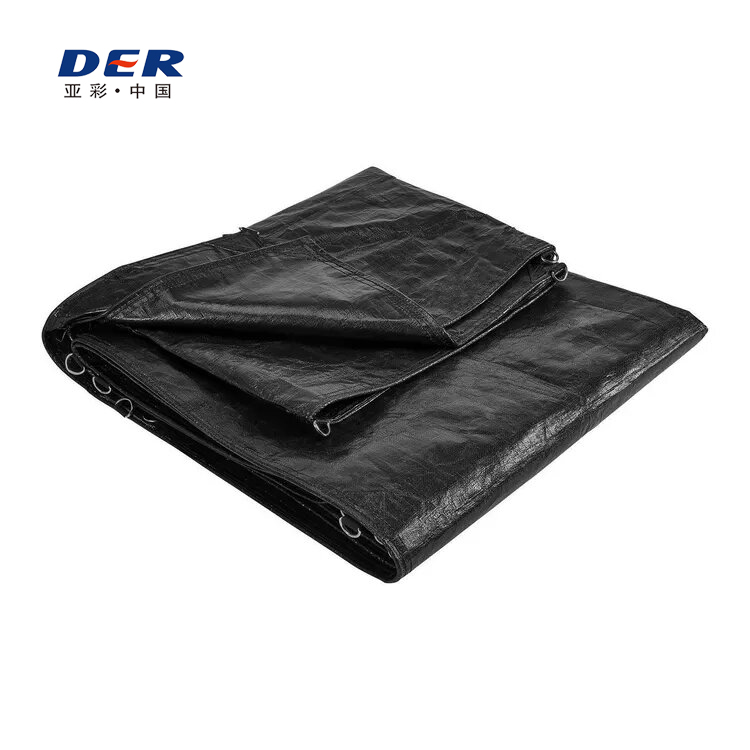
How is a 22 oz truck tarp reinforced? The heavy PVC-coated polyester sheet is only the starting point. A robust truck tarp reinforces the places where force enters or concentrates: the perimeter hem, corners, panel seams, grommet lines, D-ring rows, pockets, flaps and cargo-contact areas. Webbing and compatible extra layers spread a local pull into more fabric; corner patches manage diagonal load; welded seams join panels; and wear strips protect zones that rub against steel, lumber, machinery or trailer hardware.
“22 oz” describes the material weight, not the strength of every finished detail. A buyer should review the complete cover as a system and decide which zones need extra structure according to wind, cargo geometry, handling frequency and the real tie-down layout.
PVC-coated polyester carries broad panel tension and provides the waterproof, abrasion-resistant and weldable body of the cover.
Heat-welded panel joins transfer load between fabric sections. Seam orientation, overlap and weld continuity should fit the panel geometry and water-shedding direction.
Folded, welded or sewn edge build-up creates more structure around the perimeter before hardware is installed.
Webbing can distribute repeated pull along a longer edge and provide a stable backing zone for D-rings, grommets or straps.
Corners can receive diagonal load from two adjoining edges. Larger compatible patches or crossed reinforcement can spread that load into both directions.
D-rings work best when their webbing tabs and backing structure follow the expected pull direction instead of concentrating tension into a small unsupported spot.
Eyelets should pass through a sound reinforced stack. Edge distance, washer seating, spacing and the nearby hem determine how the hardware transfers load.
Sacrificial strips or local patches can protect places that rub against cargo edges, bows, rails, pockets or recurring fold lines.
Truck-tarp reinforcement works when each component passes force into the next component without creating an early weak point.
The same principle applies under highway flutter. Wind movement repeatedly loads the attachment system, so fit, intermediate tie points and edge control can be as important as the nominal fabric weight.
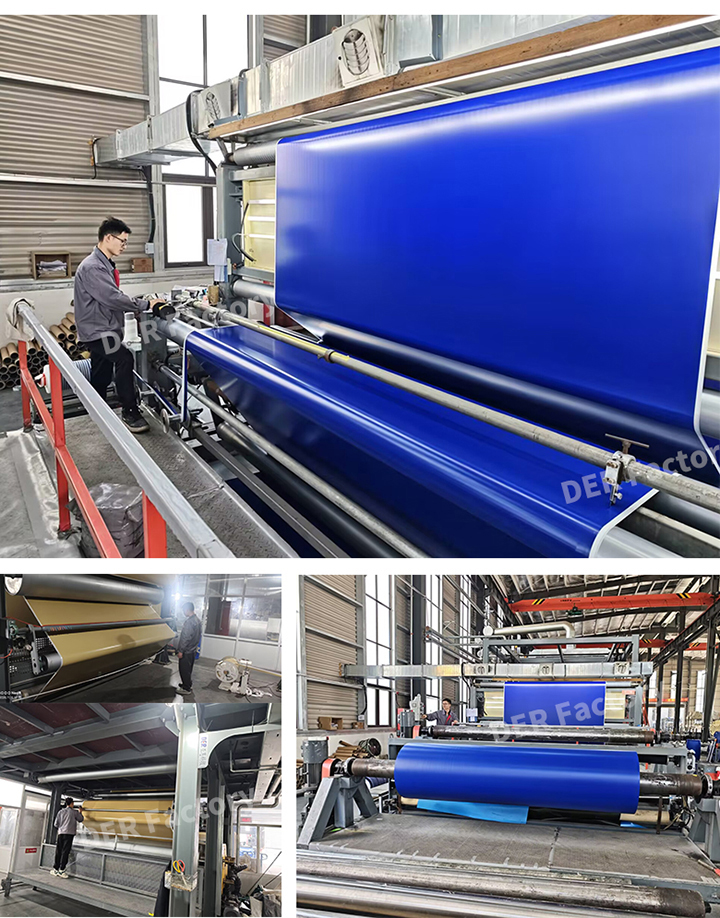
These DERFLEX-hosted product and manufacturing images show different parts of the reinforcement system: perimeter build-up, finished hardware and PVC-coated fabric production.
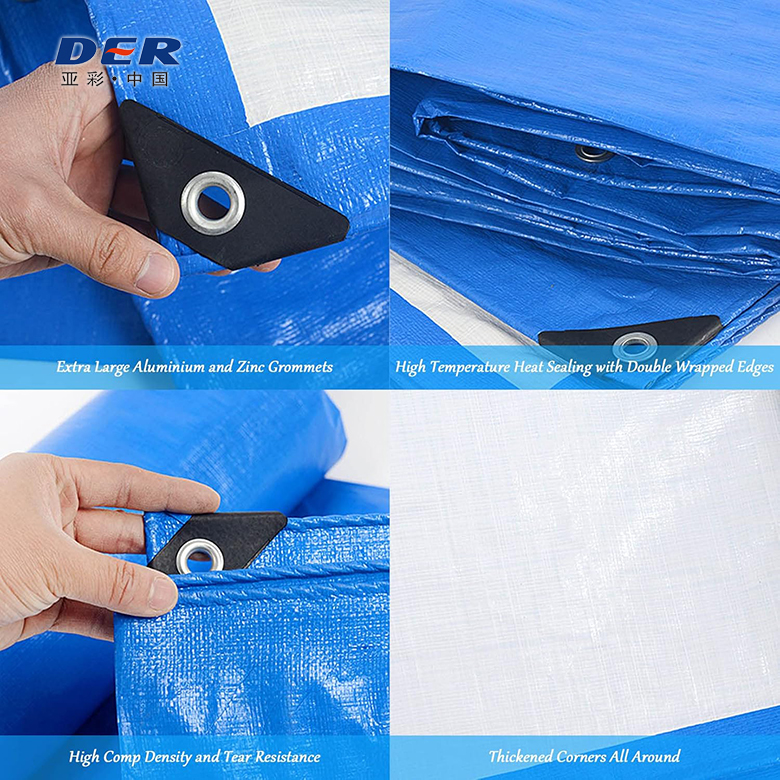
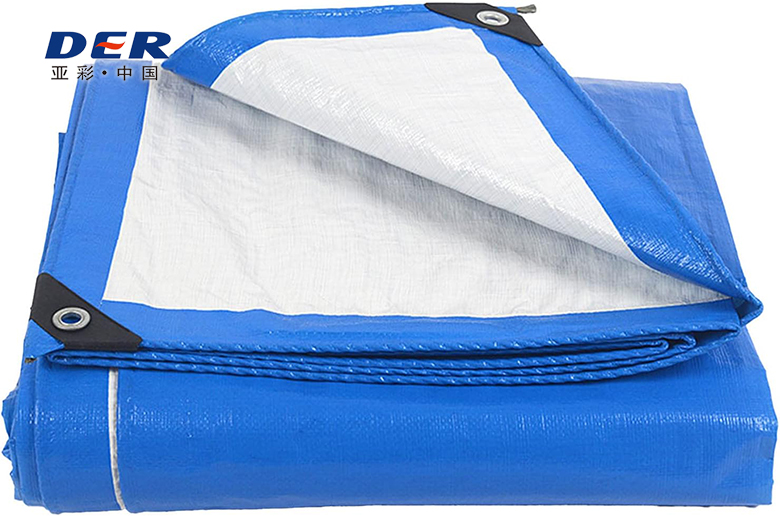
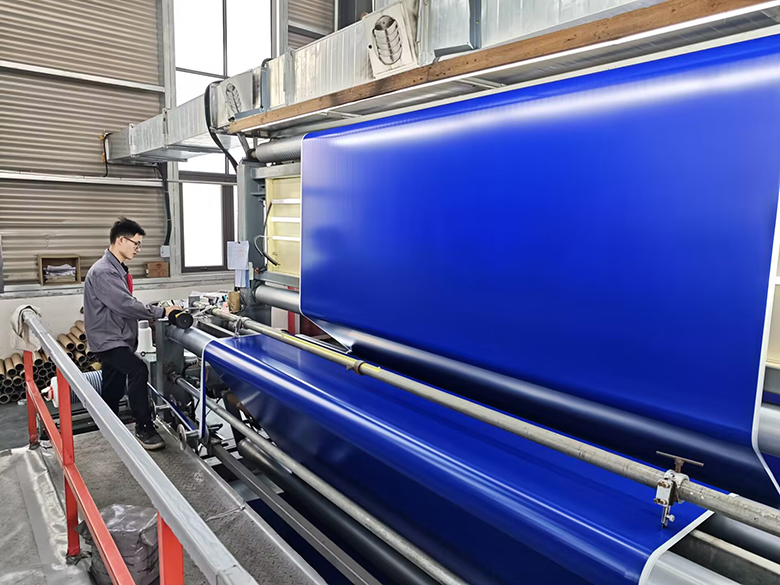
A frequent sourcing mistake is to treat fabric weight as a complete strength specification. It is not. Weight helps define the body material; reinforcement defines how the finished tarp survives localized stress.
| Design Question | 22 oz PVC-Coated Polyester Body | Reinforcement / Fabrication System | Buyer Takeaway |
|---|---|---|---|
| Broad panel tension | Carries load through the polyester scrim and coated structure. | Seams must transfer the load between joined panels. | Ask for the material structure and finished seam construction together. |
| Repeated tie-down pull | Provides the base material around the edge. | Hem, webbing, patch and hardware distribute the pull. | Do not specify “22 oz with grommets” without defining the edge build-up. |
| Corner loading | Resists tearing only as well as the local geometry allows. | Larger corner backing spreads diagonal force into both adjoining edges. | Corner detail should be a separate drawing item, not a copy of a straight-edge grommet. |
| Cargo abrasion | Heavier PVC adds abrasion reserve. | Wear strips or local sacrificial patches protect repeat contact points. | Mark known steel, lumber, machinery or bow-contact zones before production. |
| Highway flutter | Heavier fabric may reduce some movement but does not eliminate flutter. | Fit, tie-down density, hardware alignment and edge control limit repeated shock loading. | Review the complete fastening system rather than adding ounces alone. |
| Waterproof continuity | PVC coating provides the waterproof material surface. | Welded joins, pockets, flaps and penetrations must preserve water-shedding geometry. | Finished-cover waterproofing depends on fabrication details as well as the base sheet. |
Note: 22 oz/yd2 is a mass-per-area specification. It does not by itself establish grommet pull-out strength, seam strength, D-ring capacity, tensile strength or service life.
The same 22 oz body fabric can require very different edge and wear-zone architecture depending on the cargo, trailer and fastening system.
| Truck Tarp Type | Main Stress Pattern | Reinforcement Direction | Hardware / Layout Direction | What the Buyer Should Provide |
|---|---|---|---|---|
| Flatbed / General Freight | Wind flutter, frequent folding, mixed cargo contact and repeated tie-down. | Reinforced perimeter, strong corners and local abrasion protection. | Grommets and/or D-ring rows aligned with trailer rails and practical strap angles. | Finished dimensions, drop, common cargo profile, rail position and tie-down method. |
| Lumber Tarp | Large drops, repeated edge contact and changing load height. | Perimeter webbing, reinforced D-ring rows and wear zones where the tarp folds over cargo. | Multiple usable attachment rows can help adapt to different load heights. | Trailer width, load height range, drop depth, flap layout and preferred D-ring pattern. |
| Steel / Coil Tarp | Sharp or concentrated contact, low-profile loads and strong directional tie-down. | Targeted wear pads plus reinforced edges; special attention to contact geometry. | Hardware map should avoid forcing straps across unsupported or sharp zones. | Typical steel shape, dimensions, edge protection method and anchor locations. |
| Dump / Roll Tarp | Rolling cycles, pocket stress, material impact and system-driven tension. | Roller/fixed-side pockets, leading edge and repeated fold zones need system-specific build-up. | Hardware follows the tarp system rather than a generic perimeter pattern. | System model or drawing, roller diameter, pocket size, finished width/length and attachment method. |
| Sliding / Curtain-Type Cover | Frame movement, tensioning points and repeated opening/closing cycles. | Reinforce the frame interface, vertical or horizontal load lines and end closures. | Attachment coordinates should be controlled from fixed datums. | Frame drawing, rail geometry, closure system and expected operating cycle. |
For repeat B2B production, reinforcement should be frozen in a drawing and approved sample rather than decided after the tarp has already been cut.
A failure photo is useful engineering evidence. The first damaged location often reveals whether the problem comes from abrasion, geometry, tension concentration, hardware seating or overall tarp fit.
| Observed Failure | Likely Mechanism | Inspect Next | Better Reinforcement Direction |
|---|---|---|---|
| Grommet hole stretches into an oval | Repeated point loading, side pull or shock from loose fabric. | Anchor angle, nearby unused tie points, hem width and wind movement. | Spread load into more effective points and enlarge the backing zone. |
| Diagonal tear starts at a corner | Combined pull from two edges or poor alignment with the real anchor. | Corner patch geometry, strap direction and tarp fit. | Reorient or enlarge the corner reinforcement so it follows the diagonal load path. |
| D-ring tab peels or tears away | Insufficient overlap/backing or pull direction does not match tab orientation. | Webbing length, stitching/weld path, backing layer and anchor position. | Increase supported load-transfer area and orient the attachment toward the real pull. |
| Center fabric survives but edge splits | Heavy body with under-specified perimeter construction. | Hem depth, edge webbing, hardware spacing and fabric condition. | Upgrade the perimeter architecture rather than increasing center-panel weight again. |
| Abrasion hole develops over cargo edge | Repeated rubbing or pressure on a known contact point. | Cargo geometry, edge protector use, fold line and tarp movement. | Add or reposition a sacrificial wear strip / patch and reduce movement where possible. |
| Repeated repair fails in the same location | Original load path has not changed. | Frame, cargo shape, anchor layout and installation practice. | Change the reinforcement drawing instead of reproducing the same local repair. |
A material swatch cannot validate finished reinforcement. Approve the actual cover construction or a representative finished sample, then lock the drawing and inspection points for repeat production.
Confirm finished size, drops, flaps and pocket dimensions—not only the original cut size.
Confirm the approved 22 oz PVC-coated polyester construction and any required color or finish.
Check seam position, overlap, weld continuity and whether the seam crosses a high-stress zone.
Verify fold width, reinforcement strip or webbing continuity and consistency around the perimeter.
Compare the corner patch shape and extension into both adjacent edges against the approved drawing.
Confirm the tab points toward the intended pull and that backing is sufficient for the application.
Inspect for sharp edges, loose rotation, incomplete setting, distorted washers or unsupported edge distance.
Measure center-to-center positions from controlled datum edges rather than visual spacing alone.
Verify that patches actually align with real cargo, bow, rail or fold-contact zones.
Check coating for cuts, heat damage, delamination, contamination or creases caused during fabrication.
If pull or seam testing is required, record specimen construction, direction, method and acceptance criterion.
Keep the approved material code, drawing revision, hardware map, labels and packing instructions with the order record.
DERFLEX supports PVC-coated polyester material and custom finished tarp programs for importers, distributors, tarp fabricators, fleets and OEM projects. For a 22 oz truck tarp, the useful production specification combines the body material with the finished geometry and reinforcement details.
Final material, strength values, hardware specifications, test methods, tolerances, MOQ, lead time and commercial terms should be confirmed in the quotation, approved sample and purchase contract.
These related DERFLEX pages cover the material, finished-cover and test topics that support a complete truck-tarp specification.
Direct answers to the questions buyers ask when comparing heavy vinyl truck tarp construction.
It normally refers to the fabric weight of approximately 22 ounces per square yard. That is about 746 g/m2 by unit conversion. It describes material mass per area, not the finished tarp’s seam strength, grommet pull-out strength, D-ring capacity or service life.
Many 22 oz vinyl tarp constructions are in the roughly 24–25 mil, direction, and DERFLEX currently presents about 24–25 mil as a typical direction for its 22 oz vinyl tarp page. Actual thickness can vary with coating, embossing, finish and production specification, so confirm the final value for your order.
Often, yes, when the tarp sees repeated tie-down, highway movement or demanding cargo contact. The heavier body material does not eliminate local stress around the perimeter. Hems, webbing, patches and correctly supported hardware help distribute those loads.
A D-ring is commonly connected through a webbing tab or another reinforced backing zone so the pull enters a wider area of the tarp. The ring orientation, tab overlap, attachment method, nearby hem and real strap direction should be treated as one design detail.
Neither is automatically stronger in every application. A grommet can work well in a properly reinforced hem, while a D-ring can be useful for directional straps or repeated attachment. The usable performance depends on the complete structure behind the hardware.
Add them where the tarp repeatedly contacts steel edges, lumber corners, machinery projections, trailer bows, rails, pockets or recurring fold lines. The best locations come from the real vehicle and cargo geometry, not from a generic tarp pattern.
Approve the finished dimensions, material code, seam layout, hem construction, corner detail, webbing, D-ring and grommet coordinates, wear-zone patches, printing, labels and packing. Keep the approved drawing and representative finished sample under revision control.
For a faster technical discussion, send DERFLEX the truck or trailer type, finished dimensions, cargo profile, 22 oz material direction, anchor locations, D-ring/grommet layout, known abrasion zones, quantity and destination.
Technical guidance is for specification planning. Final material construction, mechanical properties, reinforcement details, hardware, test method, acceptance values, tolerances and commercial terms should be confirmed for the actual application.