Color Approval
Confirms the face, shade, gloss, texture and viewing basis. It protects brand identity and panel-to-panel appearance.
Evidence: named color target + labeled physical swatch + agreed tolerance.




Pre-production approval guide
Do not approve a custom tarp from one attractive swatch. Approve three linked pieces of evidence: the color under defined viewing conditions, the coating as a measurable material system, and a representative weld made with the intended production process.
Approve the same construction that will be produced, not a substitute swatch. Give every sample an item code, revision, date and intended order reference. Evaluate color, coating and weld quality separately, then release them together in one signed pre-production approval record. If any layer changes—pigment, lacquer, coating weight, base fabric, reinforcement or welding process—the affected approval must be reviewed again.
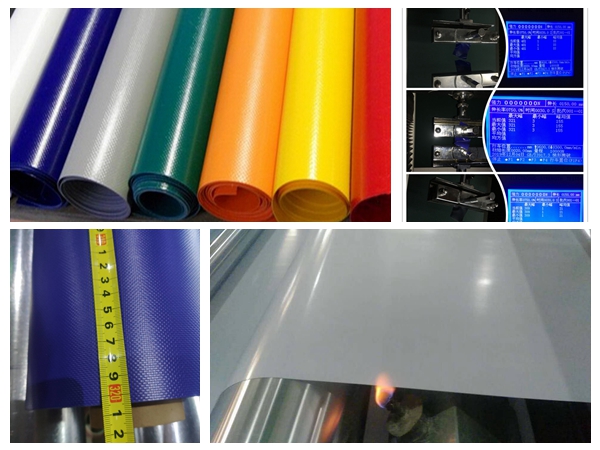
One decision, three gates
A tarp can match the requested blue and still have weak coating adhesion. A roll can pass basic material checks and still weld inconsistently. A neat seam can hide insufficient fusion. Separate approval gates make the commercial decision traceable and keep one visible feature from masking another.
Confirms the face, shade, gloss, texture and viewing basis. It protects brand identity and panel-to-panel appearance.
Evidence: named color target + labeled physical swatch + agreed tolerance.
Confirms the delivered material build, surface condition, adhesion and behaviors that affect handling and conversion.
Evidence: roll swatch + TDS/specification + project-relevant test record.
Confirms that the selected material and actual seam design work with the intended equipment and production settings.
Evidence: retained coupon + full-detail sample + result and parameter record.
Write the application, article code, drawing, target reference, test method, tolerance and decision authority.
Prepare identified color, roll-material and welded samples using the intended construction.
Inspect under agreed conditions, measure required properties and record pass, condition or failure.
Sign the correct revision, retain matching references and authorize only the approved production route.
Gate 01
“Royal blue,” a screen image or a color code alone is not a complete color acceptance rule. Coated textile color changes with PVC formulation, surface texture, gloss, coating thickness, lighting and viewing angle. State the reference and the conditions together.
| Color-control field | What to write | What to retain | Common approval error |
|---|---|---|---|
| Target | Named code and/or buyer-supplied physical reference | Signed, labeled swatch | Approving from a phone or monitor |
| Appearance | Face, reverse, gloss and embossing direction | Representative full-finish piece | Matching shade but ignoring gloss |
| Tolerance | Visual boundary and instrumental rule where applicable | Instrument settings and result sheet | Writing “close to sample” |
| Batch rule | Sampling location and roll-to-roll/panel-to-panel expectation | Start, middle and end references if agreed | Checking only one center swatch |
Gate 02
The coating provides the visible finish and contributes to waterproofing, abrasion behavior, flexibility, weather resistance and welding response. Approval should connect the polyester base cloth, PVC layer, surface treatment and intended fabrication route.
| Check | Approval question | Evidence | Acceptance basis |
|---|---|---|---|
| Weight / thickness | Does the delivered build match the approved grade across representative locations? | Readings, method and sample map | Project specification and written tolerance |
| Surface continuity | Are defects absent from critical face and weld zones? | Viewed swatch and defect boundary examples | Agreed defect list and usable-width rule |
| Coating adhesion | Is bond strength and failure behavior suitable for handling and fabrication? | Peel/adhesion result with direction | Named method and minimum or target status |
| Functional finish | Does the ordered treatment apply to this color and construction? | Relevant declaration or report when required | Destination and end-use requirement |
| Process compatibility | Does the actual finish weld, print or sew consistently? | Production-like trial sample | Approved converting result |
Do not merge different facts: total GSM does not state coating distribution; base coating adhesion is not welded-seam strength; a waterproof flat fabric does not automatically prove that seams, corners and hardware are watertight.
Gate 03
A smooth overlap is evidence of appearance, not proof of seam performance. Approve a production-representative weld made with the specified material, layer orientation, overlap, reinforcement, tooling and machine route. Then define which checks must be repeated at line start and during the run.
| Weld evidence | Why it matters | Release requirement | Red flag |
|---|---|---|---|
| Flat seam coupon | Establishes a repeatable material/process window | Labeled material, settings, orientation and result | Coupon made from a different finish or unknown lot |
| Critical-detail sample | Reveals multi-layer stiffness and stress concentration | Actual corner, hem, patch, keder, webbing or hardware transition | Only a straight two-layer strip is evaluated |
| Destructive check | Shows strength and failure behavior that appearance cannot show | Named method, specimen direction and agreed limit | “Cannot pull apart by hand” used as the only rule |
| Leak / water check | Validates the required level of sealing | Defined medium, pressure or exposure time, area and pass condition | Using “waterproof” without a test definition |
| Line-start sample | Confirms production setup after machine warm-up and material loading | Authorized before continuous fabrication | Bulk cutting and welding begin before release |
The control document
The record below is a practical framework, not a universal specification. Replace every example or open field with the requirement agreed for the product, market, test method and order.
| Approval field | Required entry | Evidence ID | Decision | Owner / date |
|---|---|---|---|---|
| Product identity | Buyer item, manufacturer article, revision, PO/project | Specification + drawing | Complete | Buyer / supplier |
| Color | Reference, face, finish, light, visual boundary and/or project-defined instrumental tolerance | Color swatch ID | Project entry | Brand / quality |
| Coating | Route, GSM/thickness tolerance, surface, adhesion and functional requirements | Roll swatch + TDS/test | Project entry | Technical / quality |
| Weld | Process, seam drawing, overlap, parameter window, visual and performance checks | Coupon + detail sample | Project entry | Fabrication / quality |
| Change control | Reapproval triggers and authorized deviation route | Revision log | No verbal change | Named authority |
| Bulk release | Approved / approved with written conditions / resubmit / hold | Signed release | Signature required | Authorized approver |
Owns visible color, brand appearance, market requirements, product use and the final commercial release.
Owns sample identity, manufacturing feasibility, process parameters, evidence preparation and controlled retention.
Confirms that the check is repeatable on the line and that incoming material, weld setup and inspection records stay linked.
Decision language
Avoid “looks okay,” “similar enough” and approval in an untracked chat thread. Use a fixed outcome and attach it to the exact sample revision.
Application-specific focus
The three gates remain the same, but the critical evidence changes with the tarp’s real duty. Allocate test effort to the area most likely to create a claim, leak, production delay or field failure.
Prioritize fleet color repeatability, surface abrasion, print or lacquer compatibility, long panel seams, repeated folding, webbing transitions and high-tension edge details. Approve how replacement panels will be matched in later orders.
Prioritize visible shade across adjacent roof panels, water-shedding seam layout, welding around keder and reinforcement, flex behavior and any project-specific flame or weathering requirement. Report scope should match the ordered construction.
Prioritize coating continuity, chemical and cleaning exposure, abrasion at contact points, seam layout over sharp geometry, reinforced openings and the finished fit. A flat ma, terial result does not replace a shaped detail trial.
Prioritize coating barrier, contamination control, seam failure mode, multi-layer transitions, defined leak or pressure testing and repeated flex cycles. Use a full assembly or representative chamber detail when a flat coupon is insufficient.
DERFLEX production support
Established in 1998, DERFLEX supplies PVC coated fabrics and tarpaulin materials for industrial and OEM applications. The useful advantage for a custom program is the ability to discuss material construction, surface, color, roll supply and fabrication requirements as one connected project.
Availability, tolerances, sample timing, minimum quantity, documentation and performance criteria depend on the final material, color, process, order and application. Confirm them in the quotation and approved specification.
Continue the technical review
Use these pages to connect pre-production approval with sample comparison, specification reading, welding-process selection, weldable material sourcing and failure prevention.
Buyer questions
Approve the identified material construction, physical color reference and viewing conditions, coating appearance and performance, representative welded seam, critical finished details, test methods, tolerances, production sampling plan and signed revision record. The final release should state exactly which sample and document versions production must follow.
It is a useful target, but it does not by itself define acceptance. The substrate, PVC formulation, coating build, texture and gloss can change perceived color. Agree on the visible side, viewing light, a labeled physical sample and a project-specific visual or instrumental tolerance.
Link the sample to an exact article code and review coating route, nominal weight or thickness with tolerance, usable width, surface finish, continuity, pinholes, adhesion, flex behavior, blocking, abrasion or cleaning needs and compatibility with the intended welding or printing process. Select only the checks relevant to the application and state their methods.
No. Appearance is one part of approval. Combine it with an agreed peel or shear check, failure-mode observation, water or leak test where relevant, folding or conditioning check and inspection of corners, hems, reinforcement transitions and hardware zones.
Yes. A useful approval coupon uses the intended fabric lot or an equivalent approved construction, the correct face orientation, surface finish, overlap, reinforcement and production process. Record the material identity and machine settings. Also approve a representative critical detail when the finished tarp contains more than a straight two-layer seam.
Record the issue against a numbered revision, identify what must change and who has authority to accept it, then resubmit the affected swatch, coupon or assembly. Do not overwrite the old result or release bulk production through an informal message. Retain the approved new version with the updated specification.