News
Company News

Why Do Tarps Rip Around Grommets? 7 Common Causes & Fixes | DERFLEX

Update:2026/9/13 17:16:29 Views:
Tarp Failure Diagnosis · Grommet & Edge Engineering

Why Do Tarps Rip Around the Grommets? 7 Common Causes

Tarps usually rip around grommets because tie-down force is being concentrated into a small area faster than the surrounding hem and fabric can distribute it. The metal eyelet is only one part of the load path; fit, pull angle, reinforcement, spacing, wind movement, material age and hardware installation all matter.

This guide helps fleet operators, tarp fabricators, distributors, contractors and industrial buyers identify the failure pattern, decide whether to repair or replace the cover, and write a better specification for the next order.

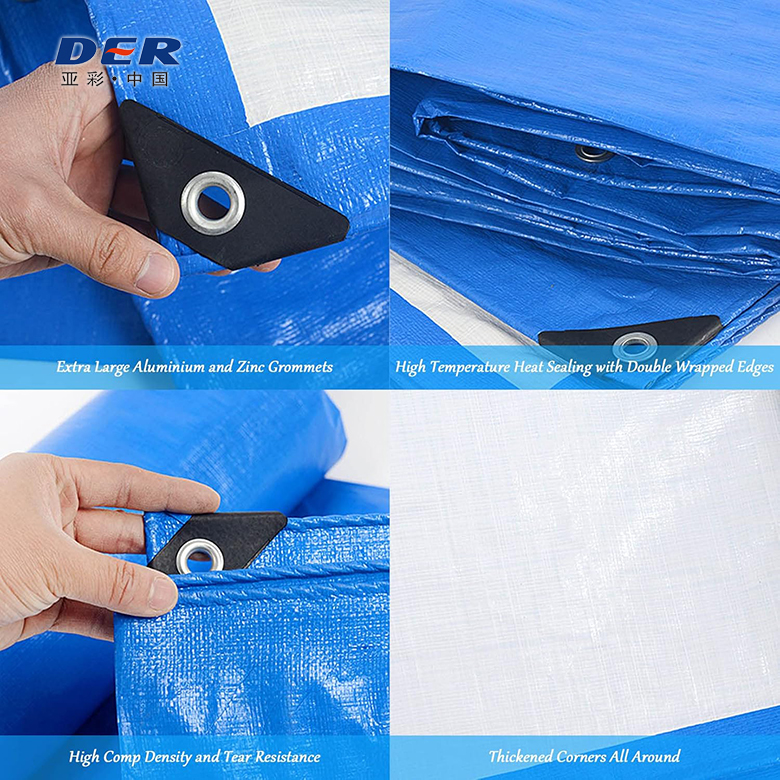
Reinforced tarp grommet, double wrapped edge and strengthened corner detail
Attachment-zone detail: grommet, corner patch and reinforced edge should be designed as one load-transfer system—not as separate accessories.
7

Quick Answer: Why Does a Tarp Tear Around an Eyelet?

The most common causes are over-tensioning, sideways pull, too few effective tie points, insufficient hem reinforcement, repeated wind flapping, weakened or abraded fabric, and poorly matched or installed grommet hardware. If the same location keeps failing, replacing the eyelet alone usually does not solve the root problem.

The Core Mechanism

A Grommet Is a Load-Transfer Point, Not a Strength Guarantee

When a rope, bungee, hook or strap pulls on a tarp, the force does not stop at the metal eyelet. It must move through the grommet, reinforcement and hem into the main fabric. Failure begins when one part of that chain is weaker, misaligned or repeatedly shocked.

AnchorFrame, rail, hook or ground point
ConnectorRope, bungee, hook or strap
GrommetMetal eyelet and washer area
ReinforcementPatch, webbing or extra layer
HemFolded, welded, sewn or rope edge
Main FabricCoated textile or woven tarp body

For repeat-use covers, select the finished tarp as a system. DERFLEX's custom tarp with grommets guidance treats material, reinforced edge, eyelet layout and tie-down method as a coordinated specification.

Root-Cause Guide

7 Common Reasons Tarps Rip Around the Grommets

Read the first tear pattern before assuming the tarp is simply “too light.” The location, direction and shape of the damage often reveal the real loading problem.

01

Over-Tensioning Concentrates Too Much Force at One Point

A grommet carries load through a relatively small ring of material. If a ratchet strap, rope or fixed anchor is tightened harder than the surrounding edge can support, the eyelet can elongate the hole, cut into the coating or start a tear that propagates into the hem.

Typical clue: stretched, oval or “pulled” material around one eyelet while nearby points still look normal.
Better response: release excess point load, re-balance the perimeter, and increase reinforcement or use a higher-capacity attachment system where the load is genuinely high.
02

The Tie-Down Pulls Sideways Instead of Through the Reinforced Direction

A grommet performs best when the connector pulls in the direction the edge was designed to carry. If the anchor sits far to one side, the rope or hook can drag across the hem and create a diagonal stress line. That load can peel the reinforcement or slit the fabric beside the eyelet.

Typical clue: a diagonal tear leading away from the grommet toward a corner or remote anchor.
Better response: realign the hardware with the anchor, reposition the fixing point, or use a webbing/D-ring layout designed for the actual pull direction.
03

Too Few Effective Tie Points Make One Grommet Carry Its Neighbors

Wide spacing is not automatically wrong, but it creates longer unsupported edge spans. If several tie points are left unused, poorly aligned or too far from the real anchors, the remaining grommets carry more force and the edge can flap between them.

Typical clue: the tarp edge bows or flutters between grommets, then one adjacent eyelet tears first.
Better response: match eyelet spacing to usable anchors and exposure. Adding hardware only helps when the hem is strong enough and the new points are actually loaded evenly.
04

The Hem or Local Reinforcement Is Too Narrow for the Load

A heavy center panel can still fail at the perimeter. If the grommet sits in a single thin layer, a shallow hem or a small corner patch, the force does not spread far enough into sound fabric. Stronger reinforced tarp construction may use wider folded edges, extra layers, webbing, rope-in-hem or larger corner reinforcement depending on the application.

Typical clue: the grommet pulls out with a narrow strip of hem attached, while the main tarp remains largely intact.
Better response: rebuild the load zone so the patch or webbing extends beyond the damaged area and transfers force into healthy material.
05

Wind Flapping Repeats the Load Thousands of Times

Steady tension is different from repeated shock. A loose edge can snap and flutter, alternately loading and unloading the same grommet. Wind can also lift a large sheet and transfer that movement back into the edge hardware. The right fix is often to control the motion before increasing strap tension.

Typical clue: several grommets show progressive elongation, fraying or cracking rather than one clean overload event.
Better response: remove excess fabric, secure the windward edge, balance tension and shorten unsupported spans. See the DERFLEX guide on how to stop tarp flapping.
06

UV Aging, Repeated Folding or Abrasion Has Weakened the Fabric Around the Eyelet

The grommet zone is handled, folded and tensioned more often than many parts of the tarp. Sun exposure, dirt, rubbing against hardware and repeated flexing can gradually reduce the strength of the coating and base fabric. A new grommet installed into brittle material may simply create the next tear.

Typical clue: cracking, whitening, delamination, frayed yarns or multiple small tears appear around several eyelets.
Better response: inspect the whole perimeter. If deterioration is widespread, replacement may be more dependable than repeated local patches.
07

The Grommet, Hole Size or Setting Method Does Not Match the Finished Edge

Hardware can damage the tarp when the eyelet is poorly seated, the washer does not support enough material, the hole is too close to the edge, or the metal rim creates a sharp bearing point. Corrosion or deformation can make the contact zone worse. The correct eyelet size and setting method depend on the tarp construction and connector.

Typical clue: tearing begins as a neat crescent at the metal rim, the eyelet rotates loosely, or the washer separates from the fabric.
Better response: inspect both faces, hardware seating, edge offset and reinforcement before installing another grommet. Do not punch a replacement into the same weakened hole without rebuilding the zone.
Failure-Pattern Matrix

What the Tear Shape Tells You About the Root Cause

Field damage is useful evidence. Photograph the first failed location before cutting away the damaged edge or installing a temporary patch.

What You See Most Likely Mechanism Inspect Next Better Direction
Oval or stretched hole around one grommet Excess point tension or shock load Strap/rope tension, nearby unused tie points, anchor movement Re-balance load; strengthen the attachment zone rather than tightening further
Diagonal tear from eyelet toward corner Sideways pull or combined corner load Anchor position, pull angle, corner patch geometry Align hardware with pull direction; enlarge or redirect reinforcement
Edge flaps between two grommets Unsupported span, poor fit or insufficient usable tie points Finished size, overhang, anchor spacing, windward edge Control the edge and shorten the moving span with reinforced fixing points
Grommet pulls out with a narrow strip of hem Weak or too-narrow reinforcement Hem depth, extra layers, webbing/rope, patch size Spread load through a wider reinforced zone
Crescent-shaped cut at metal rim Hardware bearing or poor grommet seating Washer, crimp, eyelet size, edge distance, corrosion Rebuild the zone and match hardware to the finished construction
Multiple eyelets show cracking or brittle material Material aging, UV/flex degradation or abrasion Full perimeter, coating condition, folds, contact points Assess replacement instead of repeating isolated repairs
Failure returns in exactly the same position Recurring load path or geometry problem Frame/rail/cargo interaction, fit, anchor map and handling cycle Change the specification, not only the grommet

Grommet Failure Is Often Part of a Wider Tarp Failure Pattern

For truck and trailer programs, compare the attachment-zone evidence with abrasion, seam, fit and wind damage before deciding that material weight is the only problem.

Compare grommet damage with abrasion, seam, fit and wind evidence before re-specifying the cover.
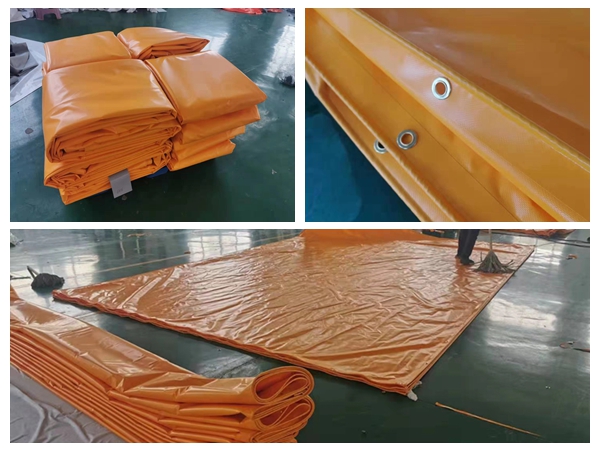
Orange PVC tarp with metal grommets and reinforced perimeter edge
Design Principle

Do Not Solve Every Grommet Tear by Adding a Heavier Tarp

More GSM can help some abrasion and puncture conditions, but it cannot correct a bad pull angle, a weak hem, an oversized loose cover or a ratchet strap pulling through an unsupported eyelet.

Before changing the base material, identify whether the failed part was the fabric, the reinforcement, the hardware layout or the installation.

  • Increase local reinforcement when the problem is concentrated at attachment points.
  • Improve fit and edge control when wind movement is driving fatigue.
  • Change connector or hardware type when the pull is too directional for a small eyelet.
  • Upgrade the material only when the fabric itself lacks the required tear, abrasion or aging resistance.
Repair Decision

Should You Repair the Grommet Area or Replace the Tarp?

A cosmetic patch is not enough if the damaged zone is still carrying the same concentrated load. The repair has to restore a usable load path.

Repair Is Usually Worth Evaluating When…

  • The damage is isolated to one or a few attachment points.
  • The surrounding tarp remains flexible, well-bonded and structurally sound.
  • A larger reinforcement patch or webbing layer can extend into healthy material.
  • The replacement grommet can be installed in rebuilt or sound material rather than the original torn hole.
  • The root cause—tension, pull angle, flapping or abrasion—can also be corrected.

For material-specific patching and edge repair, use DERFLEX's tarp repair guide.

Replacement Becomes More Practical When…

  • Multiple grommets are failing across the same perimeter.
  • The coating is brittle, cracked or delaminating.
  • The base fabric tears easily beside new repairs.
  • Seams, corners and edges are all showing age-related damage.
  • Repeated repairs keep failing in the same load zone.
  • The existing size or hardware layout does not match the real anchors.

Replacement is also the right time to correct the original geometry instead of reproducing the same weak point.

Safety note: inspect, loosen and repair tarps only when the cover, vehicle, structure and access conditions are safe. Do not work on exposed roofs, trailers, scaffolds or elevated covers during severe wind, lightning or unstable loading.

B2B Replacement Specification

Turn the Failed Grommet Into a Better Purchase Specification

For repeat orders, fleet replacements and OEM programs, the failed area should become a design input. A supplier cannot correct the load path if the purchase order only says “heavy duty tarp with grommets.”

1. Finished GeometryLength, width, drops, flaps, cut-outs and whether dimensions are finished or cut size.
2. Application & ExposureTruck, equipment, construction, storage, wind, UV, rain, cold, abrasion and handling frequency.
3. Main MaterialPVC-coated polyester or other construction, target GSM/thickness direction, required tear/tensile performance.
4. Grommet HardwareInside diameter, metal/finish, washer construction and connector compatibility.
5. Hardware MapCenter-to-center positions measured from defined finished-edge datum points.
6. Pull DirectionShow where each rope, bungee, hook or strap actually pulls—downward, outward, lengthwise or diagonally.
7. Edge ReinforcementHem width, extra fabric layer, webbing, rope-in-hem, corner patches and local wear zones.
8. Alternative AttachmentsD-rings, straps, loops or pockets where a small eyelet is not the most suitable connection.
9. Failed-Tarp EvidencePhotos of the first tear, both tarp faces, anchor geometry and any recurring abrasion or movement.

For procurement documents, include the grommet material, diameter, spacing, hem structure and reinforcement drawing together. DERFLEX's tarpaulin technical specification guide shows how to keep material and finished-cover requirements in the same controlled purchase document.

Attachment Choice

Grommets vs. D-Rings: Which Is Better for High-Load Points?

Neither hardware type is automatically stronger. The useful question is how the load is transferred into the tarp and whether the connector matches the anchor.

Attachment Works Well When Main Strength Main Risk to Control
Grommet / eyelet Rope, bungee or compact hooks need regular perimeter tie points Simple, compact and efficient for multiple small connection points Force is concentrated around a small opening; hem and pull angle matter greatly
D-ring + webbing Hooks or straps need a defined high-control point or a directional pull Can transfer force through a larger reinforced webbing/patch zone Ring orientation, webbing overlap and attachment method must follow the load direction
Mixed system Different tarp zones have different loads and connectors Allows grommets along low/moderate-load edges and D-rings at selected high-load zones Needs a clear production drawing so every attachment aligns with real anchors

A custom attachment layout can combine grommets with higher-capacity directional points. Review DERFLEX's tarp with D-rings product guidance when hooks or straps repeatedly overload small eyelets.

DERFLEX Tarp Detail Gallery

Grommet, Reinforcement and Material Images

These real DERFLEX-hosted images show the difference between the attachment point, the reinforced perimeter and the base material that carries the load.

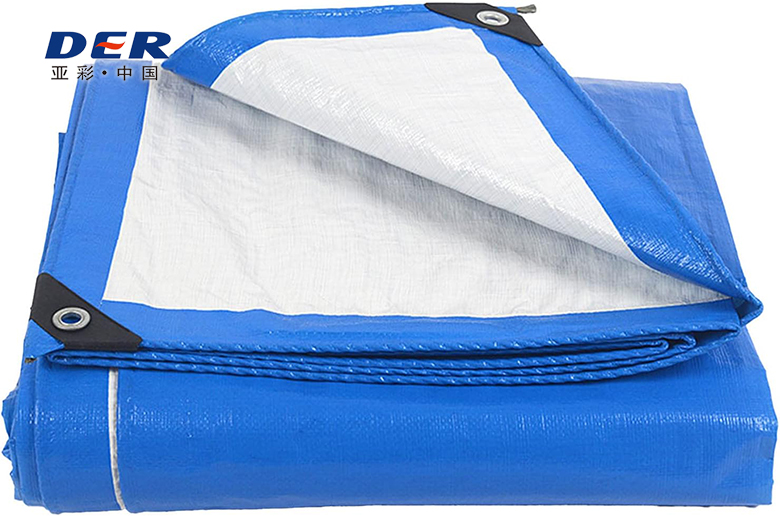
Blue reinforced tarpaulin with strengthened corner grommets and folded waterproof material
Reinforced corner construction Corner patches enlarge the area available to spread diagonal tie-down forces into the main tarp.
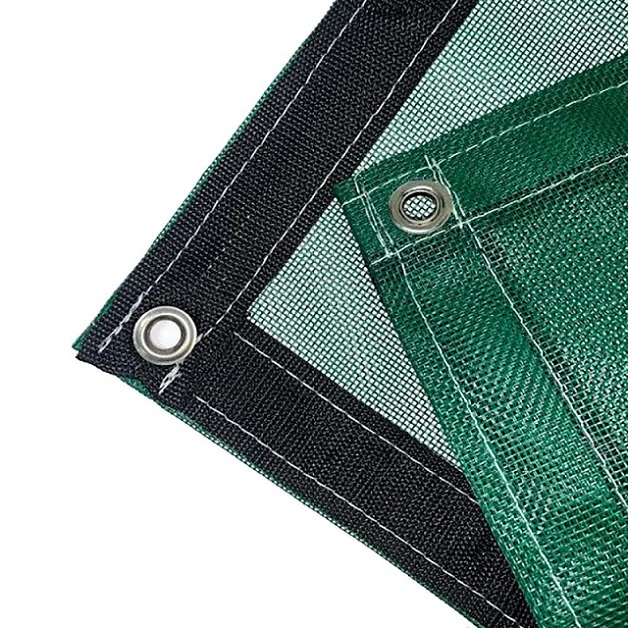
Mesh tarp corners with metal grommets and stitched reinforced black and green edges
Mesh grommet and stitched-edge detail The same load-path rule applies to mesh: the eyelet depends on the reinforcement and edge around it.
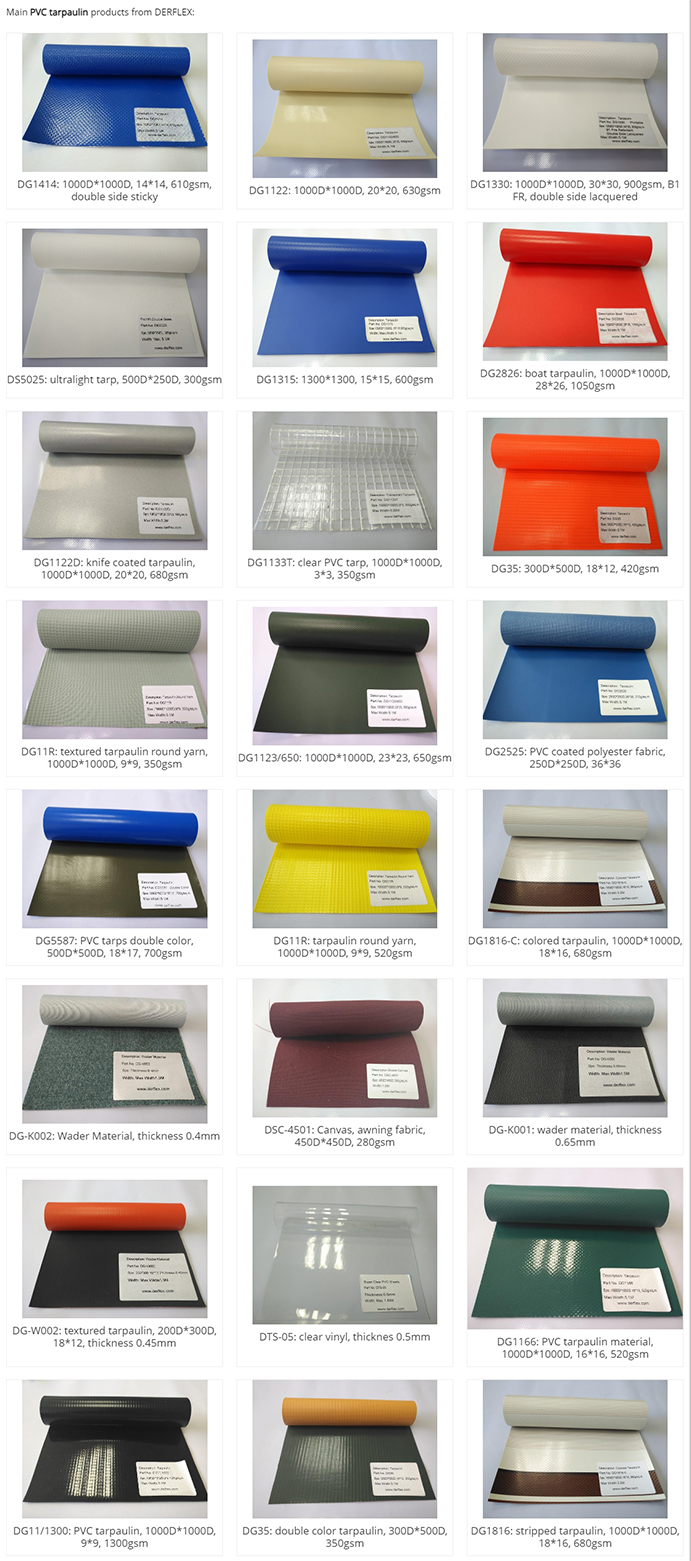
DERFLEX PVC tarpaulin material samples showing different weights coatings and fabric constructions
Base material matters, but it is not the whole system Different PVC tarp constructions can look similar in a finished cover. The base fabric, coating and reinforcement should be confirmed before comparing edge performance.
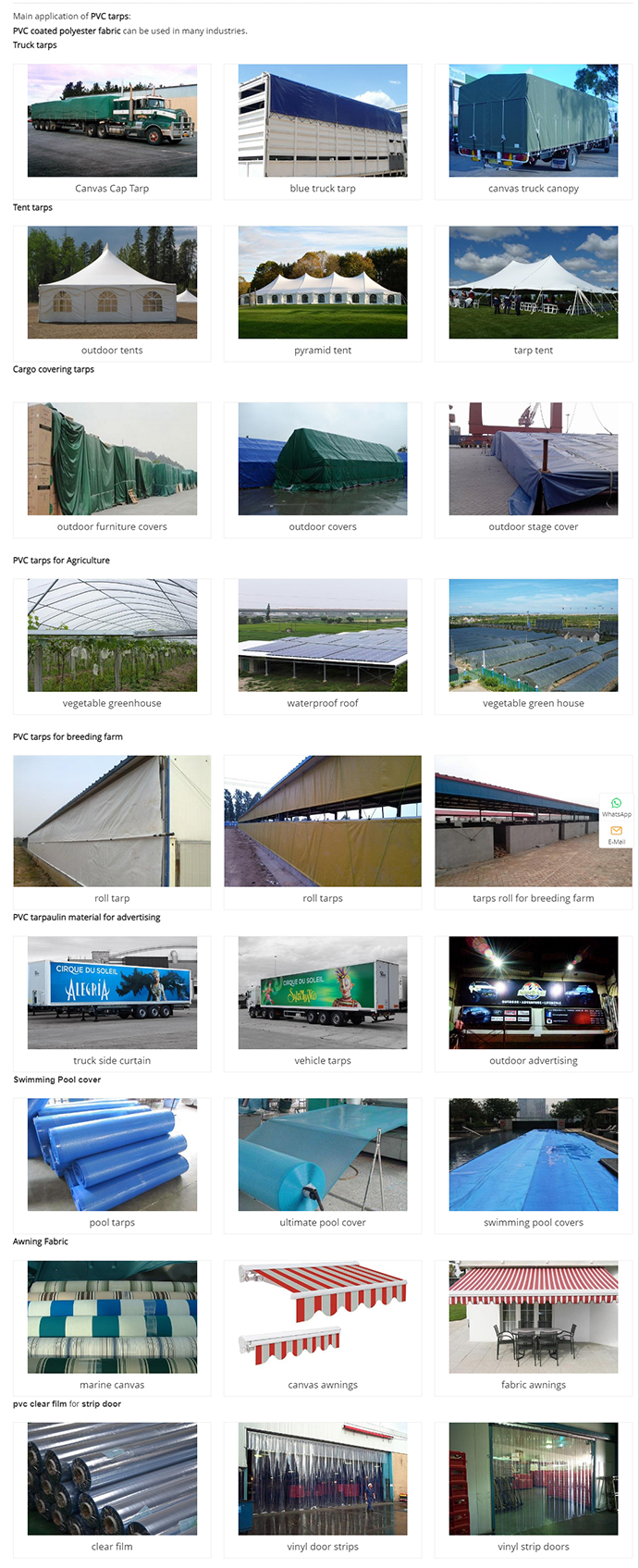
PVC tarpaulin application board for trucks tents agriculture industrial covers pools and curtains
Use environment changes the edge design Truck covers, tents, agricultural covers and industrial tarps experience different wind, handling and anchor conditions, so one universal grommet pattern is not appropriate.
What DERFLEX Can Review

Use the Failure Photo to Improve the Next Tarp

DERFLEX can discuss custom finished size, PVC/vinyl material direction, grommet layout, reinforced hems, webbing, corner patches, alternative attachment points, colo, r, printing and OEM packing for B2B programs. Final construction should be confirmed against the actual application, drawing and approved sample.

Do Not Order the Same Grommet Failure Twice.

Send clear photos of the failed point and the way the tarp was tied down. A useful review starts with the application and load path—not only the grommet diameter.

  • Application and service environment
  • Finished tarp size and quantity
  • Material / approximate GSM or thickness
  • Grommet layout and anchor positions
  • Failure photos from both sides
  • Color, printing, packing and destination
Related Questions

Questions Buyers Ask About Torn Tarp Grommets

Short answers for diagnosis, repair and replacement planning.

Why do tarp grommets rip out even when the tarp is heavy duty?

Because fabric weight alone does not control the attachment zone. A heavy tarp can still fail if one eyelet is over-tensioned, the tie-down pulls sideways, the hem is weak, the edge flaps in wind, the grommet is poorly seated or the surrounding fabric has aged.

How do I stop a tarp from tearing around the grommets?

Control the load before adding more tension. Align the tie-down with the fixing point, use enough effective attachment points, reinforce the perimeter, prevent flapping, protect abrasion zones and make sure the hardware is seated in sound material.

Can I just replace a ripped-out tarp grommet?

Not if the surrounding material is already torn or stretched. Rebuild the area with a larger compatible reinforcement layer or webbing first, then install the grommet in sound material according to the cover design. Reusing the same damaged hole often leads to another failure.

Are D-rings better than grommets for heavy loads?

Sometimes, but not automatically. A D-ring can connect to a wider webbing tab or reinforcement patch and can be oriented for a directional pull. Its real strength still depends on the backing area, attachment method and load direction.

Does closer grommet spacing prevent tears?

It can help distribute load and reduce unsupported edge movement when the extra points are connected to real anchors. Closer spacing does not fix a weak hem, poor pull angle, bad fit or over-tensioning, and unused grommets do not share any load.

When should a tarp with torn grommets be replaced instead of repaired?

Replacement is usually more practical when damage is widespread, the coating is brittle or delaminating, multiple attachment points keep failing, the base fabric tears beside repairs, or the original size and hardware layout do not match the installation.

Performance and service life depend on the selected material, finished construction, environment, installation and maintenance. Final grommet, reinforcement, material and fabrication details should be confirmed in the agreed quotation, drawing and approved sample.

Consulting Services
+86-021-54361792 / 54361798
Email
sales@derflex.com