
Repeated guest use
Lobby seats, restaurant booths and lounge chairs can experience concentrated rubbing on front edges, armrests and seat zones.



Hospitality upholstery should be specified around the room, the traffic level, the cleaning routine and the replacement plan—not selected from a color card alone.
DERFLEX develops hotel furniture PU leather for lobby sofas, lounge chairs, restaurant banquettes, guest-room headboards, conference seating, bar stools and upholstered panels. Color, grain, backing, thickness, hand feel and performance pathways can be coordinated around the actual furniture program.
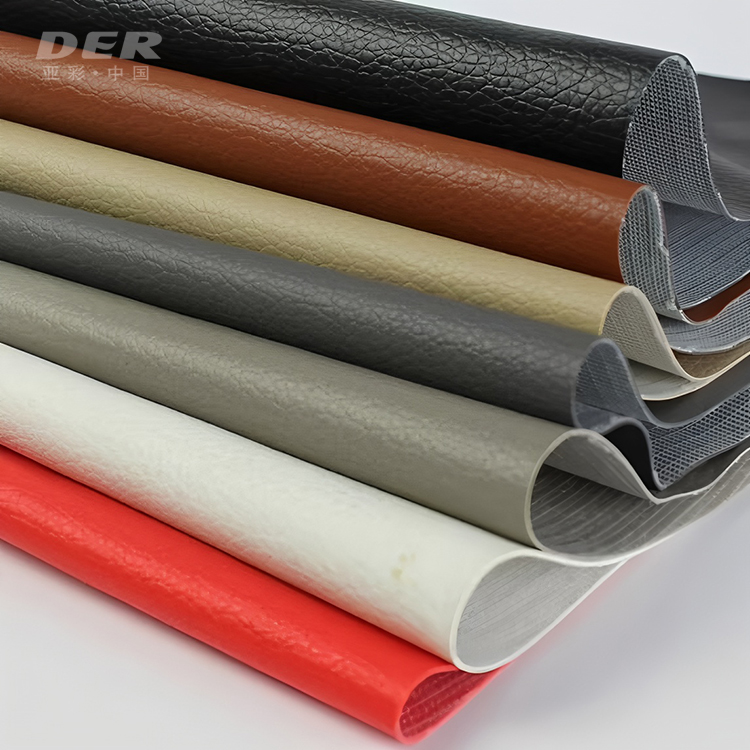
A guest may see color and grain first. Procurement teams, furniture factories and operators eventually see cleaning cycles, edge wear, body oils, luggage scuffs, humid rooms, banquet turnover and replacement matching. The material specification has to connect both sides of that experience.
Lobby seats, restaurant booths and lounge chairs can experience concentrated rubbing on front edges, armrests and seat zones.
Cleaning compatibility should be discussed with the actual cleaner, dilution, dwell time and frequency instead of relying on a broad “easy clean” claim.
Headboards, sofa backs and banquettes make shade, gloss and embossing variation more visible than a small swatch does.
Resorts, coastal hotels and humid destinations can justify a stronger focus on PU hydrolysis and ageing behavior.
Hospitality projects may reference different ignition standards by country, property type or furniture system. The required test should be named before sampling.
A material can be technically acceptable yet still create project problems if replacement lots cannot follow the approved color, grain and backing reference.
One PU leather construction does not have to serve every piece of furniture in a property. A zone-based material plan can preserve a consistent design language while changing the performance priority where it makes sense.
Prioritize broad-surface appearance, abrasion route, cleanability, seam behavior and repeat color for high-visibility front-of-house furniture.
Frequent contact, food and beverage spills and repeated cleaning shift attention toward stain-release direction, surface protection and edge wear.
Balance tactile comfort and interior design with practical cleaning, luggage contact, color continuity and upholstery efficiency.
Large visual areas make grain scale, matte level, color stability and panel wrapping important; project fire requirements may also apply.
High turnover can increase focus on abrasion, cleanability, stitching, stack/chair construction and a clearly defined ignition test route.
Humidity, body contact, cleaning products and storage conditions should be considered together when discussing hydrolysis and surface ageing.
The visible grain is only one part of the material. Top finish, PU body, bonding system and backing influence touch, cleaning, ageing, sewing, wrapping and the way the finished furniture looks after installation.
Two materials can look nearly identical in a catalog and behave differently once they are stitched around foam, wiped every day, installed in humid climates or reordered months later.
Controls sheen, touch, stain-release direction, cleaner interaction and visible scuff behavior.
Creates the leather-like face, color, grain and flexibility. Resin selection also influences ageing behavior.
Helps connect the surface system to the base and affects adhesion, flexing and upholstery handling.
Knitted, woven, nonwoven or microfiber bases change body, stretch, tear behavior, sewing and wrapping performance.
A useful quotation should describe the same construction that will be sampled, tested and reordered. The ranges below are development directions for discussion rather than universal guaranteed values.
| Specification area | Hospitality development direction | What the buyer should confirm |
|---|---|---|
| Material structure | PU surface over knitted, woven, nonwoven or microfiber backing; application-specific construction available. | Furniture zone, upholstery method, desired hand feel, stretch/body and required performance pathway. |
| Thickness | Hospitality and sofa discussions commonly begin around approximately 0.8–1.5 mm, then adjust to the selected structure. | Nominal target, tolerance method, seam bulk, edge wrapping and cushion conformity. Thicker is not automatically better. |
| Surface | Matte, semi-matte, smooth, fine grain, pebbled, napa-style, vintage or custom embossing. | Physical sample, grain scale, embossing depth, sheen and appearance under actual hotel lighting. |
| Color program | Standard colors, coordinated neutrals, custom color matching or brand / interior palette development. | Approved master swatch, lot-to-lot expectation and whether phased replacement material is planned. |
| Backing | Knitted, woven, nonwoven, polyester-base or microfiber directions. | Cutting, sewing, quilting, wrapping, bonding, stretch, tear behavior and finished-furniture geometry. |
| Abrasion & flexing | Project-specific wear route; Martindale, Wyzenbeek or another named method can be discussed when requested. | Test method, endpoint, sample conditioning and target value. A cycle number without a method is not comparable. |
| Cleaning | Easy-clean or stain-release surface direction can be developed for selected constructions. | Actual cleaner, active ingredient, concentration, dwell time, rinse procedure and cleaning frequency. |
| Hydrolysis / ageing | Humidity- and heat-focused PU construction can be discussed for demanding hospitality climates. | Destination climate, storage conditions, cleaning exposure and requested accelerated-ageing route. |
| Flame-test route | Examples may include EN 1021-1/-2, BS 5852, CAL TB 117-2013, NFPA 260 or a customer-specific requirement. | Exact standard, edition, ignition source and whether the cover alone or complete upholstery composite must be tested. |
| Roll & packing | Roll width, length, core, labels, marks and export packing can be discussed for the production program. | Cutting marker, warehouse handling, container planning, project coding and replacement-lot identification. |
These questions turn a broad material request into a more defensible hospitality upholstery specification.
Seat fronts, armrests and piping may fail differently from flat back panels. Match the test route to the likely contact zone.
Cleaner compatibility is chemistry-specific. Test the intended maintenance routine on the selected surface before large-scale approval.
PU ageing deserves more attention in humid destinations, coastal resorts, long storage cycles and high-cleaning environments.
Do not order “FR PU leather” without a standard. The required test may depend on country, property, seating assembly or client specification.
Retained references and clear item specifications help project teams manage phased openings, room refreshes and repair stock.
A production trial can reveal stretch, seam and wrapping issues that do not appear in a laboratory swatch review.
There is no single best material for every property. The right choice depends on tactile target, cleaning, climate, project rules, furniture design, lifecycle plan and budget.
Often considered for a softer leather-like hand, refined grain and flexible design direction.
A denser synthetic base can provide a more substantial structure and premium-feel direction.
Often evaluated for practical cleanability, water-resistance direction and commercial cost control.
Provides textile tactility and design language but follows a different stain, cleaning and liquid-management path.
Hospitality projects involve design teams, procurement, the furniture factory and operations. A staged approval process helps keep visual, production and technical decisions connected.
Identify lobby, guest room, restaurant, conference, headboard or another furniture application and expected traffic.
Share color standard, grain, matte level, touch, backing, thickness direction and furniture construction.
Review color and grain under project lighting and trial cutting, sewing, wrapping or quilting when relevant.
Arrange the buyer-required abrasion, cleaning, ageing, fire or restricted-substance pathway on the representative construction.
Freeze the approved sample, item specification, roll format, labels and repeat-order information before production.
A clear project brief reduces irrelevant samples and makes supplier quotations easier to compare.
DERFLEX combines synthetic leather development with B2B roll supply, sample-to-bulk control, export coordination and application-specific discussion for furniture and commercial interior programs.
Hotel projects are sensitive to visual continuity. DERFLEX can discuss color, grain, gloss, hand feel, backing, thickness, roll format and project-specific performance as one purchasing specification.
The useful goal is not a broad promise such as “premium hotel leather.” It is a reproducible material direction that the design team can approve, the furniture factory can process and procurement can reorder.
For overseas projects, labels, roll packing, quantity, destination and requested documentation can also be clarified before commercial production.
These six internal pages support adjacent stages of material selection, furniture development and international sourcing.
Concise answers for hotel furniture manufacturers, FF&E procurement teams, hospitality contractors, distributors and OEM buyers.
Send DERFLEX your furniture list, interior reference, color/grain target, cleaning routine, required test route and order plan. The next step can be a more focused material recommendation and sample-development discussion for your hospitality project.