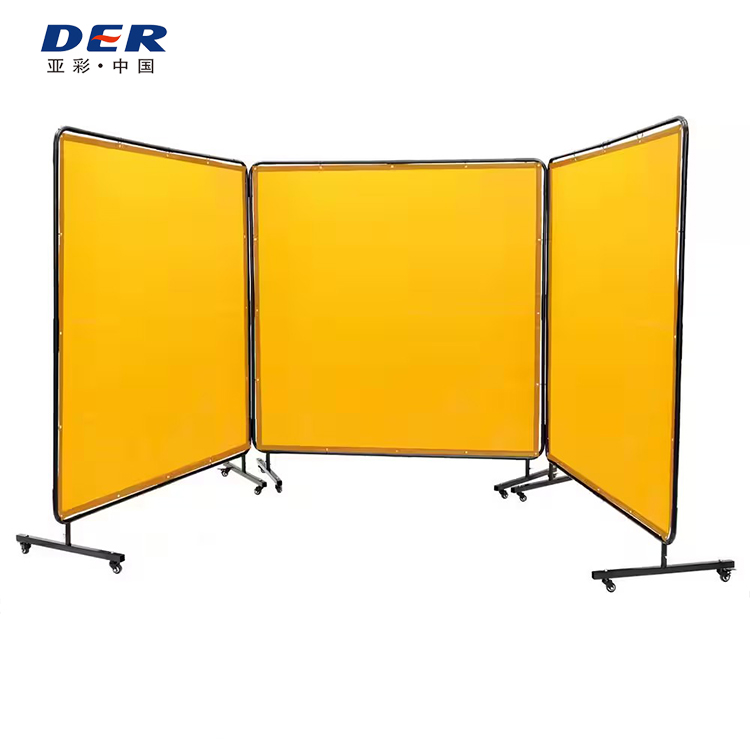
Vertical Welding Curtain
Sparks and spatter can fall away from the face. Priorities often include drape, hanging load, repeated folding, edge reinforcement and abrasion at frames or grommets.



Silicone rubber coated fiberglass roll material for welding blanket converters, vertical curtain manufacturers, hot-work barrier fabricators and industrial safety brands that need heat-resistant reinforcement with a more durable, flexible and contamination-resistant surface.
Final fabric grade must be matched to welding process, orientation, working distance, spark/spatter severity, retained hot particles, fabrication method and required test route.
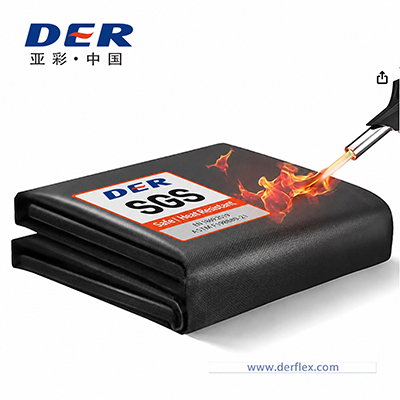
DERFLEX silicone-coated fiberglass material reference. Color, coating side, weight, thickness and exact performance depend on the approved grade.
Yes—when the grade is selected for the actual hot-work exposure. Silicone coated fiberglass combines a woven glass reinforcement with a silicone rubber surface, making it a practical roll material for reusable welding blankets, vertical welding curtains, spark shields and opaque hot-work barriers where flexibility, abrasion resistance and resistance to moisture or oil are useful.
It is not a universal “fireproof cloth.” A vertical curtain and a horizontal blanket can experience the same welding process very differently: sparks usually fall away from a curtain, while hot particles may remain on a blanket for longer. Temperature rating, spatter behavior, coating side, finished seams, thread, edge binding and hardware therefore need to be specified as one system.
A reliable welding-protection specification starts with how heat reaches the fabric, not with a generic GSM target. Three common finished-product geometries create different risks.
Sparks and spatter can fall away from the face. Priorities often include drape, hanging load, repeated folding, edge reinforcement and abrasion at frames or grommets.
Hot particles can stay on the surface longer. Blanket duty should be validated separately from a curtain grade, especially where slag or molten-metal droplets may be retained.
Both faces may touch floors, frames, equipment and operators during relocation. Balanced coating protection and repeated-handling durability can become more important.
The fiberglass core provides textile reinforcement, dimensional stability and heat-resistant structure. The cured silicone layer creates a more protected working surface for handling, wiping, moisture or oil contact and repeated conversion.
A second silicone face can improve balanced surface protection, but double-sided coating does not automatically raise the usable welding temperature. Total coating loading may also increase weight, stiffness and cost.
For broader coating and substrate selection, review DERFLEX silicone coated fiberglass fabric.
These ranges describe the wider DERFLEX silicone-coated fiberglass family. They are a starting framework, not a promise that every weight, thickness, width and coating combination is available or suitable for welding protection.
| Specification Item | Current DERFLEX Direction | Welding-Protection Buying Note |
|---|---|---|
| Base substrate | Woven fiberglass; E-glass or project-matched fiberglass construction | Weave, yarn and base weight affect tensile support, drape, thickness and conversion. |
| Coating structure | Silicone rubber on one side or both sides | Select coating side by exposure direction, handling cycle and surface-protection need. |
| Total weight direction | Approx. 260–2000 g/m2 across current published family | Do not select GSM alone; base-cloth weight and silicone loading can produce different behavior at the same total GSM. |
| Thickness direction | Approx. 0.25–3.0 mm across current published family | Thickness can affect drape and handling but does not by itself define welding-spatter class. |
| Common width direction | 1000 / 1200 / 1500 mm are published common directions; other widths project dependent | Width should be coordinated with finished panel geometry to reduce seams and cutting waste. |
| Color direction | Red, grey, black, white, yellow and project-defined colors depending on formulation/order plan | Color is not a substitute for a flame, spatter or optical-performance requirement. |
| Supply & conversion | Roll goods; cut/slit and OEM conversion directions by project | Cutting, sewing, hemming, binding, punching and grommeting should be validated on the selected grade. |
| Documentation | Project- and grade-specific confirmation | Provide the exact customer, ASTM, EN, NFPA or other required method before sampling; avoid a generic “fireproof certificate” request. |
Selected DERFLEX silicone-coated constructions are currently discussed around this continuous silicone-surface exposure range.
Exact grade, formulation, time and finished assembly govern the allowable value.The glass substrate can tolerate more heat than the silicone surface, but the bare-glass rating must not be copied onto the complete coated composite.
Approve the material as a composite system.Brief hot-particle contact is not the same as continuous service temperature. Particle mass, dwell time, orientation and burn-through test can dominate the result.
Validate the finished protective product for the real hazard.| Decision Point | One-Side Silicone | Two-Side Silicone |
|---|---|---|
| Directional exposure | Useful when one face is clearly the working face. | Useful when exposure or handling can occur from either face. |
| Weight / drape | Can reduce coating mass and help flexibility in some constructions. | May add weight and stiffness depending on coating loading. |
| Handling & contamination | Reverse face may have more exposed glass texture. | Balanced coated surfaces can suit reusable/mobile curtains. |
| Temperature | Grade dependent. | Not automatically higher just because both faces are coated. |
| Typical starting use | Directional curtain, shield, cover or cost-controlled construction after hazard review. | Frequently handled welding curtain, mobile barrier or OEM product needing both-face protection. |
For a dedicated converter view, see double-sided silicone fiberglass fabric for welding curtains.
Silicone coating is valuable when handling, abrasion and contamination resistance matter. It is not the correct answer for every thermal or optical problem.
| Material Direction | Useful Starting Point | Watch For |
|---|---|---|
| Uncoated fiberglass | General hot-work textile where cost and heat-resistant reinforcement are primary. | Exposed glass surface, repeated handling and contamination resistance. |
| Silicone coated fiberglass | Reusable blanket/curtain/shield requiring protected surface, flexibility, moisture/oil resistance and abrasion direction. | Silicone-surface temperature, coating loading, retained slag and final test method. |
| High-silica / specialty high-heat fabric | Higher thermal demand or applications where ordinary coated fiberglass is not enough. | Cost, drape, abrasion, exact heat/spatter qualification and finishing system. |
| Vermiculite or other specialty coated fiberglass | Application-specific heat/spatter directions where a silicone surface is not the preferred exposure face. | Coating behavior, stiffness, dusting/handling and project test requirements. |
| Transparent/tinted welding PVC | Visual work-zone separation and optical-screen applications specified for the completed screen system. | A different material system: opaque silicone fiberglass is not a transparent arc-viewing screen. |
DERFLEX also supplies finished welding blanket solutions and separate welding screen and curtain systems for projects where the completed assembly—not only the roll fabric—is the buying unit.
| Use Condition | Starting Direction | Why It May Fit | Confirm Before Ordering |
|---|---|---|---|
| Reusable vertical spark/spatter curtain | Flexible one- or two-side silicone fiberglass | Heat-resistant reinforcement plus protected working surface. | Arc distance, spatter severity, panel height, hanging load, grommets, seam plan and test requirement. |
| Mobile/folding hot-work barrier | Balanced two-side coating is often worth evaluating | Both faces can contact frames, floors and workers during repeated relocation. | Drape, fold radius, coating stiffness, abrasion, panel size and attachment system. |
| Horizontal equipment/floor blanket | Blanket-specific coated fiberglass or higher-heat direction | Hot particles may be retained longer than on a vertical curtain. | Dwell time, slag/molten-metal behavior, burn-through requirement, binding and seam components. |
| Close-proximity severe heat/slag zone | Heavier/specialty system to be evaluated rather than assuming silicone fiberglass | Dominant hazard may exceed a general silicone-coated fabric direction. | Peak/radiant heat, molten material, exposure duration and finished-product test. |
| Outdoor or oily maintenance area | Silicone-coated fiberglass can be useful | Silicone surface can improve moisture/oil/weathering handling direction. | Outdoor life expectation, cleaning chemicals, abrasion and storage practice. |
Converters should qualify the whole assembly: fabric, seam thread, binding, hems, grommets, reinforcement patches, suspension hardware and any labels or accessories exposed to heat.
If flame-performance documentation is part of the project, start with the exact required method and evaluate a matching grade rather than using a generic “FR” label. DERFLEX also maintains a dedicated FR silicone coated fiberglass fabric direction for project review.
These are current DERFLEX-hosted image references for material selection and buyer context. Final production photography should match the exact sold grade and finished product.
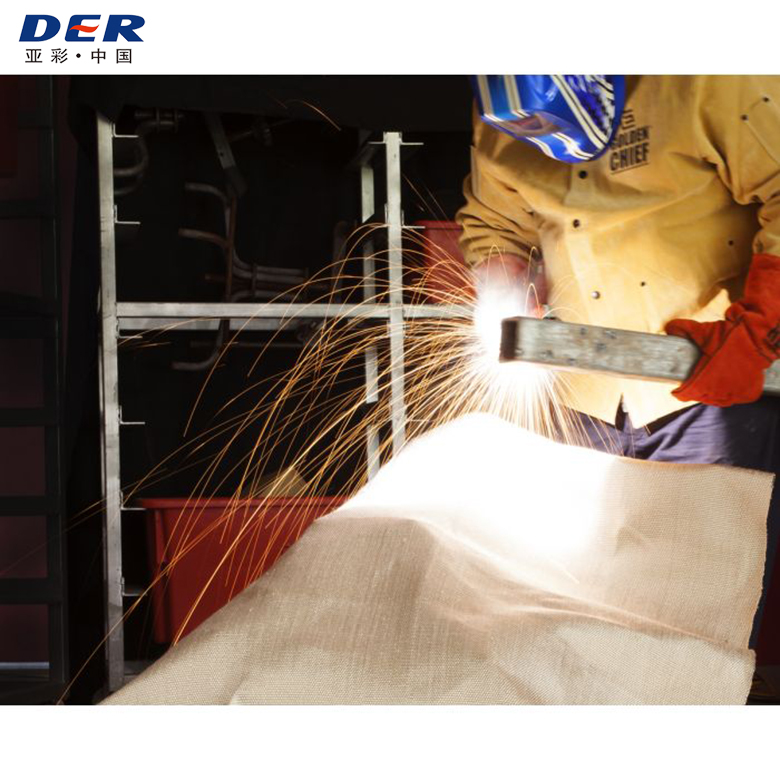
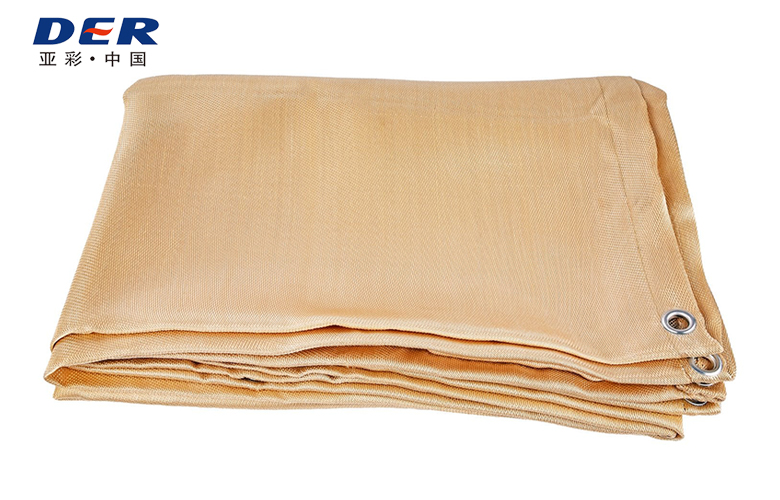
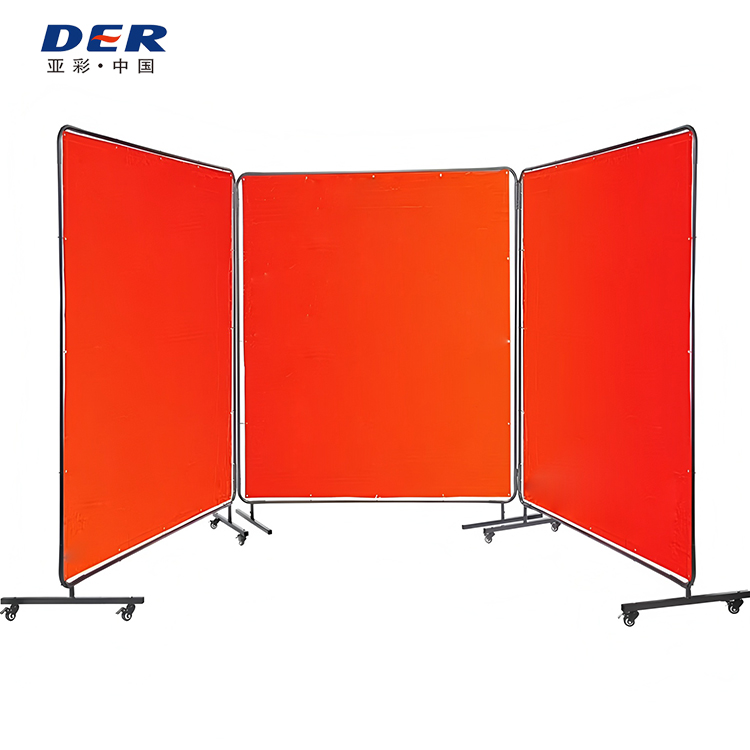
For U.S. workplaces, OSHA 29 CFR 1910.252 requires appropriate fire-prevention precautions and says guards should be used to confine heat, sparks and slag when hazards cannot be removed. It also addresses screens/shields, combustible protection, fire watches and other hot-work controls.
This page is a material-selection guide, not a workplace-safety certification. The completed blanket, curtain or shield must be evaluated inside the purchaser's actual hot-work procedure and applicable regulations.
OSHA 1910.252 — General Requirements for Welding, Cutting and Brazing
Start with orientation, heat, sparks/spatter, abrasion, contamination, folding cycle and finished-product geometry before freezing the roll grade.
Fiberglass construction, silicone coating side/loading, total weight, thickness, width, color, roll length and packing can be discussed according to project requirements.
Use an approved material/conversion sample and a clear purchasing specification to reduce repeat-order ambiguity for converters, distributors and OEM safety brands.
It is woven fiberglass cloth coated with cured silicone rubber on one side or both sides. The glass supplies textile reinforcement and dimensional stability, while the silicone surface improves handling durability and resistance to moisture, oil and abrasion. Welding suitability still depends on the grade, orientation, heat/spatter exposure and finished construction.
There is no single universal welding temperature rating. Selected DERFLEX silicone-coated constructions are currently discussed around approximately 230–287°C continuous exposure at the silicone surface. Welding sparks and spatter are short-duration hot-particle events, so their behavior must be evaluated separately from continuous service temperature.
“Fireproof” is too broad for a technical purchase specification. Ask instead for the exact continuous/peak temperature, flame test, welding-spatter or burn-through method required for the finished product. A material can be heat- or flame-resistant under one method without being suitable for every welding hazard.
It can be better when both faces are repeatedly touched, folded, contaminated or exposed, because the construction provides more balanced surface protection. It is not automatically higher-temperature than a comparable one-side construction, and extra coating can increase weight, stiffness and cost.
Not automatically. Vertical curtains tend to shed sparks and spatter, while a horizontal or draped blanket may retain hot particles for longer. Blanket duty should therefore be confirmed separately using the actual orientation and exposure.
Do not assume it can. Silicone-coated fiberglass is not a conventional thermoplastic PVC-coated fabric. Sewing, hemming, binding and mechanical attachment are common conversion directions, but the production joining method should be validated on the selected grade.
No. Silicone-coated fiberglass is normally an opaque heat/spatter barrier material. Transparent or tinted welding-view screens use a different material/system and must be specified for the applicable optical and completed-screen requirements.
Send the finished product type, welding/hot-work process, orientation, working distance, continuous and peak heat, spark/spatter severity, target weight/thickness/width, coating side, color, conversion method, test requirement, trial/bulk quantity, packing preference and destination.
Send DERFLEX your welding process, curtain/blanket orientation, heat and spatter severity, target roll specification, conversion method, required test route, quantity and destination. A practical silicone coated fiberglass direction can then be reviewed for sampling and quotation.
Technical ranges on this page are purchasing references across current DERFLEX silicone-coated fiberglass programs. Final tolerances, continuous/peak temperatures, welding-spatter behavior, standards, documentation and finished-product suitability must be confirmed for the exact ordered grade and application.