News
Industry News

Tarp vs Shrink Wrap for Equipment Shipping | DERFLEX

Update:2026/10/2 19:56:14 Views:
Industrial covers · B2B supplyRequest a Quote

Equipment shipping · Packaging decision guide

Tarp vs Shrink Wrap: Which Is Better for Equipment Shipping?

Choose a reusable PVC tarp for repeat shipments and frequent access. Choose industrial shrink wrap when a one-way shipment needs a closely fitted enclosure. Equipment shape, route exposure, heat restrictions and moisture control determine which system is suitable.

For OEMs, equipment exporters, rental fleets and logistics teams, this guide compares protection requirements and cost per trip. DERFLEX supplies custom PVC coated fabric and finished tarps with project-specific reinforcement and fastening options.

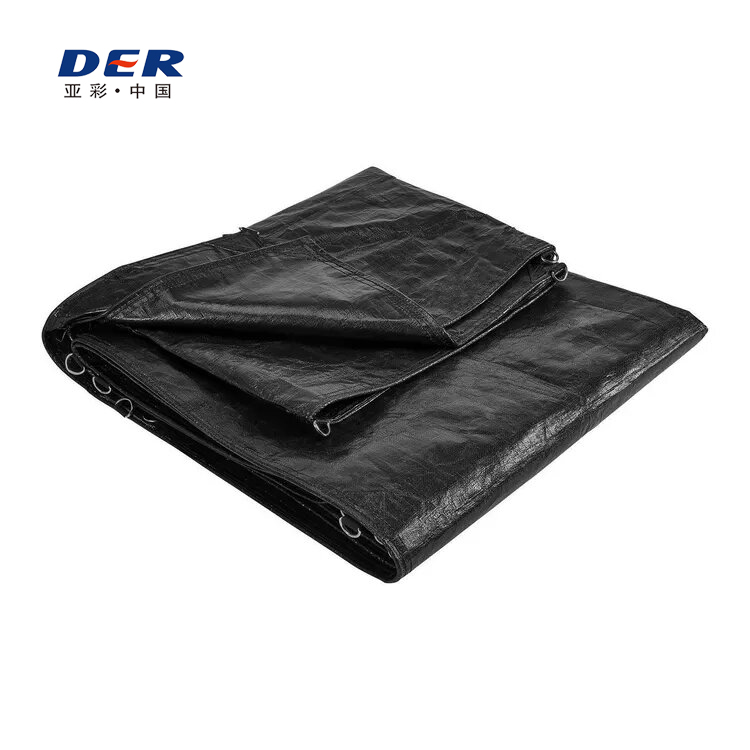
Reusable cover construction
Folded black PVC tarp with reinforced edges and metal D-ring fastenings
DERFLEX tarp example. Cover fit, reinforcement and fastening should be reviewed for the actual equipment and transport route.
01 / THE COMPARISON

Compare complete shipping systems

A loose, lightweight sheet and a fitted reinforced cover are different products. Here, “tarp” means a reusable PVC coated polyester cover; “shrink wrap” means industrial heat-shrink film, commonly polyethylene, fitted and closed around equipment.

Tarp vs industrial shrink wrap for machinery transport — selection guidance, not a universal performance rating.
Decision factorReusable PVC tarpIndustrial shrink wrap
Primary fitRepeat routes, shared cover inventory and equipment requiring regular access.One-way transport and irregular shapes needing a fitted outer enclosure.
InstallationPosition and fasten the finished cover; field installation normally needs no shrink heat.Prepare, pad, close and heat-shrink the film using a suitable installation process.
Rain & road sprayCoated panels shed water; seams, drops, overlaps and underside exposure determine coverage.Film can form continuous coverage; seams, penetrations and base closure determine integrity.
Wind & abrasionControl slack and distribute cover forces through reinforced fastening zones.A fitted envelope reduces loose area; projecting corners still need padding and secure anchoring.
Inspection accessUnfasten and refit, or specify dedicated access flaps.Plan access doors or resealing. Repeated cutting changes the enclosure and labor requirement.
ReusePossible after condition checks, cleaning and approved repairs; requires a return system.Usually costed as consumable packaging when removal requires cutting; confirm exceptions.
Moisture managementPlan drying, drainage and ventilation or a separate inner preservation package.Plan drying plus ventilation or an engineered sealed preservation package, depending on the duty.
Cost basisCover investment spread over approved uses, plus installation, care and return freight.Installed film, preparation, access features, removal and disposal for each shipment.

Pallet stretch wrap tightens by stretching and is a separate packaging category. Do not substitute it for an approved industrial heat-shrink enclosure solely because both are sold as “wrap.”

If repeated access is central to the job, start with DERFLEX equipment tarp options and define the machine profile before selecting a stock size.

02 / CHOOSE BY SHIPMENT

Let the operating plan decide

These are starting points for a packaging review. The machine manufacturer’s preservation requirements and the carrier’s transport conditions should determine the final system.

Repeat journeys + regular access

Evaluate a reusable tarp

A rental generator returning to the same depot, or equipment moving repeatedly between plants, can support cover recovery and maintenance. Specify access to inspection points, identification and a clear refitting sequence.

Check first: Will the cover return, remain serviceable and fit the next load?

One-way journey + fitted enclosure

Evaluate shrink wrap

A large fabricated assembly shipped once may justify a custom film envelope. Confirm the transport film grade, underside closure, protected corners and access needed at customs or receiving inspection.

Check first: Can the enclosure be installed and repaired correctly at the shipping site?

Sensitive equipment + long exposure

Evaluate layered protection

Machined surfaces, electrical assemblies and corrosion-sensitive parts may need an inner preservation package. Select the outer tarp or wrap separately for weather, handling and inspection duties.

Check first: What must the inner package control, and how will that condition be verified?

Heat-restricted site? Check the installation method before choosing film. A pre-fabricated tarp avoids heat shrinking around the machine, although any inner sealing process must still be reviewed separately.
03 / FAILURE POINTS

What can damage either cover during transport?

The enclosure succeeds or fails at local details: the leading face, corners, fasteners, pockets and openings. More thickness cannot correct an unsuitable attachment layout.

Control motion at the cover

For a tarp, map reinforced fastening points to suitable cover anchors and remove unsupported slack without pulling isolated eyelets excessively. For film, review perimeter closure, supporting bands and areas that could balloon or collapse.

A storage cover is not automatically a highway cover. Use the carrier’s route and load profile when reviewing flatbed transport tarp construction.

Protect the contact surfaces

Pad rails, sharp brackets and exposed corners before covering. Use compatible non-abrasive protection on painted panels. Film shrinkage can press the enclosure against projections; a moving tarp can chafe the same locations.

Keep lift points, tie-down inspection locations and identification accessible without cutting through a critical seal.

Weather covering and load restraint have separate jobs. The equipment needs its own approved cargo securement. Tarp D-rings, cover straps and shrink film should not be assumed to restrain the machine’s shipping weight. See the carrier’s securement plan and the applicable transport requirements.
04 / MOISTURE & CORROSION

Does shrink wrap prevent rust better than a tarp?

A close-fitting enclosure can reduce external contamination, but ordinary shrink film is not, by itself, a corrosion preservation system. Both cover types can enclose moisture if wet equipment is packaged or internal conditions are unmanaged.

The useful question is what protects the metal surfaces throughout the journey, including port delays and storage after arrival.

Vented outer enclosure

Manage weather and airflow

For equipment whose preservation plan permits ventilation, place vents or openings so they support airflow while limiting rain entry. Install the cover after the equipment is dry and sufficiently cooled.

Ventilation can help with moisture management; it cannot guarantee a dry interior in humid air.

Sealed preservation package

Control the inner environment

For sensitive export machinery, ask the packaging specialist about a low-permeability barrier, compatible VCI protection, desiccant sizing and humidity monitoring.

Do not cut vents into a sealed preservation barrier unless its design specifically requires them. The outer cover and inner barrier serve different functions.

Preservation depends on equipment materials, allowable residues, exposure duration, packaging volume and barrier properties. Confirm compatibility with the machine manufacturer rather than applying a generic “rust-proof” claim.

05 / PROCUREMENT ECONOMICS

Which costs less per shipment?

Reusable tarps can spread their purchase cost over multiple successful trips. Shrink wrap may be economical when return freight or cover recovery is impractical. Compare complete installed costs over the same shipment scope.

Count the costs buyers miss

  • Tarp: purchase, installation and removal, inspection, cleaning, repair, recovery and return transport.
  • Shrink wrap: film, padding, installation labor and equipment, access features, repairs, removal and accepted waste handling.
  • Both: separate preservation packaging and cargo restraint, if required for the same job.

The calculator excludes cargo damage and delay costs. Compare technical suitability before deciding from price.

Use a cover inspection routine to establish realistic repeat use. DERFLEX’s tarp maintenance checklist supports that review.

Cost per trip calculator

Enter your actual quoted amounts in one currency. No prices or service-life estimates are prefilled.

Tarp per trip = purchase cost ÷ usable trips + recurring tarp costs
Shrink wrap per trip = complete installed wrap cost
Results appear after you enter all four values.
06 / REUSABLE TARP SPECIFICATION

What should an equipment shipping tarp quote include?

A useful RFQ defines the finished cover and its use conditions. Fabric weight is one item in that specification; it does not establish suitability by itself.

Procurement brief for a custom reusable equipment cover
ItemInformation to defineWhy it matters
Cover geometryShipping L × W × H, projections, skid dimensions, required drop and openings.Defines panel shape, clearance and underside exposure.
Fabric constructionPVC coated polyester; target GSM, flexibility and relevant exposure requirements.Balances handling weight, coating and textile reinforcement.
Material weightDERFLEX lists 450–1100 gsm for equipment-cover projects; confirm the specific grade.The published range is a material direction, not an approved transport rating.
Seams & reinforcementPanel joints, welded seam details, reinforced hems and identified wear patches.Addresses leaks, stress concentrations and repeated contact.
Cover fasteningGrommets, D-rings, webbing or straps with location drawings and usable cover anchors.Aligns the cover’s restraint layout with the actual machine.
Access & identificationInspection flaps, equipment labels, orientation marks and installation instructions.Supports inspection and consistent refitting.
Supply & acceptanceFabric rolls, cut panels or finished covers; sample, drawing tolerances and inspection criteria.Clarifies who fabricates, installs and approves the cover.

Select the fabric with the finished cover in mind

Start with the coating, reinforcement and processing requirements in the PVC tarpaulin material range. Ask for grade-specific data relevant to your project instead of assuming all fabrics with the same GSM perform alike.

Approve a representative sample

Review seam integrity, fastening positions, corner clearance and ease of fitting on the intended equipment. Define acceptance criteria before repeat production.

Plan the pattern around the asset

A crane boom, generator skid and machine tool crate require different panel shapes. DERFLEX can discuss dimensional and finishing options through its custom PVC tarp program.

Separate required evidence from options

If UV, cold flexibility or flame performance is required, specify the environment or test requirement and request supporting information for the proposed grade. MOQ, sample timing and lead time require project confirmation.

07 / MATERIAL & APPLICATION EXAMPLES

See the cover, the transport use and the material

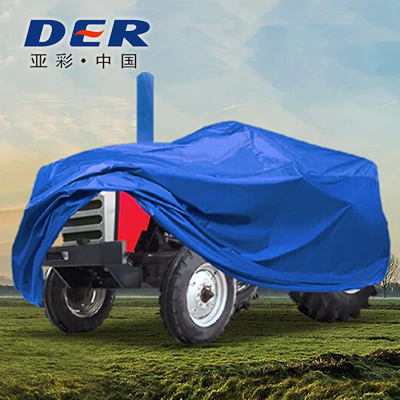
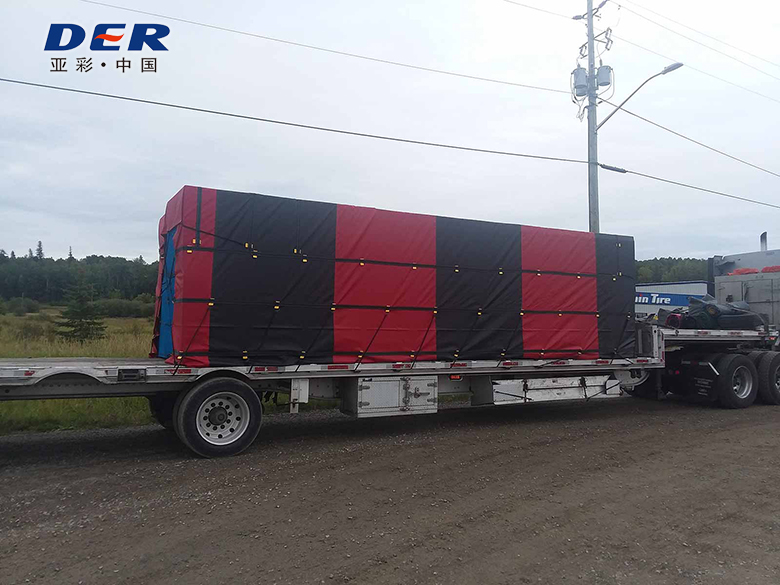
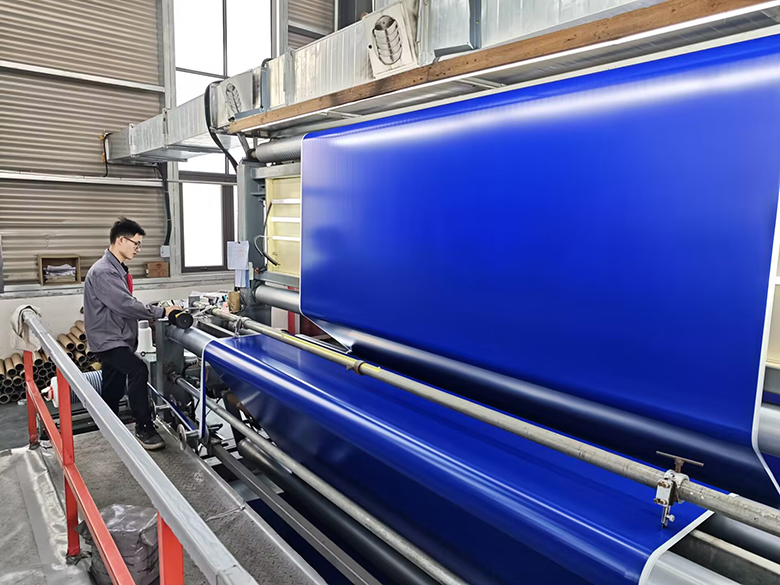
Original images published on the DERFLEX website. Each illustrates a different part of tarp selection; these are not test evidence for a particular shipment.

08 / PRE-SHIPMENT HANDOFF

Agree on these details before the machine leaves

Assign responsibility for preparation, packaging inspection and arrival handling. This prevents the right material from being used in the wrong way.

  1. Document the shipping profilePhotograph the dry equipment and mark sharp edges, fragile parts, lift points and inspection locations.
  2. Approve the preservation methodRecord whether the inner system is vented or sealed and how exposed metal is protected.
  3. Check the finished enclosureInspect seams, hems or film closures, padding, drainage and any access openings.
  4. Verify cover attachment separatelyConfirm the cover is controlled, while the carrier verifies the independent cargo securement.
  5. Plan repairs and inspectionsDefine who may open or repair the package and how required checks will be recorded.
  6. Agree on arrival and recoverySet a safe unpacking method. Recover reusable covers, or arrange accepted film disposal.

For model-specific geometry and protection of large assets, see heavy machinery cover design options.

09 / BUYER QUESTIONS

Equipment shipping FAQ

Is a tarp or shrink wrap better for shipping heavy equipment?

A reusable PVC tarp is often a practical choice for repeated shipments and frequent inspection. Industrial shrink wrap is often useful for a one-way shipment requiring a closely fitted enclosure. Choose from route exposure, equipment geometry, access needs, heat restrictions and the return plan for reusable covers.

Can shrink wrap replace a tarp on a flatbed shipment?

It can provide the outer weather cover when the film grade, edge padding, seams, base closure and anchoring are suitable for the shipment. The carrier and packaging provider should review the actual load and route. Neither shrink wrap nor a protective tarp replaces the equipment’s cargo securement system.

Does shrink wrap prevent rust during ocean shipping?

Ordinary shrink film does not, by itself, establish a corrosion protection system. Dry the equipment, protect compatible metal surfaces and choose an approved preservation package. Depending on the equipment, that may require VCI materials or a sealed low-permeability barrier with correctly sized desiccant and humidity monitoring.

Can industrial shrink wrap be reused like a PVC tarp?

Most fitted shipping shrink-wrap enclosures are removed by cutting and should be costed as consumable packaging. Some engineered removable systems may allow reuse, but this needs supplier confirmation. PVC tarps can be redeployed after inspection, cleaning and any approved repairs; usable cycles are project-dependent.

What tarp weight should I specify for equipment shipping?

Specify the equipment profile, exposed edges, handling method and transport conditions before selecting GSM. DERFLEX publishes a 450–1100 gsm equipment-cover material range, but this is a quotation starting point rather than a highway performance rating. Confirm strength, seams, reinforcement and cover fastening with the sample.

Can I use a PVC tarp over an inner preservation package?

Yes, a layered system can be considered when a separate inner package controls moisture or corrosion and a reusable outer tarp provides weather and handling protection. Design the layers together so the outer cover does not abrade the inner barrier, obstruct inspection or compromise its seals.

Custom PVC covers · OEM & bulk supply

Send the shipping profile. Build the tarp specification.

Share equipment photos or drawings, shipping dimensions, route and exposure, inspection needs, expected repeat use, cover quantity and destination. DERFLEX can review PVC fabric, reinforced seams, fastening and finished-cover options for your project.

Request a Custom Tarp Quote

Specify fabric rolls, panels or finished covers. Confirm sample requirements, MOQ, packing and production timing with the quotation.

DERFLEX · PVC coated fabric & custom protective coversEquipment shipping guide ·
Consulting Services
+86-021-54361792 / 54361798
Email
sales@derflex.com