


Tensile Membrane Manufacturer & Supplier for Architectural Roofing, Canopies, Facades, and Large-Span Structures
DERFLEX supplies tensile membrane materials for buyers who need more than a decorative surface. We support fabricators, tensile structure contractors, engineering teams, architectural membrane distributors, project developers, and OEM partners that need a dependable material platform for modern lightweight structures. Whether the target is a stadium edge canopy, a transportation hub roof, a retail entrance cover, a tensile walkway, a public plaza shade system, or a landmark tensile facade, the membrane must do several jobs at once: carry load through tension, maintain dimensional stability, resist weathering, support welding and fabrication, satisfy visual goals, and stay commercially workable for real project delivery.
This page is built for buyers comparing tensile membrane fabric, architectural membrane material, PVC tensile membrane, PVDF-coated membrane, and higher-end PTFE membrane options. Instead of presenting tensile membrane as a generic roll good, DERFLEX positions it as a project-oriented technical material that must balance strength, service life, cleanability, fire performance, appearance, lead time, and supply consistency. If you are looking for a tensile membrane manufacturer or a tensile membrane supplier that can support specification review, OEM customization, and repeat-order control, this page is structured to help you move from concept to quotation with better clarity.
- Custom PVC / PVDF / PTFE membrane options
- Project-oriented strength, color, and finish control
- Factory supply with quality inspection discipline
- Request a quote for OEM and structural applications
What Is Tensile Membrane and Why Does Material Selection Matter So Much?
Tensile membrane is a high-strength flexible architectural material designed to work primarily in tension rather than compression. Instead of behaving like a rigid wall panel or a conventional roof board, the membrane is stretched over a steel, aluminum, or cable-supported frame so the final structure uses curvature, pretension, and engineered edge detailing to create stability. This is why terms such as tensile membrane fabric, architectural tensile membrane, structural membrane fabric, membrane architecture material, and tensile structure membrane material are often used interchangeably in the market. The exact wording changes, but the buying logic stays similar: the membrane is not only a skin. It is a performance-critical structural component.
In practice, a good tensile membrane must offer much more than a visually smooth surface. Buyers usually need to evaluate base cloth strength, coating system, lacquer or topcoat, weldability, dimensional stability, translucency, surface finish, fire behavior, dirt resistance, and long-term outdoor weathering. Project teams also care about the commercial side: whether the membrane manufacturer can hold quality across batches, whether custom widths and colors are available, how quickly production can be scheduled, and whether test data and certification-oriented documentation can be prepared in a timely way.
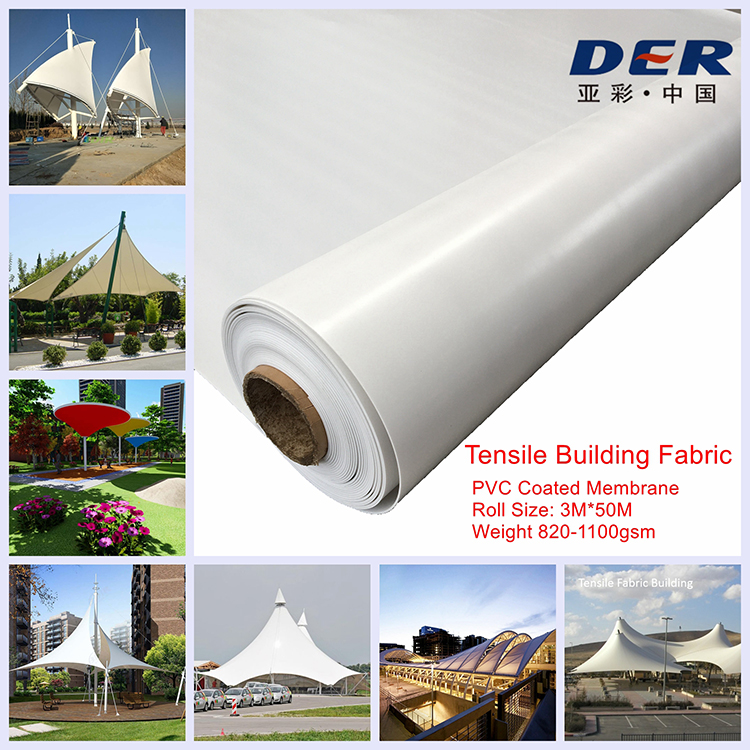
DERFLEX develops tensile membrane solutions around this real decision framework. For standard commercial projects, PVC tensile membrane often provides the best balance of cost efficiency, flexibility, and fabrication practicality. For applications that need improved self-cleaning or stronger surface durability, PVDF tensile membrane or acrylic-finished constructions are often more suitable. For landmark or long-life permanent structures where premium lifespan and fire performance dominate the specification, PTFE membrane or ETFE-related systems may also come into the comparison set. The correct answer depends less on trend language and more on the structure’s use cycle, climate, code pathway, maintenance expectations, and project budget.
How Professional Buyers Usually Evaluate Tensile Membrane
- Can the membrane achieve the required strength-to-weight ratio for the structure?
- Does the surface treatment match cleaning, visual, and pollution exposure conditions?
- Can the material be fabricated efficiently through welding, patterning, and edge reinforcement?
- Are fire performance targets and project compliance requirements realistically supportable?
- Is the service life appropriate for a temporary, semi-permanent, or permanent installation?
- Can the supplier control lead time and batch consistency for repeat or multi-stage projects?
- Are custom colors, translucency levels, widths, and finishing details available for OEM or project supply?
Need help narrowing down PVC, PVDF, or PTFE? Send structure type, target lifespan, fire target, surface preference, project climate, and estimated quantity.
Looking for a Custom Tensile Membrane Supplier?
DERFLEX supports OEM and project supply programs for tensile membrane roofs, canopies, facades, walkway covers, transport structures, and architectural fabric systems. Share your application, dimensions, color target, fire requirement, and delivery schedule for a tailored recommendation.
Key Features Buyers Expect from a Competitive Tensile Membrane Manufacturer
Buyers comparing tensile membrane supplier options are usually not just comparing price per square meter. They are comparing risk, lifespan, fabrication practicality, and total project reliability.
High Tensile Strength with Dimensional Stability
The membrane must keep its geometry under pretension, wind load, snow considerations, and long-term environmental movement. High-tenacity reinforcement and well-controlled coating construction help the membrane maintain reliable structural behavior across fabrication and installation stages.
Weather Resistance for Outdoor Exposure
Architectural membrane fabric is constantly exposed to UV, temperature swings, rain, dust, and atmospheric pollution. DERFLEX tensile membrane materials are developed for outdoor environments where weathering stability and long-term appearance matter as much as initial strength.
Surface Performance and Cleanability
PVDF or acrylic surface finishes can improve stain resistance, reduce dirt accumulation, and support a cleaner visual appearance over time. For many canopies, facades, and public-space structures, self-cleaning behavior is not a luxury feature. It is a maintenance-cost issue.
Good Weldability and Fabrication Efficiency
A tensile membrane may look elegant in a rendering, but its real project success depends on whether it can be patterned, welded, reinforced, edge-finished, and installed without unnecessary processing risk. Practical weldability is a major reason PVC-based architectural membrane remains widely specified.
Fire-Oriented Material Planning
Different regions and projects require different fire performance pathways. A capable tensile membrane manufacturer should support material planning around common targets such as B1, M2, NFPA 701, DIN 4102, and other project-relevant standards where applicable, instead of treating fire performance as a generic marketing label.
Customization for Real Project Delivery
Structural membrane projects are rarely truly standard. Buyers may need custom color, translucency, gloss level, base fabric strength, width, lacquer system, printing marks, packaging method, or labeling format. DERFLEX supports OEM and custom programs built around project needs rather than stock-only assumptions.
Commercial Features That Matter in B2B Procurement
- Factory-oriented quoting instead of purely trading logic
- Lead time planning that matches fabrication and installation schedules
- Stable repeat-order quality for phased projects or distribution programs
- Technical support before final membrane type selection
- Clear customization pathway for OEM, private label, and converter supply
- Documentation support for project review and specification alignment
Why the “Cheapest Roll” Usually Costs More Later
A low-grade tensile membrane can create hidden costs through faster dirt pickup, weaker seam performance, unstable dimensions during fabrication, lower surface durability, inconsistent color between batches, and earlier replacement. For architectural buyers, the right membrane is not only about material price. It is about installation efficiency, public-facing appearance, service life, and reduced rework risk. That is why many buyers searching for tensile membrane manufacturer, tensile membrane supplier, architectural membrane fabric manufacturer, or custom tensile membrane supplier are actually trying to avoid project failure, not simply looking for a lower quote.
Technical Specifications of Tensile Membrane Materials
Typical ranges below are presented for quotation and comparison guidance. Final values depend on membrane type, coating structure, reinforcement system, top finish, and project-specific design requirements.
| Material Types | PVC tensile membrane, PVDF-coated PVC membrane, acrylic-finished membrane, PTFE fiberglass membrane, ETFE-related architectural systems depending on application direction |
|---|---|
| Base Reinforcement | High-tenacity polyester for mainstream PVC/PVDF structures; fiberglass for PTFE membrane systems |
| Typical Weight Range | 650–1350 g/m² for many architectural tensile membrane products |
| Typical Tensile Strength | 3000–8000 N/5cm depending on construction grade |
| Typical Temperature Range | -30°C to +70°C for common outdoor membrane applications |
| Service Life | PVC architectural membrane often around 10–20 years; PTFE membrane can extend to 25–30+ years under appropriate design and maintenance |
| Surface Options | Gloss / matte, PVDF topcoat, acrylic finish, self-cleaning oriented surface treatments, custom color and translucency options |
| Fire-Oriented Options | Project-relevant pathways may include B1, M2, NFPA 701, DIN 4102 and other specification-led requirements, subject to product configuration and market requirement |
| Width and Fabrication Support | Project-suitable roll widths, weldability planning, cutting and edge-finishing compatibility, reinforcement guidance |
| Customization | Color, finish, translucency, strength grade, package format, OEM labeling, and project-specific supply coordination |
Main Material Logic by Project Level
PVC tensile membrane is usually preferred when buyers need a commercially efficient architectural membrane with balanced strength, fabricability, and service life. PVDF tensile membrane is often chosen when the project needs improved surface performance and a cleaner long-term appearance. PTFE membrane becomes more attractive when permanent landmark positioning, premium lifespan, and stronger fire performance justify a higher system cost. ETFE enters the comparison when transparency and very low weight dominate the design intent.
Specification Advice for Quotation Requests
To speed up recommendation accuracy, buyers should share structure type, span direction, target life, project location, climate category, fire target, preferred color, translucency goal, surface preference, quantity, and whether the order is for raw membrane rolls, processed panels, or OEM / distributor supply. Good specification clarity usually leads to faster sampling, more relevant material matching, and a cleaner quotation process.
Need Tensile Membrane Specs Matched to Your Project?
We can recommend the right tensile membrane fabric based on span, environment, fire pathway, visual goal, and budget band. This is especially useful for buyers comparing PVC membrane against PVDF or PTFE without wanting to overspecify or underspecify the project.
Where Tensile Membrane Materials Are Commonly Used
Stadium and Sports Facility Roofing
Tensile membrane for stadium roof applications must combine large-span capability, strong weather resistance, and visual consistency across broad visible surfaces. These projects often prioritize durability, controlled translucency, and clean detailing at seams and edges.
Commercial Canopies and Entrance Covers
Tensile membrane for canopy systems is widely used at shopping centers, hotels, retail plazas, office entrances, and transport interfaces. Here the membrane must deliver architectural appeal, shading function, and practical maintenance behavior in high-traffic public environments.
Walkways, Transit, and Transportation Hubs
Airports, rail stations, bus terminals, and pedestrian corridors often use architectural tensile membrane systems because they create lightweight shelter with efficient coverage and a modern project image.
Public Plazas and Landscape Structures
Municipal and civic projects use tensile membrane roofs and shade systems to cover gathering spaces, open-air events, waiting areas, schools, and park facilities where both aesthetics and weather function matter.
Exhibition, Event, and Semi-Permanent Structures
When installation speed, visual impact, and economical span coverage are important, membrane architecture material offers a strong alternative to heavier conventional roofing systems.
Facades and Landmark Architectural Features
Tensile membrane fabric can also be used as a design-forward surface element in landmark, cultural, and branded architecture where curved form, translucency, and visual lightness are part of the value proposition.
Why Applications Change Material Selection
A membrane for an industrial walkway cover and a membrane for a landmark civic pavilion may both be called tensile membrane, but they should not always use the same specification. Exposure level, public visibility, lifespan target, cleaning frequency, and code pathway can all change the right construction. That is why DERFLEX treats tensile membrane supply as an application-matching process rather than a one-line catalog decision.
OEM and Custom Programs
DERFLEX supports custom tensile membrane supplier requirements for converters, processors, distributors, and private-label buyers who need controlled material programs for recurring project categories. This may include custom strength bands, color matching, top-finish selection, batch labeling, and packaging coordination for easier project management.
Why Buyers Choose DERFLEX as a Tensile Membrane Supplier
Factory-Oriented Manufacturing Capability
DERFLEX is positioned around coated fabric manufacturing and industrial material supply rather than retail-only trading. For architectural membrane projects, this matters because the buyer often needs more than inventory availability. They need a membrane manufacturer that understands coating structure, surface treatment logic, and the importance of consistency from raw reinforcement to finished material.
Existing DERFLEX architectural membrane pages also emphasize advanced coating and laminating capability, strict quality control, and project-oriented customization. That combination is important for tensile membrane buyers because architectural materials need repeatability across visible surfaces and across phased deliveries, not just one acceptable sample roll.
Project-Level Customization and OEM Support
A serious tensile membrane supplier should be able to support custom color, surface finish, tensile band, coating type, and documentation pathway instead of forcing the project into a narrow stock program. DERFLEX supports OEM and custom supply for buyers who need project-matched membrane programs for contractors, converters, fabricators, or regional distribution.
- Custom material recommendations by application
- Project-oriented strength and finish planning
- Support for OEM / private label / distributor supply
- Structured quotation logic for repeat orders and phased projects
Quality Planning from Sampling to Repeat Orders
For many project buyers, the first approved sample is only the beginning of the real challenge. The harder part is making sure later deliveries remain commercially consistent in color tone, coating feel, surface finish, weld response, and handling behavior. DERFLEX treats tensile membrane supply as a controlled material program rather than a one-time shipment. That matters for contractors working on phased installations, converters building standard product lines, and distributors who need a reliable architectural membrane supplier for repeated demand across similar project categories.
In practical terms, better quality planning means clearer sample confirmation, more disciplined production communication, and stronger alignment between quotation, material selection, and expected field performance. Buyers searching for tensile membrane manufacturer, tensile membrane supplier, architectural membrane fabric manufacturer, or tensile structure membrane material factory are often trying to reduce this exact risk. They want a supply partner that understands that a membrane must continue performing not only during the first delivery, but also across future orders, maintenance cycles, and visible in-service years.
Lead Time Awareness for Real Project Schedules
Architectural procurement is rarely isolated from schedule pressure. Fabricators and contractors often need membrane supply aligned with steel work, substructure readiness, patterning timelines, and installation windows. DERFLEX emphasizes responsive quotation and production planning so buyers can reduce delays between material confirmation and delivery.
Quality Control and Certification-Oriented Supply
Tensile membrane quality is not something buyers can fully judge from a photo. The material must be supported by disciplined inspection of strength, coating quality, adhesion, weathering behavior, and project-relevant fire or performance pathways. DERFLEX architectural membrane pages reference strict quality control and compliance direction with ISO, EN, DIN, NFPA, ASTM, and other market-led requirements depending on the product and destination. That orientation is valuable for project buyers who need more than generic sales language.
Tensile Membrane Comparison: PVC vs PVDF vs PTFE vs ETFE-Oriented Alternatives
Many buyers do not actually need “the most expensive membrane.” They need the most appropriate membrane for the structure’s use cycle and commercial target.
PVC Tensile Membrane
Often the most commercially practical option for canopies, walkways, shopping areas, event structures, and a wide range of architectural roofing projects. It offers strong cost-performance balance, good weldability, useful flexibility, and mainstream architectural compatibility.
- Usually the first choice for broad commercial use
- Good fabrication efficiency
- Common service life around 10–20 years depending on finish and exposure
- Available with acrylic or PVDF surface improvement pathways
PVDF Tensile Membrane
Best viewed as an upgraded PVC-based architectural membrane with improved surface durability and cleaner long-term appearance. It is a strong choice for buyers who want better anti-soiling behavior without moving fully into premium PTFE cost territory.
- Better self-cleaning and surface retention than basic PVC
- Suitable for visible public-facing architecture
- Often preferred when maintenance appearance matters more
- Good fit for long-term canopies and transport-related structures
PTFE Membrane
PTFE-coated fiberglass membrane is usually selected for premium permanent structures where long lifespan, higher-end project identity, and stronger fire-related performance requirements justify a more advanced material system.
- Typical service life can extend 25–30+ years
- Excellent durability and premium project positioning
- Common in airports, stadiums, and iconic architecture
- Higher initial cost and different processing logic than PVC-based systems
ETFE-Oriented Systems
ETFE enters the conversation when very high light transmission, ultra-lightweight envelopes, or cushion-based facade and roof systems are the main design driver. It is not a one-to-one substitute for every tensile membrane fabric project but is relevant for some advanced architecture programs.
- Can achieve very high light transmission
- Useful for atriums, skylights, and special facade applications
- Often chosen for transparency and energy-related design goals
- Requires system-level evaluation beyond simple membrane roll comparison
How to Choose the Right Tensile Membrane Material
Choose PVC tensile membrane when you need a reliable, commercially efficient architectural fabric with practical welding and broad project applicability. Choose PVDF tensile membrane when the project needs improved cleanability, stronger surface retention, and a more refined public-facing result. Choose PTFE membrane when lifespan and prestige are central to the brief. Evaluate ETFE-oriented systems when transparency and lightweight enclosure strategy are dominant. If your procurement team is balancing technical and commercial priorities, DERFLEX can help compare these options without overcomplicating the quoting stage.
Comparing Tensile Membrane Options for a Live Project?
We can help you compare PVC, PVDF, PTFE, and related architectural membrane routes based on structure type, service life goal, visibility, maintenance expectations, and budget range.
Representative Case Study: Tensile Membrane Supply for a Public Entrance Canopy Program
A regional fabricator preparing a high-visibility public entrance canopy project needed a tensile membrane material that could deliver a clean white visual effect, stable fabrication behavior, good weldability, and outdoor durability suitable for a hot climate with dust exposure. The project team had initially considered a lower-grade membrane because the quoted material cost looked attractive. After review, they recognized that the canopy would sit at the main public-facing access point, which meant visual cleanliness, seam reliability, and replacement interval would matter as much as initial price.
Challenge: The buyer needed a tensile membrane supplier that could recommend a membrane structure suitable for visible long-term use, not just provide a generic PVC roll. They also needed faster quotation clarity because the steel and fabrication schedule had already started moving.
Solution: DERFLEX recommended a project-matched architectural membrane route with stronger surface performance, practical fabrication compatibility, and clearer guidance on expected maintenance behavior. The communication focused on strength band, finish strategy, service life target, and batch consistency instead of reducing the decision to price alone.
Result: The buyer gained a membrane specification that better matched the project’s climate, appearance requirement, and installation workflow. The fabricator also improved confidence in seam processing, reduced the risk of visible early soiling, and moved forward with a more defensible commercial decision for the client-facing structure.
This case is presented as a representative project-supply scenario to illustrate how tensile membrane selection decisions are commonly structured in real B2B procurement.
Frequently Asked Questions About Tensile Membrane
1. What is tensile membrane used for?
Tensile membrane is used for stadium roofs, transport canopies, shopping center covers, public walkway shelters, facades, event structures, landscape shading, and other lightweight large-span architectural applications where form, efficiency, and weather protection are all important.
2. What is the difference between PVC tensile membrane and PTFE membrane?
PVC tensile membrane is usually more cost-effective and easier to fabricate for a wide range of commercial projects. PTFE membrane is typically chosen for longer life, premium positioning, and stronger fire-performance expectations in permanent landmark structures.
3. How long does tensile membrane fabric last?
Service life depends on material type, surface finish, climate, maintenance, and installation quality. PVC architectural membrane is commonly used in the 10–20 year range, while PTFE membrane can extend to 25–30+ years in appropriate applications.
4. Can DERFLEX provide custom tensile membrane solutions?
Yes. DERFLEX supports custom and OEM supply for color, finish, strength level, surface treatment, translucency, packaging, and project-oriented commercial coordination.
5. What information should I send when asking for a quote?
The best quote requests include structure type, application, span or dimensions, expected service life, fire requirement, color preference, project climate, target quantity, and delivery timeline. This helps DERFLEX recommend a more accurate membrane route.
6. Is tensile membrane suitable for permanent architecture?
Yes, many tensile membrane systems are suitable for long-term and permanent applications when the material type, structural design, surface finish, and maintenance plan are matched correctly to the project.
7. Why work with a tensile membrane manufacturer instead of buying from a generic trader?
A manufacturer-oriented supplier can usually provide stronger control over construction quality, customization, repeat-order consistency, specification alignment, and technical communication. That is especially important for architectural projects where appearance and durability are visible to the end user.