


 Coated Technical Fabric for Flexible Gas Storage
Biogas Balloon Fabric
Flexible coated membrane material developed around the way a gas balloon actually works: repeated expansion, welded seams, folded transport, fitting reinforcement and controlled biogas containment.
DERFLEX supplies biogas balloon fabric for manufacturers, membrane fabricators, EPC contractors and renewable-energy projects that need a practical flexible gas balloon membrane rather than a general waterproof sheet. Material direction can be discussed around balloon geometry, gas composition, pressure, welding process, indoor or outdoor exposure and the final connection details.
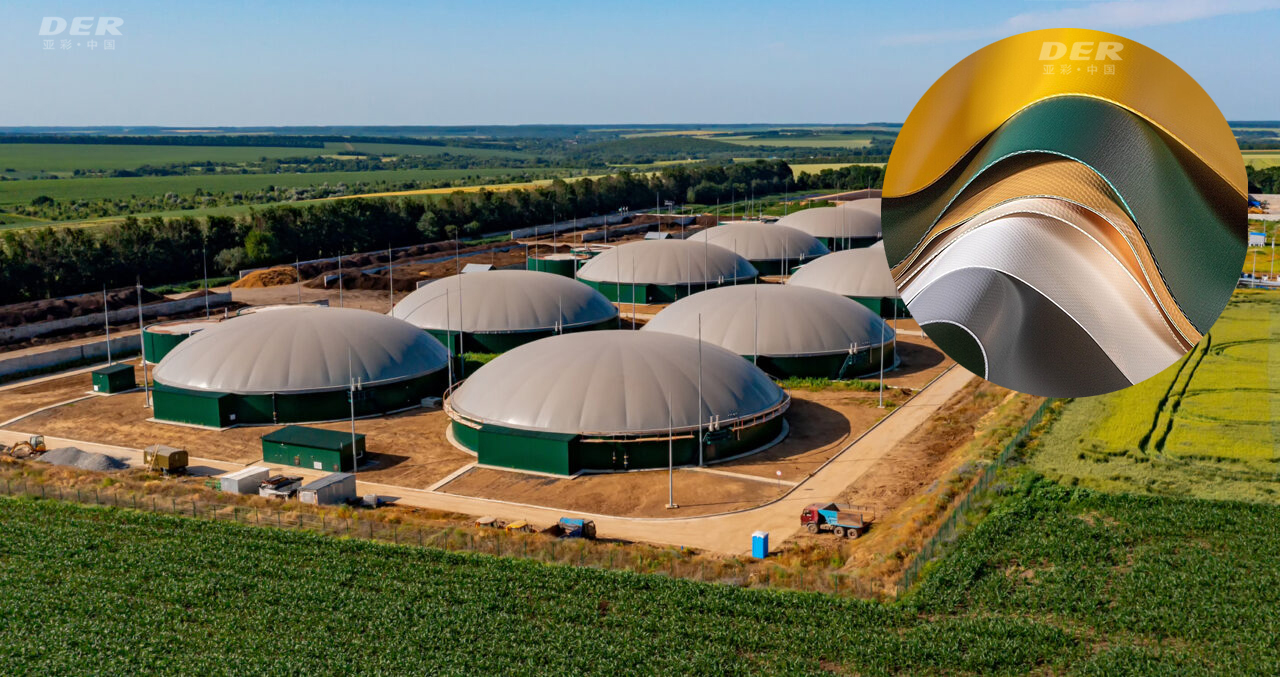
A Biogas Balloon Is a Moving Storage Envelope, Not a Static Cover
Biogas balloon fabric is a reinforced coated textile used to fabricate collapsible gas-storage balloons, gas bags and flexible low-pressure storage envelopes for methane-rich biogas. The finished container may be cylindrical, pillow-shaped, rectangular, low-profile or another project-specific form, with welded seams and integrated gas fittings.
This changes the material-selection logic. A static cover mainly needs to protect what is underneath. A balloon has to become the container itself. The gas balloon material therefore has to combine a gas-barrier coating with textile reinforcement, fabrication-friendly surfaces and enough flexibility to change shape as the stored volume rises or falls.
The most useful specification starts with the working envelope: usable volume, nominal shape, operating pressure, gas chemistry, number and position of fittings, installation surface, expected folding or relocation, and whether the balloon remains outdoors.
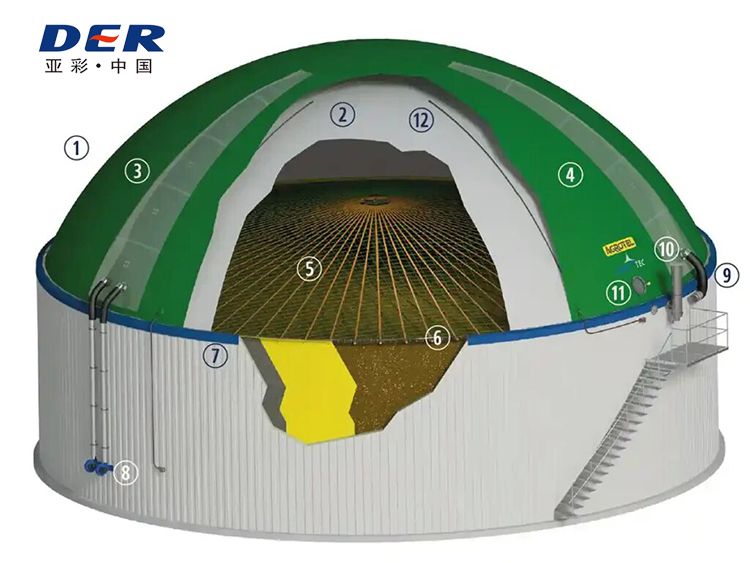
How Balloon Shape Changes the Fabric Requirement
Searchers often ask for one “biogas balloon material,” but the same coated fabric does not automatically suit every shape or storage arrangement.
Cylindrical Gas Balloon
Common for compact ground-mounted storage. Review longitudinal seam loading, end-panel geometry, inlet/outlet reinforcement and how the balloon is restrained from rolling or shifting.
Pillow / Low-Profile Bag
Useful where height must stay limited. Crease zones, floor contact, condensate collection and reinforcement near corners can matter as much as nominal fabric weight.
Rectangular Flexible Storage
Panel geometry can create localized stress at corners and fittings. Seam routing, panel orientation and reinforcement details should be agreed before bulk fabrication.
Custom Buffer Balloon
Pilot plants, temporary storage and process buffering may need unusual dimensions or fitting layouts. Material should be reviewed together with the fabrication drawing, not quoted by GSM alone.
Build the Flexible Gas Balloon Membrane from the Inside Out
A practical flexible gas balloon membrane is a composite. The textile carries load; the coating controls the gas and environmental interface; the welded seam turns flat roll goods into a three-dimensional pressure envelope.
Why coating formulation matters
Biogas can contain methane, carbon dioxide, moisture, condensate and varying levels of hydrogen sulfide or other components. Material suitability should therefore be checked against the actual gas composition and the test method required by the project.
Why textile construction matters
The base reinforcement influences tensile behavior, tear propagation, dimensional control, puncture resistance and handling during fabrication. Yarn construction and weave direction can also affect how a finished balloon deforms under pressure.
Why the seam is part of the material system
A material can look suitable in roll form and still be difficult to fabricate consistently. Trial welding is recommended where practical so the coating, equipment settings, overlap, seam geometry and reinforcement details can be reviewed together.
Eight Checks That Matter More Than a Simple “Waterproof” Claim
Biogas balloon fabric is selected for gas containment and repeated movement. Procurement should therefore include performance criteria that ordinary tarpaulin specifications may not address.
Defined Gas Permeability
Specify gas type, test method, temperature, units and acceptance criterion rather than relying only on the words “gas-tight.”
Seam Strength
Review welded overlap strength and repeatability using the fabricator’s actual equipment where possible.
Fold & Crease Resistance
Collapsible balloons are packed, unfolded and reshaped. The coating should remain compatible with the expected folding and handling cycle.
Fitting Reinforcement
Gas inlets, outlets, drain points, pressure devices and anchor zones concentrate stress and need compatible reinforcement design.
Chemical & Moisture Exposure
Review H?S level when known, humidity, condensate and any process chemicals that may contact the membrane.
Outdoor Weathering
For exposed balloons, define UV, rain, surface-cleaning and temperature requirements separately from the gas-barrier requirement.
Puncture & Ground Contact
Ground-mounted balloons may need a prepared surface or protective underlay so sharp debris does not become the dominant failure risk.
Dimensional Stability
Pressure cycling, panel orientation and textile stretch affect final geometry, connection position and usable storage volume.
Biogas Balloon Fabric Technical Specification Direction
The table below is a procurement framework rather than a universal datasheet. Final values should be frozen after project review, required testing and sample approval.
| Specification Item | DERFLEX Custom Direction | What the Buyer Should Confirm |
|---|---|---|
| Product Type | Biogas balloon fabric / flexible gas balloon membrane / gas storage bag fabric. | Finished balloon shape, usable volume and whether the requirement is roll goods, cut panels or fabrication support. |
| Base Fabric | Reinforced polyester textile; yarn and weave can be discussed according to mechanical requirement. | Tensile direction, tear requirement, folding behavior and panel orientation. |
| Coating System | PVC coated polyester, PVC with protective surface treatment, PVC/PVDF surface direction or other project-specific coated membrane route. | Gas chemistry, outdoor exposure, welding process, cleaning method and required test standards. |
| Fabric Weight / Thickness | Project-specific rather than one fixed balloon grade. | Do not select by GSM alone; connect weight and thickness to pressure, geometry, reinforcement and handling. |
| Gas Barrier | Low-permeability direction available by agreed project specification. | Gas used for test, temperature, test method, units and acceptance limit. |
| Welding | HF/RF, hot-air, hot-wedge or suitable approved process depending on coating formulation. | Machine type, electrode/nozzle configuration, overlap width, seam geometry and trial-weld result. |
| Outdoor Surface | UV-stabilized PVC, lacquered surface or PVDF-oriented surface option where appropriate. | Project location, sunlight exposure, expected cleaning, color and appearance requirements. |
| Chemical Exposure | Coating structure reviewed against expected biogas and condensate environment. | Methane/CO? balance, H?S level if known, ammonia, moisture and other process contaminants. |
| Color / Width | Custom color and roll-width programs can be discussed for OEM fabrication. | Panel nesting, weld count, brand requirements, visible dirt and heat-absorption considerations. |
| Optional Treatments | UV, anti-mildew, anti-wicking, flame-retardant or other project-specific directions can be reviewed. | Applicable test method and mandatory project or local requirements before quotation. |
| Supply Format | Roll goods, custom material codes, project packaging and repeat-order OEM programs. | Quantity, shipment format, batch traceability, labeling and replacement-material strategy. |
Engineering note: operating pressure, design pressure, balloon dimensions, foundation/ground condition, restraint method and safety devices belong to the gas-storage system design and should be confirmed by the responsible system designer. Material supply does not replace system engineering.
The Finished Balloon Is Defined at the Seams and Fittings
For flexible gas storage, the panel layout and connection details can determine whether a technically suitable fabric becomes a practical finished product.
Seam Map Before Cutting
Define panel orientation, longitudinal seams, end-cap seams, reinforcement strips and access for welding equipment before roll width is finalized.
Inlet / Outlet Zones
Pipe connections, flanges or flexible couplings should be supported by reinforcement compatible with the main membrane and the expected movement.
Pressure & Drain Details
Pressure-control and condensate-drain components are system parts, but the surrounding membrane zones should be designed to avoid unnecessary stress concentration.
Anchoring & Restraint
Ground-mounted or hanging balloons may require straps, loops or restraint interfaces. These details should be positioned in reinforced zones rather than added as an afterthought.
Folded Transport
Large fabricated envelopes are commonly shipped folded. Packing method, fold radius, protective interleaving and site handling should be considered during material approval.
Trial Weld & Sample Approval
A practical approval sequence is material sample → trial weld → seam evaluation → finished-detail check → frozen material code for bulk production.
Where Flexible Biogas Balloon Fabric Is Commonly Specified
Balloon-style storage is often selected when the project values lightweight transport, flexible capacity, compact installation or a simpler storage envelope than a permanent rigid structure.
Agricultural Biogas Plants
Gas buffering for manure and farm-waste digesters where production can vary during the day and season.
Wastewater Treatment
Flexible storage between anaerobic digestion and downstream boilers, CHP, flares or gas-treatment equipment.
Food & Organic Waste
Biogas storage for digesters serving food factories, kitchens, breweries, dairies and other organic-waste streams.
Biomethane / RNG Buffering
Low-pressure buffer storage upstream or around upgrading systems where temporary volume balancing is required.
Pilot & Decentralized Systems
Smaller or modular biogas projects that value a collapsible gas storage format and straightforward transport.
Replacement Gas Balloons
Material matching for existing flexible gas bags where drawings, prior specifications or a verified membrane sample are available.
Flexible Balloon, Double-Membrane Holder or Rigid Storage?
The right storage architecture depends on the project. A material page should help buyers distinguish formats rather than imply that one solution fits every site.
Flexible Gas Balloon
- Collapsible and comparatively easy to transport.
- Useful for buffer storage, smaller systems or project-specific layouts.
- Requires careful ground preparation, restraint, seam design and fitting reinforcement.
- Fabric flex and fold behavior are major material-selection factors.
Double-Membrane Gas Holder
- Separate inner gas membrane and outer weather shell.
- Common in larger permanent biogas storage systems.
- Material priorities differ between inner and outer membrane layers.
- System includes support-air and structural/anchoring design considerations.
Rigid Gas Storage
- Fixed structure with different engineering, corrosion and construction considerations.
- May suit projects where rigid geometry and permanent infrastructure are preferred.
- Transport, foundation and fabrication logic differs substantially from flexible textile storage.
- Material selection should follow the system architecture rather than price per square meter.
A Material-First Supply Model for Biogas Balloon Manufacturers
DERFLEX approaches the requirement from coated technical fabric and fabrication behavior. That is useful for buyers who already design or fabricate their own gas balloons and need repeatable gas balloon material rather than a generic finished product listing.
The company’s broader coated-fabric manufacturing experience supports discussion around base textile, coating route, surface finish, roll width, welding compatibility and OEM material codes. For international projects, quotation can be organized around a frozen specification so repeat orders can reference the same approved material direction.
DERFLEX can support inquiry review for gas-holder OEMs, flexible-container fabricators, EPC contractors, distributors and replacement projects. Where the project requires a complete gas-storage system, the responsible engineering party should define the structural, pressure-control and safety requirements while DERFLEX focuses on the membrane material scope.
What DERFLEX Can Discuss Before Quotation
- Balloon type, capacity and dimensional concept.
- PVC, PVC/PVDF surface or alternative coated membrane direction.
- Gas permeability requirement and test criteria.
- Base-fabric strength and project-specific mechanical targets.
- Welding process and sample / trial-weld approval.
- Color, roll width, labeling and packaging.
- OEM repeat-order material coding.
- Roll goods or project-specific supply format.
Five Steps from Project Data to Approved Balloon Fabric
The fastest quotation is not always the most useful quotation. A short technical review can reduce the risk of choosing a fabric that matches only color and GSM.
Send These Details for Faster Technical Matching
A useful request for quote gives the material supplier enough operating context to avoid a generic recommendation.
System & Geometry
Usable gas volume, balloon shape, length/diameter or panel drawing, horizontal/vertical orientation and installation surface.
Operating Conditions
Working/design pressure, temperature range, indoor/outdoor location, UV exposure and frequency of inflation/deflation.
Gas & Chemistry
Expected biogas composition, H?S level if known, moisture/condensate and any unusual contaminants.
Fabrication Method
HF/RF, hot-air, hot-wedge or other process, preferred roll width, seam type and trial-weld capability.
Connections
Inlet/outlet sizes, flanges, drain, pressure devices, lifting or anchoring points and required reinforcement zones.
Commercial Program
Quantity, target delivery window, roll or fabricated-panel requirement, packaging, labeling and expected repeat-order plan.
Continue the Biogas Membrane Selection Path
These six internal links connect balloon-format storage with adjacent DERFLEX material and system pages without repeating the same search intent.
Biogas Balloon Fabric Questions from Buyers
Answers are written for material procurement and fabrication planning. Final gas-storage design requirements remain project-specific.
What material is commonly used for a biogas storage balloon?
Reinforced coated textile is a common material direction. PVC-coated polyester is widely used because it can combine textile strength, flexibility and weldability. PVC/PVDF surface options or other coated membrane structures may be considered according to gas composition, outdoor exposure, required permeability and fabrication method.
Is biogas balloon fabric the same as ordinary PVC tarpaulin?
Not necessarily. General PVC tarpaulin is usually specified for waterproof covering. Biogas balloon fabric should be evaluated for gas permeability, welded-seam performance, chemical exposure, folding behavior, fitting reinforcement and pressure-related deformation. A visually similar coated fabric can have a very different performance profile.
How do I choose the GSM or thickness of gas balloon material?
Start with the balloon geometry, usable capacity, pressure range, reinforcement plan, textile strength, welding method and handling requirements. GSM and thickness are useful parameters, but neither should be used as the only selection criterion. The project specification should connect them to measurable mechanical and gas-barrier requirements.
Can DERFLEX supply custom flexible gas balloon membrane material?
DERFLEX can discuss project-specific coated fabric directions including base fabric, coating system, color, roll width, surface treatment, welding compatibility, labeling and repeat-order material codes. Final suitability should be confirmed through agreed technical data and sample approval.
Which welding method can be used for biogas balloon fabric?
Depending on coating formulation and fabrication design, HF/RF welding, hot-air welding or hot-wedge welding may be considered. The fabricator should verify settings, seam geometry and overlap through trial welding where practical before bulk production.
What information should I send when requesting a quotation?
Send the balloon capacity, shape and dimensions, working/design pressure, gas composition, H?S level if known, temperature, indoor/outdoor exposure, welding method, fittings, reinforcement details, quantity, preferred roll width, required tests and any available drawing or existing material datasheet.
Need Biogas Balloon Fabric for an OEM or Project?
Send DERFLEX your balloon capacity, geometry, gas composition, pressure range, welding method and quantity. The team can use that information to discuss a project-specific material direction and quotation.
Product information is provided for material-selection discussion. Final performance values, compliance requirements, system safety, pressure design and service suitability should be confirmed against the approved project specification, test method and responsible engineering design.