Material Definition
A Stadium Roof Skin, Not a Conventional Coated Fabric
ETFE is a fluoropolymer film. Its finished performance depends on the selected foil, welded panel geometry, perimeter clamping, cable or frame behavior, pneumatic control and project engineering.
What is an ETFE stadium roof membrane?
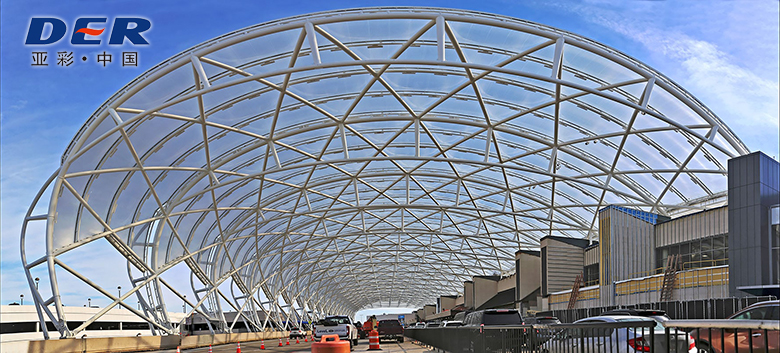
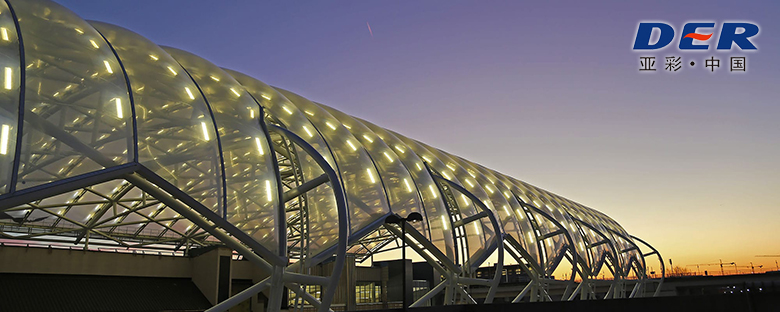
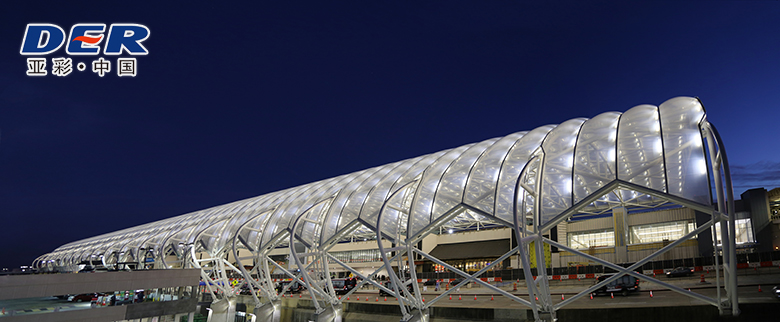
An ETFE stadium roof membrane is a transparent or translucent foil used to form lightweight roof and enclosure zones above sports venues. Depending on the design, the foil may be pre-stressed as a single skin, supported by a cable network, or welded into air-filled cushions held in aluminium perimeter profiles.
Stadiums place unusual demands on an envelope: very large spans, dense spectator occupancy, event lighting, broadcast sightlines, weather exposure, ventilation, maintenance access and, in some venues, daylight conditions for natural turf. For this reason, buying ETFE only by thickness or square-meter price can create gaps between material supply and system performance.
Where DERFLEX fits in the project chain
DERFLEX supports façade contractors, membrane fabricators, specialist roof companies, distributors and procurement teams with ETFE foil selection and commercial supply. Typical discussions include film thickness, clear or printed appearance, roll dimensions, sample approval, welding trials, batch identification, protective packing and shipping documentation.
The appointed architect, structural engineer, envelope consultant, specialist fabricator and installer remain responsible for the completed stadium roof design, calculations, code approval, safety strategy and installation method.
Procurement principle: define the roof zone and system concept first; then confirm film grade, thickness, pattern, roll configuration and testing route. This produces a more useful quotation than requesting “ETFE stadium membrane” without drawings or performance targets.