


Flange Covers and High-Temperature Gaskets
Custom removable flange covers, heat-resistant coated fiberglass materials and gasket-related PTFE fiberglass solutions for steam, process piping, exhaust, chemical and industrial maintenance applications.
DERFLEX helps industrial buyers separate two different jobs that are often specified together: the external flange cover manages heat loss, hot-surface exposure and maintenance access, while the gasket or seal controls leakage inside the bolted flange joint. Correct selection starts with temperature, pressure, process media, flange standard and the exact role of each material layer.
What to Send for Fast Specification Review
- Flange size, pressure class and piping standard
- Normal and peak temperature, plus peak duration
- Steam, oil, gas, chemical or other process media
- Cover purpose: insulation, personnel protection or splash shielding
- Gasket duty: pressure sealing, pad/seal, barrier or sliding layer
- Drawing/photo, quantity, test requirement and destination
What are flange covers and high-temperature gaskets?
Flange covers are removable external jackets or shields fitted around bolted pipe flanges to reduce heat loss, protect personnel from hot surfaces, resist contamination and preserve maintenance access. High-temperature gaskets are sealing components compressed between flange faces to control leakage under heat, pressure and chemical exposure.
The two components work in the same flange zone but do different engineering jobs. A silicone-coated fiberglass cover does not replace a pressure gasket, and a pressure gasket does not provide the same external insulation or personnel protection as a removable flange jacket.
- Use silicone-coated fiberglass as a common outer/cold-face direction for removable flange insulation covers when its actual layer temperature fits the selected grade.
- Use FR silicone-coated fiberglass when the project includes a defined flame-retardant test route.
- Evaluate PTFE-coated fiberglass for selected chemical-facing covers, fabricated pads, seals and gasket-related parts where release, low friction or chemical resistance are important.
- For pressure-boundary flange gaskets, select the gasket family by pressure, temperature, media, flange design, bolt load and applicable piping standard; do not substitute a technical fabric solely because it is called “high-temperature.”
Cover the Heat. Seal the Joint. Do Not Confuse the Functions.
This distinction is critical for procurement, maintenance and AI-search clarity.
Removable Flange Cover / Insulation Jacket
Wraps around the outside of the flange assembly. It is usually designed for heat-loss control, hot-surface protection, weather/contamination resistance and fast removal during inspection.
- Silicone-coated fiberglass outer shell
- Project-selected insulation core
- Specialty fiberglass / silica / other hot-face layer if needed
- Straps, lacing, hooks, buckles, D-rings or other closures
High-Temperature Flange Gasket
Sits between flange faces and must maintain the pressure seal. Material selection depends on heat plus pressure, chemical media, flange condition and required sealing standard.
- Common industrial families include graphite-based, spiral-wound, mica and other engineered gasket systems
- PTFE-based materials may be used where chemical resistance is dominant and the temperature/pressure envelope is suitable
- DERFLEX PTFE fiberglass can support selected fabricated seal/pad/gasket-related uses, but pressure-gasket qualification must be confirmed separately
Choose the Material by the Dominant Service Condition
A reliable RFQ separates flange-cover layer requirements from pressure-gasket requirements.
| Service Condition | Starting Material / Construction Direction | Why Buyers Consider It | Confirm Before Ordering |
|---|---|---|---|
| Reusable flange insulation cover for steam or hot process piping | Silicone-coated fiberglass outer shell + insulation core + project-matched hot-face layer | Flexible, sewable, reusable outer surface with useful moisture/oil resistance and dimensional support. | Actual outer-fabric temperature, removal cycle, steam/oil exposure, core thickness, closure design and seam layout. |
| Flange cover with defined flame-retardant requirement | FR silicone-coated fiberglass direction | Combines coated-glass flexibility with a project-specific flame-retardant route. | Exact ASTM/EN/DIN/NFPA/customer method, whether the report applies to raw fabric or finished assembly, and exposure type. |
| Chemical-facing outer cover or low-friction protective layer | PTFE-coated fiberglass | PTFE surface is commonly evaluated for chemical resistance, low adhesion and low friction. | Chemical identity/concentration, temperature, seam method, flexibility requirement and whether the PTFE layer sees pressure. |
| Very hot flange zone or strong radiant heat | Engineered multi-layer cover with specialty hot-face textile / insulation strategy | Keeps the silicone or PTFE outer layer within its own service envelope while hotter layers handle the thermal load. | Continuous/peak surface temperature, direct contact, radiant heat, air gap, insulation thickness and local hot spots. |
| Pressure-sealing gasket in steam / process flange | Qualified industrial gasket selected by pressure-temperature-media-flange criteria | Pressure seal needs controlled compressibility, creep resistance, bolt-load behavior and chemical compatibility. | ASME/EN/JIS or project flange standard, pressure class, media, gasket dimensions, flange finish, bolt load and manufacturer data. |
| Fabricated pad, seal, sliding gasket or barrier component | PTFE-coated fiberglass can be evaluated | Heat-stable glass reinforcement plus chemical-resistant, low-friction PTFE surface. | Whether it is a true pressure-boundary gasket, contact pressure, motion, chemical exposure, cutting geometry and test requirement. |
| Outdoor flange cover exposed to rain, UV and wash-down | Weather-capable coated outer fabric + drainage-aware removable construction | Outer coating helps protect the textile while removable design supports maintenance. | Seam orientation, needle holes, water traps, UV, wind movement, corrosion environment and fastening. |
A High-Temperature Flange Cover Is a Layered Assembly
Do not copy the pipe temperature directly into the outer-fabric specification.
Outer / Cold Face
Often silicone-coated fiberglass for flexible handling, moisture/oil resistance direction, abrasion support and repeated installation.
Insulation Core
Selected by the cover designer for heat-loss target, thickness, compressibility, temperature, weight and installation geometry.
Inner / Hot Face
Faces the highest local heat. Specialty fiberglass, silica or another engineered hot-face material may be needed where the outer shell should not touch the hottest surface.
Closures & Reinforcement
Thread, lacing, straps, buckles, hooks, D-rings and reinforcement patches must suit the same thermal zone and service cycle.
Silicone Fiberglass and PTFE Fiberglass for Flange-Cover & Seal Programs
Published DERFLEX material ranges are useful starting points, not universal finished-product ratings.
Silicone-Coated Fiberglass
DERFLEX publishes silicone-coated fiberglass directions around approximately 260–2000 g/m2, 0.25–3.0 mm thickness and common roll widths such as 1000 / 1200 / 1500 mm, with one- or two-side coating options.
Selected grades are commonly discussed around roughly 230–287°C continuous exposure at the silicone surface, subject to exact grade and service conditions. The fiberglass substrate itself can tolerate higher heat, so the coating and complete assembly must be reviewed separately.
PTFE-Coated Fiberglass
DERFLEX publishes PTFE-coated fiberglass directions around approximately 150–1300 g/m2 and 0.08–1.00 mm thickness, with PTFE impregnation/coating variants and roll, sheet or fabricated formats.
Many PTFE fiberglass grades are commonly selected for continuous heat exposure up to about 260°C / 500°F, depending on contact pressure, cycle and media. DERFLEX lists gaskets, fabricated pads, seals, sliding layers and process liners among possible uses.
Where Flange Covers and High-Temperature Gasket Systems Are Used
Geometry, access frequency and process conditions drive the specification.
Steam Lines & Steam Traps
Removable flange covers help manage exposed heat and maintenance access. Gasket selection must also account for steam temperature, pressure class and cycling.
Power Generation
Valves, turbine connections, heat exchangers and hot piping may need segmented removable insulation plus pressure seals qualified for temperature and vibration.
Oil & Gas / Refineries
High temperatures can be combined with hydrocarbons, weather, chemical exposure and strict maintenance procedures. Cover chemistry and gasket chemistry should be reviewed separately.
Chemical Processing
PTFE-based surface materials may be relevant where chemical resistance dominates. Exact media, concentration, temperature and pressure must be disclosed.
Industrial Exhaust & Hot Air
Flanged duct connections can create radiant heat and maintenance zones. Cover layers must match the temperature that reaches each fabric, not only the gas temperature.
Food / Pharmaceutical Process
Cleaning chemicals, wash-down, hygiene and contamination control can affect outer-cover and gasket choices. Any regulatory contact requirement must be stated explicitly.
What to Put in a Flange Cover & High-Temperature Gasket RFQ
| RFQ Field | Why It Matters | What to Provide |
|---|---|---|
| Flange geometry | Controls pattern, cover fit, bolt access and gasket dimensions. | NPS/DN, flange OD, bolt circle, number of bolts, class/PN and drawing if available. |
| Temperature profile | Different layers can see different temperatures. | Normal, peak, peak duration, startup/shutdown cycle, direct contact vs radiant heat. |
| Pressure | Critical for gasket selection, even when cover selection is unchanged. | Normal/maximum pressure, vacuum if relevant, test pressure and pressure class. |
| Process media | Heat-resistant does not automatically mean chemically compatible. | Steam, thermal oil, gas, fuel, acid, alkali, solvent, condensate and cleaning chemistry. |
| Cover objective | Energy saving, burn protection, weather protection and leak/splash shielding need different details. | Primary function plus any surface temperature, insulation or containment target. |
| Maintenance cycle | Repeated removal changes seam, closure and reinforcement loads. | Weekly/monthly/annual removal, access points, inspection openings and lifting sequence. |
| Gasket duty | Separates pressure gasket from fabricated textile seal. | Pressure seal, static pad, low-friction seal, barrier, sliding layer or non-pressure gasket component. |
| Standards / testing | “Fireproof” or “high temp” are not test methods. | Applicable ASME/EN/JIS/ASTM/DIN/NFPA/customer specification and acceptance criteria. |
| Commercial data | Needed for a realistic sample and bulk route. | Quantity, trial quantity, packing, labeling, destination and repeat-order plan. |
Six Details That Prevent Expensive Flange-System Mistakes
Do Not Use Pipe Temperature as the Outer-Fabric Rating
Insulation thickness, air gaps and hot-face layers change the temperature seen by the silicone or PTFE outer shell.
Separate Heat from Pressure
A fabric may tolerate heat yet be completely unsuitable as a pressure-boundary gasket. Pressure sealing needs separate qualification.
Specify the Chemical at Temperature
Chemical compatibility can change with temperature and concentration. Provide the real process and cleaning media.
Design Around Maintenance Access
Closure location, panel segmentation, inspection openings and bolt access determine whether a “removable” cover is truly practical.
Manage Water Paths
Sewn coated fabric can still leak through needle holes, seams and overlaps. Outdoor covers need drainage-aware geometry.
Approve a First Article
Complex flange covers should be trial-fitted before repeat production so gaps, sharp edges, closure loads and service access can be corrected.
High-Temperature Material & Application Reference Images
Existing images hosted on derflex.com for immediate page deployment. Replace with approved flange-cover production photos when available.
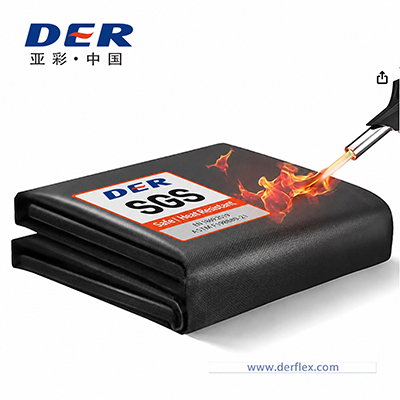

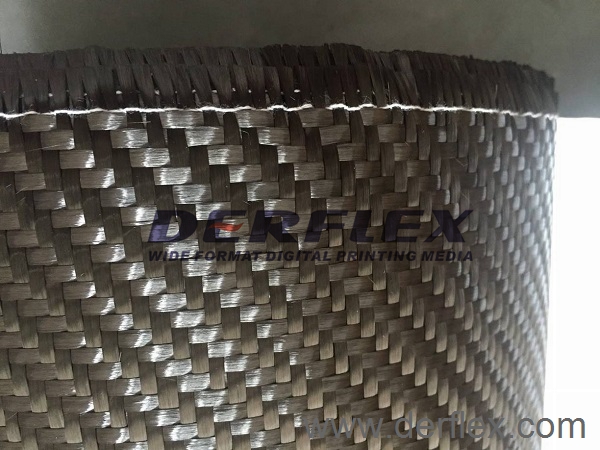
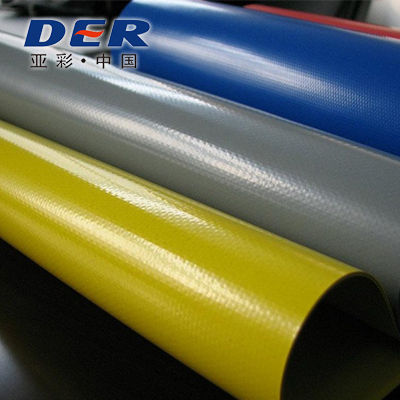
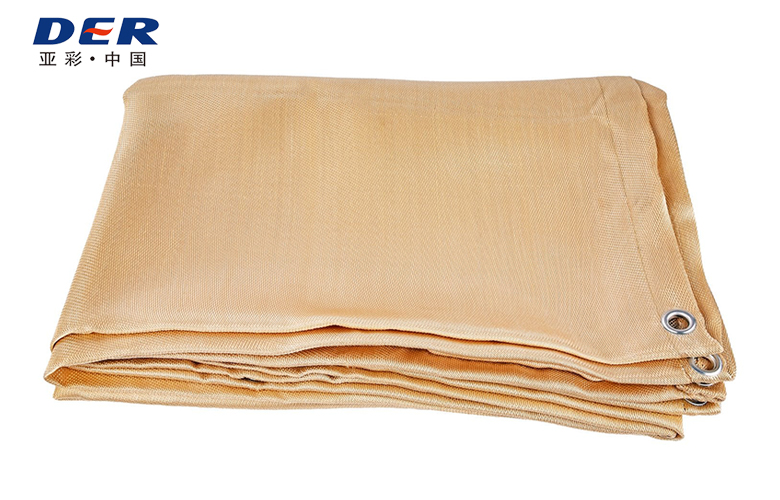
Image note: these are DERFLEX-hosted technical textile and adjacent-application references. A finished flange insulation cover photo should be added when an approved production image is available.
Continue the Thermal Protection & Gasket-Material Selection
Quick Answers About Flange Covers and High-Temperature Gaskets
Concise answers designed for buyers, maintenance teams and search-result extraction.
What is the best material for a high-temperature flange cover?
Silicone-coated fiberglass is a common outer-shell direction because it combines heat-resistant glass reinforcement with a flexible coated surface. The finished cover may also need a separate insulation core and hotter inner layer.
What is the difference between a flange cover and a flange gasket?
The cover sits outside the flange for insulation, personnel protection or shielding; the gasket sits between flange faces to create the pressure seal.
Can PTFE-coated fiberglass be used as a high-temperature gasket?
It can be used in selected fabricated pads, seals, gasket-related parts and low-friction/chemical-facing components. It should not be assumed to replace a pressure-qualified flange gasket without engineering validation.
What gaskets are used for high-temperature steam flanges?
Industrial steam systems commonly use engineered gasket families such as graphite-based or spiral-wound designs, but the correct choice depends on pressure class, temperature, flange standard, media and bolt loading.
Are removable flange insulation covers waterproof?
The coated fabric can be highly water resistant, but seams, needle holes, closures and overlaps create water paths. Finished outdoor performance depends on the complete jacket design.
How do I measure a custom flange insulation cover?
Provide flange OD, pipe OD, total axial width, bolt projection, nearby obstructions, insulation thickness, required access and photos/drawings. Complex assemblies should be first-article fitted.
Flange Cover & High-Temperature Gasket FAQ
Can DERFLEX customize removable flange covers?
DERFLEX can discuss project-based coated-fabric direction, panel geometry, size, reinforcement, cut-outs, grommets, straps, D-rings, labels, packing and selected OEM conversion requirements. Final construction should be confirmed around temperature, layer stack, maintenance access and operating environment.
Does DERFLEX supply high-temperature gasket materials?
DERFLEX supplies PTFE-coated fiberglass materials that are used in fabricated pads, seals, gasket-related components, sliding layers and industrial process parts. For pressure-boundary flange gaskets, the exact gasket construction must be separately qualified for pressure, temperature, media and flange standard.
What temperature should I provide for a flange cover quotation?
Provide the metal surface temperature, normal operating temperature, short-duration peak temperature, peak duration and whether the cover touches the hot surface directly. If known, also provide the expected temperature at the outer shell.
Should a flange insulation cover use one-side or two-side silicone coating?
One-side coating can suit directional exposure or lighter flexible builds. Two-side coating is often evaluated for reusable covers where both surfaces benefit from easier cleaning and improved resistance to moisture or oil. Exact selection depends on cost, stiffness, handling and service conditions.
Can the same material be used for valve covers, flange covers and gaskets?
Not automatically. Valve and flange covers have different geometry and maintenance loads, while a pressure gasket performs an entirely different sealing function. A common material should only be reused after the most demanding relevant condition is reviewed.
What information speeds up a B2B quotation?
Send flange/valve drawings or photos, dimensions, pressure class, continuous and peak temperature, process media, cover purpose, preferred material or current sample, gasket duty, closure method, quantity, required test standard, packing and destination.
Build the Flange Protection System Around the Real Operating Conditions
Send DERFLEX the flange size and class, normal/peak temperature, pressure, process media, cover purpose, gasket duty, preferred material, drawing/photo, quantity, destination and required standard. The team can review a practical coated-fabric and fabrication direction for sampling or B2B production.