


How Strong Should a Heavy Duty Tarp Seam Be? Weld Strength Explained
A heavy duty tarp seam should be strong enough for the real load path—not merely “strong” on a supplier datasheet. For PVC-coated tarpaulins, a defensible requirement defines the material, joint geometry, test method, specimen width and direction, minimum breaking force or seam-efficiency target, failure mode, and separate waterproof or aging checks. This guide shows procurement teams how to turn “heavy-duty weld” into a measurable acceptance criterion.
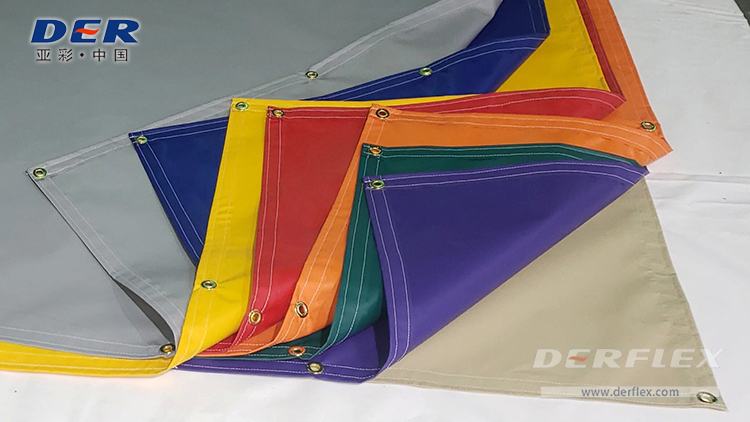
There Is No Universal “X N/50 mm” Number for Every Heavy Duty Tarp Seam
Seam strength is meaningful only when the test basis is defined. The same joint can produce different results when specimen width, warp/weft direction, load mode, conditioning, overlap width or test method changes. For a production PVC tarp, specify a project-specific minimum under a named method and record how the specimen fails.
A useful cross-check is seam efficiency: compare the seam breaking force with the parent fabric breaking force only when both values are obtained on a genuinely comparable basis. Published research on welded PVC-coated textiles notes that seam efficiencies around 60–80% are common in that research context, while higher efficiency can be harder to achieve. That range is not a universal pass/fail standard and is not a DERFLEX guaranteed value.
Use Seam Efficiency to See Whether the Joint Becomes the Weak Link
The ratio is useful for supplier qualification and repeat-order QC only when the parent-fabric and seam results use compatible test conditions.
If a parent fabric measures 2,400 N/50 mm and a comparable welded seam measures 1,800 N/50 mm, seam efficiency is 75%. This example explains the math; it is not a DERFLEX specification or universal acceptance limit.
For material selection beyond seam strength, use the tarpaulin technical specification guide to align GSM, thickness, tensile, tear, coating adhesion and fabrication requirements before the seam target is frozen.
Seam Efficiency Calculator
Enter comparable breaking-force values using the same unit, specimen-width basis and material direction.
This tool calculates a ratio only. It does not set a pass/fail requirement. Confirm the acceptance criterion for the actual fabric, weld design, test method and end use.
Which Test Standard Should Be Used for PVC Tarp Seam Strength?
Do not put “ASTM test” or “ISO seam strength” on a purchase order without naming the exact method and confirming its scope.
| Reference | What it covers | How a tarp buyer should use it | Important limitation |
|---|---|---|---|
| ASTM D751 | Test methods for coated fabrics. ASTM currently lists D751-26 as active; the D751 family scope includes tarpaulins and contains seam-strength and dead-load seam-strength sections. | A strong starting reference for specifying coated-fabric seam testing when the selected procedure matches the product and procurement need. | The standard does not create one universal strength value for every tarp. The buyer still needs an acceptance criterion. |
| ISO 13935-2:2026 | Grab-method determination of maximum force to seam rupture for sewn textile seams. | Useful only after confirming the material and seam are within scope. | ISO states the method is normally not applicable to coated fabrics; do not select it automatically for PVC-coated tarp. |
| ISO 2411:2024 | Determination of coating adhesion strength for rubber- or plastics-coated fabrics. | Use as a separate material-quality consideration when coating-to-scrim adhesion could limit a welded joint. | Coating adhesion is not the same property as finished-seam strength. |
| Project leak / hydrostatic / water test | Checks barrier continuity rather than mechanical load capacity. | Define separately when rain, water, air or liquid tightness matters. | A mechanically strong seam can still leak, and a watertight seam may still be mechanically under-designed. |
Write the exact test method, specimen direction, specimen-width basis, conditioning, reporting units, sample count and minimum acceptance criterion into the drawing or PO. Never rank two suppliers using seam numbers produced under different test setups.
A Tarp Weld Can Be Strong in Shear and Vulnerable in Peel
The direction in which the joint is opened can matter as much as the headline breaking force. Finished tarps also introduce cross-seams, corners, hems and hardware loads that a simple straight coupon does not reproduce.
| Load / detail | What happens | Why buyers should care | QC focus |
|---|---|---|---|
| Lap / shear-type loading | Load transfers along the bonded overlap. | Often represents long panel welds more realistically than an opening load. | Breaking force, elongation and failure location. |
| Peel / opening tendency | The joint is progressively opened at an edge. | Edge lift or poor interfacial fusion can be exposed even when the lap seam carries high load. | Interface separation, edge preparation and coating integrity. |
| Cross-seam / multilayer junction | Extra layers change heat flow, pressure and local stiffness. | A machine setting qualified on two layers may not transfer directly to four-layer intersections. | Intersection continuity, voids, edge lift and local overheating. |
| Corner / hem transition | Load changes direction and concentrates near folds or reinforcement ends. | Finished-cover failure may begin beside the weld rather than inside it. | Transition geometry, patches, webbing and fabric tear. |
| Repeated flex / dead load | Long-term stress can reveal creep, fatigue or progressive edge opening. | Important for truck, storage and tensioned-cover programs with sustained or cyclic loads. | Project-defined conditioning and after-exposure seam check. |
Six Weld & Finished-Tarp Failure Modes That Tell You More Than “Pass”
Peak force matters, but the failure location tells engineering and QC teams what should be corrected before mass production.
Interfacial peel
The two coated surfaces separate along the weld. Review cleanliness, surface treatment, coating compatibility, energy/heat input, pressure and overlap geometry.
Incomplete fusion
The joint contains weakly bonded zones or discontinuities. Under-processing, uneven pressure or unstable speed/dwell can leave a seam that looks finished but opens early.
Heat-damaged transition
The fabric breaks beside an overheated or thinned weld zone. More heat is not automatically more strength; the process must stay inside the material’s usable welding window.
Parent-fabric rupture
The coated fabric breaks away from the bonded interface. This can indicate that the weld is no longer the first weak link, but the full cover still needs load-path and tear-propagation review.
Cross-seam / corner weakness
Multiple layers, folds and abrupt geometry change pressure distribution and heat transfer. These zones deserve dedicated production samples instead of assuming a straight seam represents them.
Reinforcement or hardware pull-out
The panel seam survives, but the hem, webbing, D-ring patch or grommet zone fails. Heavy-duty performance depends on the entire load-transfer system.
What Actually Controls Heavy Duty Tarp Weld Strength?
Weld strength is an output of material chemistry, joint design and machine settings. A recipe copied from another PVC fabric can be wrong even when GSM looks similar.
| Variable | Why it changes the seam | What to freeze for repeat orders |
|---|---|---|
| Coating formulation & adhesion | The thermoplastic surface must activate and consolidate without the coating delaminating from the scrim. | Approved material code / construction and relevant material QC. |
| Surface finish / contamination | Lacquer, texture, dirt, release residue or moisture can change the welding window and interface contact. | Surface condition, cleaning procedure and approved finish. |
| Overlap width / seam margin | Joint geometry changes stress-transfer distance and edge concentration. | Drawing dimension and tolerance—not “wide weld” wording. |
| Heat or RF energy | Too little can leave poor fusion; too much can thin coating, distort scrim or damage the transition zone. | Qualified production setup for the material and joint type. |
| Pressure | Controls intimate contact and consolidation of the activated surfaces. | Equipment setup and verified process window. |
| Speed / dwell time | Changes total energy exposure and interaction with pressure. | Qualified speed/dwell range tied to equipment and material. |
| Cooling / handling | A joint moved or peeled while still unstable can distort before full consolidation. | Handling sequence and minimum stabilization practice where needed. |
| Layer count / seam intersections | Extra layers change pressure, heat transfer and local stiffness. | Separate setup or sample validation for cross-seams and reinforced zones. |
Published PVC-coated textile welding studies show that pressure, welding width/seam margin, energy and speed can materially change measured seam strength. One 2026 ultrasonic-welding study, for example, reported a large strength increase when seam margin and pressure were increased within that experiment. Those machine settings are process-specific and should not be copied directly to hot-air or HF/RF tarp welding.
Seam Strength Starts Before the Welding Machine
A heavy duty tarp is a system: base polyester construction, PVC coating, coating adhesion, surface finish, seam design, reinforcement and attachment hardware must work together.
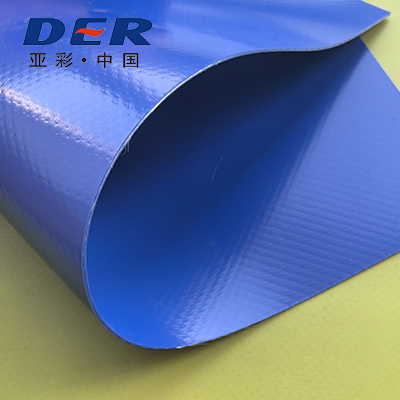
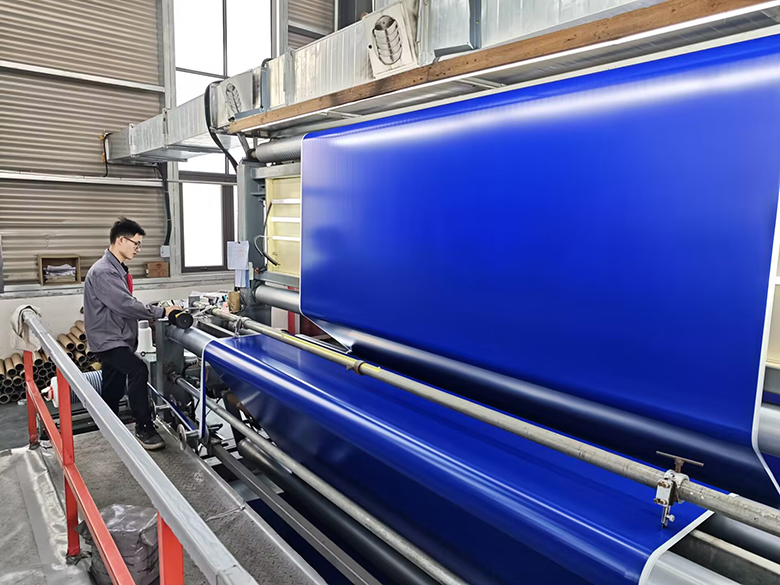
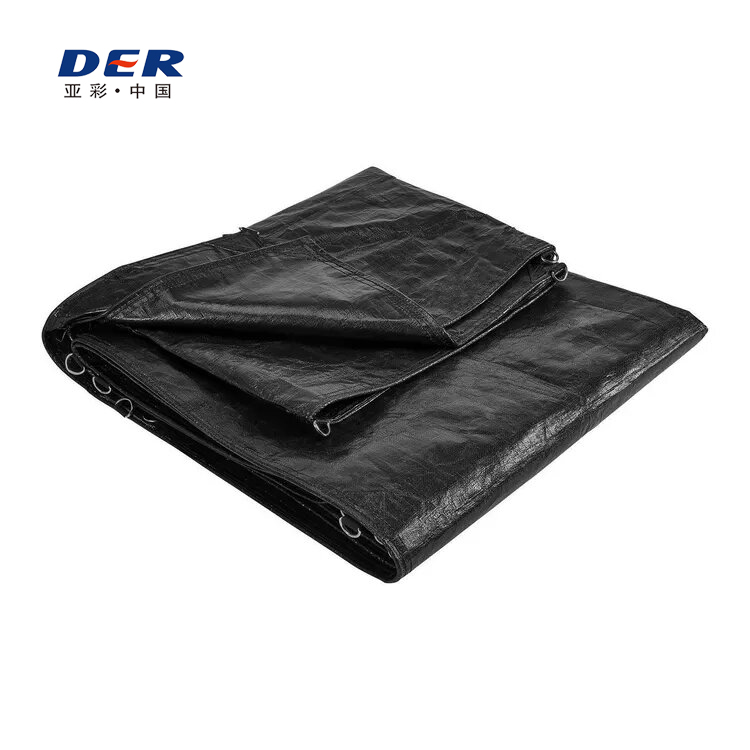
For a broader finished-cover selection framework, see DERFLEX heavy duty tarp specifications and customization. For a direct comparison of joining routes, use the separate welded vs sewn tarpaulin seam guide; this page focuses instead on measurable weld-strength acceptance.
“Strong Enough” Changes with the Tarp’s Service Environment
Do not reuse one seam acceptance plan for every application. Define the load and failure risk first, then choose the relevant test and conditioning.
| Application | Primary seam risks | Recommended acceptance focus | Additional checks to consider |
|---|---|---|---|
| Truck / trailer tarp | Wind flutter, repeated folding, abrasion, tie-down loads and hardware transitions. | Production panel weld strength + failure mode + reinforced edge/hardware review. | Flexing, abrasion zones, hems, webbing and D-ring/grommet pull-out as project risk requires. |
| Construction / storage cover | Wind uplift, rain pathways, corners and fixing points. | Panel joint strength plus cross-seam/corner qualification. | Water shedding, attachment-point load and field installation detail. |
| Tent / shelter panel | Long seams, roof water paths, intersections and repeated erection. | Directional seam test on approved panel construction. | Water continuity, intersection details and project-specific environmental conditioning. |
| Industrial equipment cover | Curves, corners, access openings, straps and local abrasion. | Finished-detail samples, not only a straight overlap coupon. | Fit, zipper/strap zones and abrasion reinforcement. |
| Agricultural / outdoor storage tarp | UV, temperature cycles, repeated fastening, water exposure and edge loads. | Seam strength tied to the selected material and actual fastening layout. | Weathering, low-temperature handling or repeat-folding validation where material/service risk justifies it. |
The tarpaulin failure analysis guide can help procurement and QC teams trace whether field damage started at a seam, tear, coating interface or hardware zone instead of treating every failure as “fabric quality.”
How to Qualify a Heavy Duty Tarp Weld Before Mass Production
The goal is not to create an unusually strong laboratory coupon. The goal is to freeze a production-representative construction that can be repeated and checked.
Approve the PVC-coated fabric construction, finish, direction and reinforcement used for the order.
Define overlap, orientation, layers, cross-seams, hems and transition details on a drawing revision.
Use production equipment and settings appropriate to the actual fabric rather than a generic welding recipe.
Report force plus failure mode, direction, method, conditioning and specimen basis.
Use the approved seam/drawing as a repeat-order reference and revalidate after material or process changes.
When should after-aging testing be added?
When field risk justifies it. Temperature, UV, water exposure, repeated flexing or sustained loading can change how a coating, weld or reinforcement behaves. Define the conditioning that reflects the project rather than adding a generic aging test for marketing.
When should the seam be requalified?
Revalidation is prudent when the coated-fabric construction, surface finish, color/coating route, joint geometry, welding equipment, production settings or critical reinforcement changes. The change-control rule should be written into the quality plan for repeat programs.
For material compatibility, fabrication routes and finished-panel considerations, continue to DERFLEX heat welded tarpaulin manufacturing guide.
Put a Measurable Seam Requirement on the RFQ, Drawing or PO
“Heavy-duty welded seam” cannot be audited. A good specification tells the supplier exactly which production joint will be tested, how it will be tested and what must be reported.
Copy-ready acceptance wording
Joint: [hot-air / compatible HF-RF / other approved route], overlap: [project-defined], orientation: [defined on drawing].
Test: [agreed coated-fabric seam method], specimen direction and width basis: [define], conditioning: [define].
Acceptance: minimum seam breaking force [buyer-defined] and/or seam efficiency [buyer-defined].
Report: individual results, average result and failure location/mode.
Separate barrier requirement: [water / hydrostatic / leak test if required].
Sample control: production-representative pre-production sample and drawing revision to be approved before bulk manufacture.
Information DERFLEX needs for a seam-strength review
- Application and service environment
- Target material or GSM / thickness
- Finished tarp size and panel layout
- Welding route / equipment if specified
- Overlap / seam geometry
- Critical load direction
- Webbing, hems, D-rings or grommets
- Water / leak requirement
- Quantity and repeat-order plan
- Required test / conditioning / compliance
Seven Common Ways Tarp Weld Comparisons Go Wrong
Most disputes start because the parties compare incomplete numbers rather than an agreed test system.
Comparing unlike methods
N/25 mm, N/50 mm and results from different fixture or textile/coated-fabric methods are not automatically interchangeable.
Writing only “strong weld”
No test method, direction, overlap or minimum criterion means there is no objective receiving-inspection rule.
Checking only the peak force
A change from parent-fabric rupture to low-load interfacial peel can reveal process drift even before the average number looks obviously poor.
Testing only a straight seam
Cross-seams, corners and reinforced details may have a different thermal and stress-transfer condition.
Calling a strong seam waterproof
Mechanical strength and barrier performance are different. Specify a separate water or leak check when required.
Copying one machine recipe
Different PVC coating systems and finishes can require different process windows even at similar finished weights.
Chasing the highest number
An excessively stiff or overprocessed joint can move stress into the adjacent fabric. Controlled load transfer is more useful than a headline number alone.
Build the Seam Requirement Around the Actual DERFLEX Tarp Program
DERFLEX supplies PVC-coated tarp materials and supports roll goods, cut or welded panels and custom finished tarp discussions. Seam design can be coordinated with reinforced hems, webbing, grommets, D-rings and other finished details according to the approved project specification.
Material-first matching
Start with the coated-fabric construction and service exposure, then qualify the compatible welding route and joint geometry instead of treating the weld as an independent component.
Production-representative samples
For new or demanding programs, agree the material, joint drawing, load direction, water requirement and acceptance method before bulk manufacturing.
Finished-cover load path
Panel welds are reviewed together with hems, webbing, patches and hardware so the highest-risk transition does not become the uncontrolled weak point.
Start from DERFLEX’s tarp manufacturer hub when the project still needs material, application or finished-cover selection before a weld-strength criterion can be fixed.
Heavy Duty Tarp Seam & Weld Strength FAQ
Short, direct answers for procurement, engineering and quality-control teams.
What is a good seam strength for a heavy duty tarp?
There is no universal number. A useful requirement states the coated-fabric construction, exact test method, specimen-width basis, material direction, conditioning and a buyer-defined minimum breaking force or seam-efficiency target. Failure mode and any water or aging requirement should also be reported.
What is seam efficiency?
Seam efficiency compares seam breaking force with the parent fabric’s breaking force under genuinely comparable test conditions: seam efficiency (%) = seam breaking force ÷ parent-fabric breaking force × 100. It helps show how much of the parent material’s strength is transferred through the joint.
Should a welded tarp seam be as strong as the parent fabric?
Not necessarily. Requiring 100% of parent-fabric strength without considering test method, failure mode and load path can be misleading. The engineering goal is a controlled, repeatable joint that meets the finished tarp’s actual loads with the required margin and does not create a new weak transition beside the weld.
Which ASTM standard can be used for PVC tarp seam strength?
ASTM D751 is a coated-fabric test-method family whose scope includes tarpaulins and contains seam-strength and dead-load seam-strength sections. ASTM currently lists D751-26 as active. Buyers should still identify the exact procedure, specimen direction, units, conditioning and project acceptance criterion.
Is ISO 13935-2 suitable for PVC-coated tarpaulin welds?
Do not select it automatically. ISO 13935-2:2026 is a grab-method standard for seam rupture in textile fabrics, and its scope says it is normally not applicable to coated fabrics. PVC tarp buyers should use a method appropriate to coated fabrics and the actual joint being qualified.
Does a stronger weld mean the tarp seam is waterproof?
No. Mechanical seam strength and waterproof or leak performance are separate properties. A seam may carry a high tensile load but still contain a channel, edge lift or imperfect cross-seam. Use a separate water, hydrostatic, air or liquid-leak requirement when the application needs barrier continuity.
How do hot-air and HF/RF welding affect seam strength?
Both can produce strong joints in compatible PVC-coated materials, but they use different energy-transfer mechanisms and process windows. Strength depends on the actual material, overlap geometry, pressure, energy/temperature, speed or dwell, surface condition and equipment control. The production joint should be qualified rather than assuming one welding route is automatically stronger.
What should I send DERFLEX for a weld-strength quotation or sample review?
Send the application, target material or GSM/thickness, finished dimensions, seam layout, joining route, critical load direction, overlap or drawing details, reinforcement and hardware layout, water requirement, quantity, destination, and any required test method, conditioning or certification.
Technical reference context
ASTM D751 — Standard Test Methods for Coated Fabrics: ASTM’s page lists D751-26 as active and the D751 scope includes tarpaulins; the method family includes seam strength and dead-load seam strength.
ISO 13935-2:2026: seam tensile properties using the grab method; ISO notes it is normally not applicable to coated fabrics.
ISO 2411:2024: determination of coating adhesion strength of coated fabrics.
Hussen et al., 2022: ultrasonic welding research on PVC-coated hybrid textiles; useful for seam-efficiency and process-variable context, not a universal tarp acceptance standard.
Scientific Reports, 2026: research on ultrasonically welded PVC-coated polyester seams under pressure, seam-margin and temperature variations; process-specific findings should not be copied as hot-air/HF-RF production settings.
Need a Seam Requirement Your Supplier and QC Team Can Actually Measure?
Send DERFLEX your application, dimensions, target material or GSM/thickness, quantity, seam drawing, reinforcement, load direction, water requirement, destination and required test or certification. The discussion can then be built around the real failure risk instead of a generic “heavy-duty weld” claim.